
An investment casting cell's three load-bearing machines are the wax injector, the shell-building line, and the melting furnace; choosing the wrong pressure class or furnace type burns the project at the sample stage [S3].
Foundries running stainless, carbon steel, alloy steel, and aluminum work-cells typically standardize on a multi-stage flow — wax pattern, shell, dewax, pour, knock-out, and finish — with 12 named work steps including shot-blast shell removal, cut-off, and CNC machining [S2]. The equipment categories on the market in mid-2026 cluster around c-type hydraulic injectors, double-site hydraulic injectors, double-site pneumatic injectors, and supporting shell-making and melting modules [S3].
Wax Injection Machine Class and Pressure Band
C-type hydraulic wax injection machines are the workhorse for mid-volume precision casting of stainless and carbon steel, with clamp force and shot pressure sized to pattern complexity [S3].
For higher throughput, double-site hydraulic wax injection machines allow two patterns to be injected per cycle, doubling output without doubling floor space; the same vendor also markets a double-site pneumatic variant for lower-pressure, lower-tonnage jobs where pattern detail is paramount and injection force is secondary [S3]. A separate hydraulic wax injection machine line on the same catalog covers general-purpose lost-wax work, while c-type frames are typically chosen for taller or asymmetric dies that need rigid clamping [S3]. Buyers should match injection pressure to wax flow length and pattern wall thickness — long thin-wall patterns demand higher sustained pressure that pneumatic machines struggle to hold steady.
Shell Building: Sand Spreading, Floating, and Drying Line
Shell quality — and therefore casting surface finish — is set by the sand spreading machine, sand floating machine, and the drying mould shell line working as a coordinated train [S3].
Sand floating buckets, paint mixing buckets, and dust filter machines handle slurry and reclaim at the bench level; their throughput has to be balanced against the shell line's dryer residence time, because wet shells entering the dewax stage are the most common source of shell cracking [S3]. A wax container and a thermostat wax tank upstream of the injector keep wax at the correct viscosity — a parameter that interacts with injection pressure and pattern wall thickness. For a casting mold shop moving from sand casting to investment casting, the shell line is usually the first capital bottleneck because dryer capacity, not injector capacity, sets daily throughput.
Dewax and Wax Recovery: Autoclave vs Electric Hot Tank
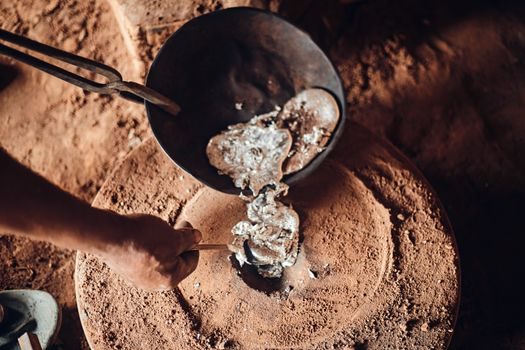
Electric heating dewax machines and standard dewax machines differ mainly in how fast and how uniformly the wax is driven out of the shell; flash-boil dewax cracks shells, slow uniform heating preserves them [S3].
The wax dissipate moisture recovery bucket and the wax melting tank close the loop: recovered wax is filtered, re-melted, and re-blended before returning to the injector, which is why a 2–5% virgin-wax top-up is standard industry practice. An auto steam generator typically feeds the dewax autoclave, while a separate roasting furnace burns out residual wax and pre-sinters the shell before pour — these are two different thermal duties and should not be merged into one unit. For shops running die casting work alongside investment casting, the dewax kettle can sometimes double as a die pre-heater, but only if the temperature controller and safety venting match both duties.
Melting Furnace: Induction vs Resistance vs Gas
Induction smelting furnaces are the default for stainless, carbon, and alloy steel investment casting because they deliver clean, controllable melt with low sulfur pickup; resistance and gas furnaces still appear in aluminum cells and small-batch iron foundries [S3].
Foundries casting carbon steel, alloy steel, and aluminum alloy under one roof typically standardize on a medium-frequency induction furnace sized to the largest pour weight plus 20% heel; this matches the workflow practiced at 30-year precision-casting foundries that run multiple alloy families in parallel [S2]. The induction furnace also pairs well with a casting ladle hand-off into the pour station, since pour temperature can be trimmed by ladle holding time. Pour temperature control is the single largest contributor to fill of thin-wall investment patterns, and a furnace that cannot hold ±10 °C setpoint should be resized before the pour station is upgraded.
Finishing Cell: Knock-Out, Cut-Off, and Surface Treatment
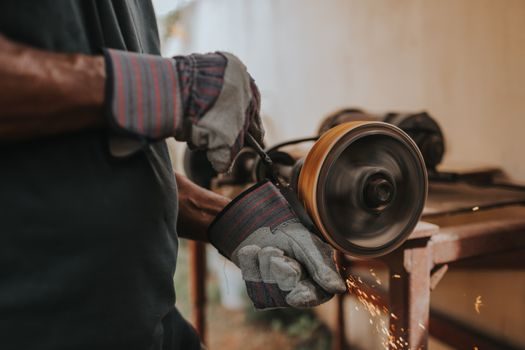
Vibrates decorticator machines knock the shell off the casting, gate cutting machines remove the sprue, and industrial sand blasters or polishing machines finish the surface — these three machines are usually sized as a matched line, not bought piecemeal [S3].
A burning furnace or roasting furnace upstream softens any residual shell ceramic before decortication, extending decorticator life and reducing casting damage on thin-wall features. The polishing machine is the last chance to recover surface roughness before shipment, and it is also the workstation where the foundry's published surface finish numbers (typically Ra 3.2–6.3 µm for investment cast stainless) are actually earned. A foundry quoting tighter than Ra 3.2 µm as a standard line item is over-promising unless it has a dedicated polishing cell, not a bench grinder.
Selection Criteria and a Side-by-Side Comparison
Match equipment to alloy family, annual part count, and the tightest tolerance on the drawing — not to the cheapest catalog price, because downtime on the wrong injector costs more than the price gap [S1][S3].
A direct comparison of the three most common wax-injector classes clarifies the trade-off: c-type hydraulic frames give the highest clamp rigidity for tall, asymmetric dies and dominate stainless-steel work; double-site hydraulic injectors double the per-hour pattern count at similar pressure class and suit mid-volume carbon-steel runs; double-site pneumatic injectors are the lowest-cost entry and fit aluminum alloy and small brass or zinc-alloy patterns where injection pressure stays below the hydraulic band [S3]. A fourth option — fully manual or semi-automatic hand-injection units — survives in prototype and sample shops where annual volume is under a few hundred patterns and lead-time matters more than per-part cost. Buyers who do not need a die casting machine and only run investment castings should not over-spec hydraulic pressure; buyers who plan to scale beyond 50,000 patterns/year should not start with pneumatic.
Who Should NOT Buy the Cheapest Pneumatic Line
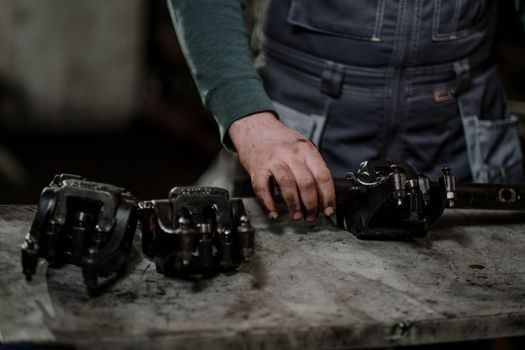
High-pressure, thin-wall, or stainless-steel work will punish an under-spec pneumatic wax injector within the first month — the symptom is short shots, misruns, and pattern flash that scrap dies [S3].
Shops that handle anti-static-sensitive electronic-housing castings also need stable wax temperature and injection pressure, which pneumatic machines struggle to hold through shift-long production. If the part drawing calls out CT5–CT6 tolerance per ISO 8062, or a surface finish tighter than Ra 3.2 µm, the pneumatic class is the wrong starting point and any saving on capex is absorbed by scrap in the first quarter. The right move is a hydraulic frame, even if the daily output is modest.
Vendor and Sourcing Signals Worth Tracking
Chinese foundries such as Changrui Investment Casting Co., Ltd. publish full equipment catalogs covering wax injection, shell making, dewax, melting, and finishing on a single domain, which is a useful one-stop sourcing signal for buyers building a greenfield cell [S3].
Long-tenured casting groups with 30 years of precision-casting and machining practice typically list value-added services — CNC machining, surface treatment, electroplating, paint spraying, and assembly — alongside raw casting, which is a useful proxy for whether the foundry can take a drawing all the way to a finished part [S2]. Wholesale copper-alloy casting listings in mid-2026 show US$ 0.50–15.00 per-piece pricing on 100-piece MOQs alongside US$ 1,000–40,000 per-ton lots, a useful pricing band for budgeting alloy cost separately from equipment capex [S1]. For a buyer weighing a balancing valve sizing workflow or an aluminum coil spec map exercise against an investment casting cell build, the equipment-side decision should anchor on injection pressure class, shell-line dryer capacity, and furnace type — not on the alloy per-part price. Track the next equipment catalog refresh and any new double-site hydraulic frame release as the next two buying signals.