
ISO 9001:2015 is the fifth edition of the standard, in use by over one million organizations globally, and the only edition cited as current on the ISO catalogue page for QMS requirements [S1].
For a hydraulic power unit build, the standard governs the process used to realize the unit, not the unit itself, and the typical evidence trail covers scope, design output, purchasing controls, calibration, and acceptance test records [S1][S4][S5].
Scope, Roles, and What the QMS Actually Covers
ISO 9001:2015 is structured around seven clauses of requirements, with clauses 4 through 10 containing the auditable provisions that apply to a hydraulic power unit (HPU) build, including context of the organization, leadership, planning, support, operation, performance evaluation, and improvement [S1].
The certified object is the management system, not the product. A shop that builds HPUs can hold ISO 9001:2015 certification for "the design, manufacture, and distribution of hydraulic systems" while each individual unit is verified through documented inspection and test records rather than carrying a per-unit certificate [S5].
Government contracts make the same point contractually: bidders are required to demonstrate an internal quality system meeting ISO 9001:2015, MIL-I-45208A, or equivalent, with proof supplied as part of the proposal package before award [S2].
Document Set the QMS Expects During an HPU Build
For a build covered by ISO 9001:2015, the typical controlled-document package includes: project scope, design input/output, bill of materials with approved suppliers, calibration records for pressure gauges and flow meters, work instructions, assembly travelers, nonconformance and corrective action records, and the final acceptance test report [S4][S5].
Clause 7.5 of ISO 9001:2015 requires that documented information be identified, reviewed, and approved for suitability, controlled in distribution, and retained for the period defined by the organization, which maps directly to the assembly traveler, drawing revisions, and calibration certificates that travel with the unit [S1][S4].
Hydraulic assembly work emphasizes cleanliness, proper assembly techniques, and traceability, and Pearse Bertram's published work statements explicitly tie those practices to ISO 9001:2015 procedures rather than to a generic best-practice label [S4].
Where Design Review and Acceptance Test Intersect

Government HPUs typically require staged design reviews at 30%, 60%, and 90% progress, with formal acceptance review on receipt, providing a natural alignment with ISO 9001:2015 clause 8.3 design and development requirements [S2].
A reference procurement package illustrates the level of detail expected: 150-gallon L-shaped reservoir, 40 HP electric motor driving a piston pump rated 47 GPM at 1110 PSI, 1.5 HP circulation pump, kidney loop filtration with cooler, return filter, soft-start 480 V panel, temperature and low-level indicators, rubber hose plumbing with stainless steel tubing where needed, grey paint finish, and OSHA compliance as a baseline [S2].
Clause 8.5.1 of ISO 9001:2015 requires controlled production under defined conditions, including the use of suitable equipment, qualified personnel, and monitored process parameters, which is the audit hook for torque records, cleanliness checks, and pressure-test logs on the build floor [S1][S4].
Supplier and Component Traceability
ISO 9001:2015 clause 8.4 requires evaluation, selection, monitoring, and re-evaluation of external providers, and for HPUs this maps to the component sourcing step that follows a signed-off scope [S1][S6].
Brand-specific requirements are normal at this stage; the reference procurement lists Parker as a named piston pump brand, with the offeror allowed to bid an equivalent only if the equivalency is documented in detail and accepted by the technical reviewer [S2].
Component traceability data, including make, model, serial, certificates of conformance, and country of origin, is typically filed against each line of the bill of materials, and this data is what the auditor samples first when reviewing a hydraulic build [S4][S6].
Calibration, Test, and Acceptance Records
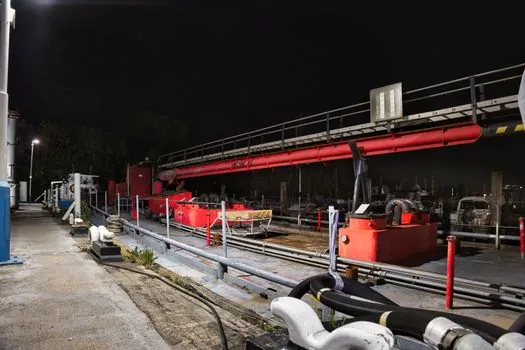
Clause 7.1.5 of ISO 9001:2015 requires measurement traceability, and a typical HPU acceptance test records reservoir capacity, pump flow at rated pressure, relief-valve setting, temperature rise at no-load and loaded runs, filtration micron rating, and noise level, each tied to a calibrated instrument with a certificate ID [S1][S2].
Reference HPUs are required to ship with documentation that the receiving authority can re-verify, and the acceptance review clause on a federal procurement gives the government the right to reject the unit or any subsystem that fails inspection on receipt [S2].
For a one-off or low-volume build, hand-recorded test sheets signed by the test operator and a quality representative are usually acceptable evidence, provided they are filed in the controlled-document store and retained per the documented retention period [S4][S5].
Where the Documentation Falls Short
Auditors most frequently issue findings for missing or expired calibration certificates, drawing revisions not pulled into the work order, and corrective actions closed without effectiveness verification, rather than for design content itself [S1][S5].
Small shops that assemble HPUs from customer-furnished designs sometimes skip design-output review because the customer owns the drawing, but ISO 9001:2015 clause 8.3 still requires the organization to verify that the design is suitable for its production process, and the evidence of that review must be on file [S1].
For audit prep on an HPU line, the highest-value fix is the calibration register, because it produces immediate traceability across every pressure and flow number on the acceptance test sheet [S1][S4].
Specifying an HPU under a quality-controlled program, including the right level of build documentation, fits the broader engineering pattern of getting component selection, sourcing, and the assembly traveler right before power-on, which is also where most field failures originate. Independent of the QMS paperwork, a well-built HPU depends on the upstream filter-regulator-lubricator stack delivering clean, dry, metered air to controls, and the same control logic a filter-regulator-lubricator unit feeds is what the soft-start panel sequences on first power-up.
Trackable next signal: the next ISO catalogue update for ISO 9001 confirmed status, plus the publication of any new IAF mandatory documents for accredited certification bodies, both on the iso.org catalogue page [S1].
For the relevant spec sheets and selection criteria, see power quality analyzer.
See also our earlier report, Motorized Zoom vs Fixed Magnification on a VMM: Accuracy Tradeoffs.