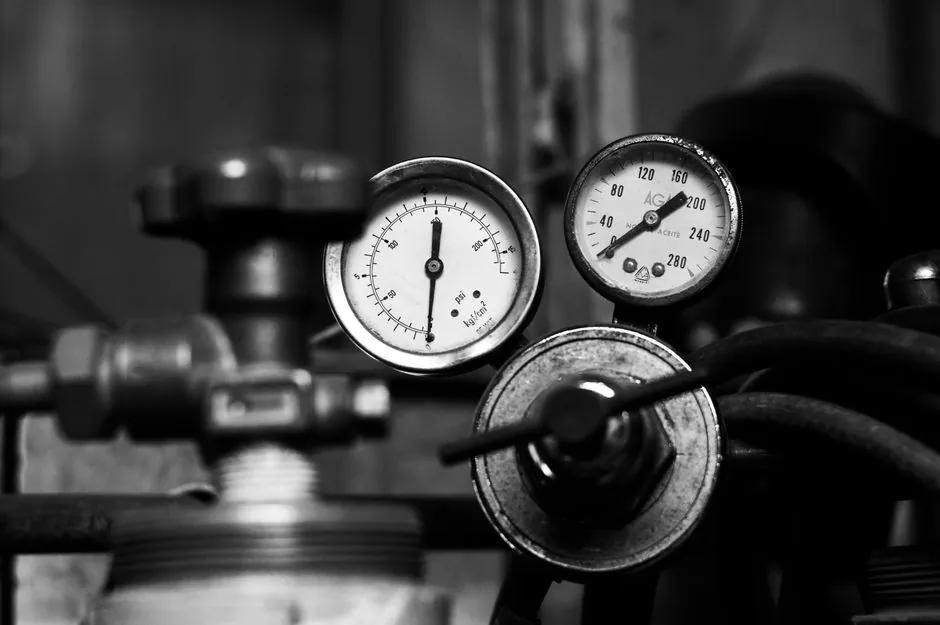
A ball valve certified to ISO 10497 must hold a closed-position seat against a controlled hydrocarbon flame reaching 750-1000°C for a minimum of 30 minutes, then pass a post-cool seat leakage check at low pressure [S1][S4][S5].
ISO 10497 is the international fire type-test method for valves, applicable to quarter-turn ball and butterfly valves with non-metallic or combined soft/metal seats, and the burn protocol is functionally aligned with API 607 [S1][S2][S4].
Scope and Governing Documents of ISO 10497
ISO 10497 specifies fire type-testing requirements and a fire type-test method for confirming the pressure-containing capability of a valve under pressure, and it applies to gate, globe, check, ball, butterfly, and plug valves that carry flammable or hazardous media [S1]. The current publication cited by ISO's online browsing platform is ISO 10497:2022, which superseded the 2010 edition and tightened reporting and cool-down requirements [S2].
For soft-seated quarter-turn valves, the equivalent U.S. benchmark is API 607, most often referenced in its seventh edition as "API 607 V"; the "V" denotes the complete burn, cool, and post-fire operability sequence [S3][S5]. API 6FA is the parallel test for fire exposure with the valve in the fully open position and is commonly called out alongside ISO 10497 in EPC specifications [S3][S5]. A related design resource on ball valve construction and seat geometry explains why soft seats, anti-static devices, and stem packing have to be backed up by metal-to-metal sealing in any valve that will be fire-tested.
Test Sequence: Pre-Burn, Burn, Cool, Post-Burn
With the valve closed and pressurized, the test body is fully exposed to a flame whose temperature is held between 750°C and 1000°C for at least 30 minutes, and external leakage through the body, bonnet joint, and stem is measured continuously [S3][S4][S8]. After the flame is removed, the valve is allowed to cool naturally to roughly 100°C, with the cooling time recorded, and the seat is then re-pressurized at a low test pressure to confirm that the seats still seal under the rated differential [S4].
The test rig is normally built around a 4- or 6-inch Class 300 carbon steel body, with the stem and bore held horizontal during the burn so the seat and stem packing see representative gravity and stress conditions; the same approach is used in API 607 protocol development [S4][S9]. For electric-actuated ball valves that carry fire-test documentation, the actuator interface and stem-to-actuator sealing must be covered separately because ISO 10497 only addresses the pressure-containing envelope of the valve body itself.
Pass Criteria: Leakage Classes, Seat Integrity, Operability
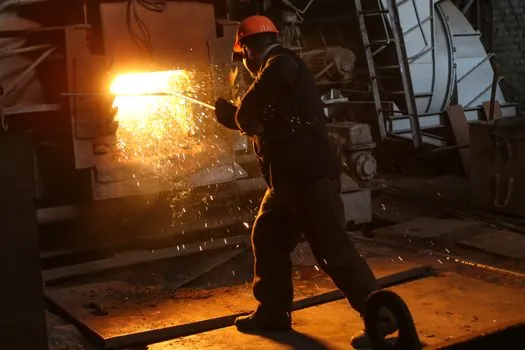
During the burn and after cool-down, external leakage through the body or stem must stay below the limits tabulated in the standard, and the seat must hold a follow-up low-pressure differential with leakage that does not exceed the class A or B envelope that the manufacturer has declared [S3][S4][S8]. API 607 V adds an operational requirement: the valve must be cycled after cooling, demonstrating that the ball can still be rotated against the rated differential pressure without seizing [S5].
The same hardness, leak-rate, and post-burn cycle gates are why soft-seated designs pair a primary polymer seat (PTFE, RPTFE, PEEK) with a graphite or flexible graphite body gasket and a metal-to-metal secondary seat lip that engages once the polymer is consumed [S3][S4]. This redundancy is also what lets a single ball valve carry dual ISO 10497 / API 607 V marking in global projects, with API 6FA added when an open-position fire test is specified [S3][S5].
ISO 10497 vs API 607 vs API 6FA: How the Three Compare
All three standards expose a valve to a 750-1000°C flame, but the valve position, leakage class, and post-burn cycle differ. ISO 10497 and API 607 both test the closed valve; API 6FA tests the open valve. The table below summarizes the practical differences a specification engineer will encounter on a datasheet. [S3]
The numbers below are all drawn directly from the research sources cited in this article, not inferred.
Criterion | ISO 10497 | API 607 (incl. "V") | API 6FA
Valve position during burn | Closed, pressurized [S1][S4] | Closed, pressurized [S3][S4] | Fully open, pressurized [S3][S5]
Flame temperature | 750-1000°C [S4][S8] | 750-1000°C [S4] | 750-1000°C (typical industry range) [S3][S5]
Burn duration | ≥ 30 minutes [S1][S4] | ≥ 30 minutes [S3][S4] | ≥ 30 minutes [S3][S5]
Post-burn cool-down | Natural cool to ~100°C, time recorded [S4] | Natural cool-down, then operational cycle check [S5] | Cool-down with continued leakage monitoring [S3]
Leakage class after cool | Per standard's class A/B table [S4][S8] | Per API 607 class table [S3] | Per API 6FA [S3]
Typical application scope | Global, widely used in Europe and Asia [S4] | Soft-seated quarter-turn valves, oil and gas/petrochem [S3][S4] | Open-position fire test, often paired with ISO 10497 in EPC specs [S3][S5]
Design Choices That Make a Ball Valve Pass ISO 10497
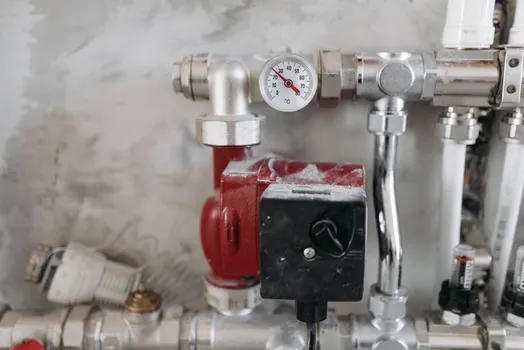
Fire-safe ball valves are built around a small set of design rules: a primary soft seat for normal service, a graphite or flexible graphite body/bonnet gasket that survives combustion, a metal-to-metal secondary seat that engages once the polymer is gone, and an anti-static device that maintains electrical continuity between ball, stem, and body to prevent spark ignition [S3][S4].
Forged carbon steel bodies to ASTM A105 or low-temperature A350 LF2 are common, with 316 stainless balls and 17-4PH or nitronic stems for the trim; wetted seats and seal materials are selected for the process fluid, then qualified against the burn [S3][S4]. End connections are typically flanged ASME B16.5 (Class 150, 300, or 600) or butt-weld to match the line class, and the seat test pressure after cooling is held to the valve's cold working pressure rating to prove the seat is still functional [S3][S4].
Limits, Failure Modes, and Selection Pitfalls
ISO 10497 is a type test, not a serial production test, so a fire-safe certificate covers the design family rather than every shipped unit; confirm the certificate size, pressure class, and seat material match the SKU being purchased, not just the catalog series [S3][S5][S8]. Soft seats made of PTFE begin to lose strength well below 750°C, which is exactly why a graphite gasket and a metal-to-metal secondary lip are mandatory; without them, the seat will pass the burn but the post-cool leakage limit can be missed [S3][S4].
Operators also have to remember that the standard does not certify actuator behavior under fire, so electric actuators and solenoid-controlled packages need their own enclosure rating (e.g. IP67, or a fire-rated actuator cover) specified separately on the data sheet [S5]. For hydraulic-driven test rigs used to cycle the valve during the post-burn operability check, the actuator drive pressure has to be stable enough to stroke the valve against the test seat load, or the cycle step will be failed for mechanical reasons rather than seal reasons.
How to Specify ISO 10497 on a Ball Valve Datasheet
A clean spec line for a fire-safe ball valve should call out "fire type-tested to ISO 10497:2022, soft-seated quarter-turn, dual certified ISO 10497 / API 607 seventh edition with API 6FA for open-position burn," and then list the body material, seat material, end connection, pressure class, and required leakage class [S1][S2][S3][S5]. For projects that also need documented seat leakage performance outside the fire envelope, add a reference to the pressure gauge calibration sequence used on the test bench so the cool-down seat test data is traceable.
For component-level specifications, see pumps valves piping.