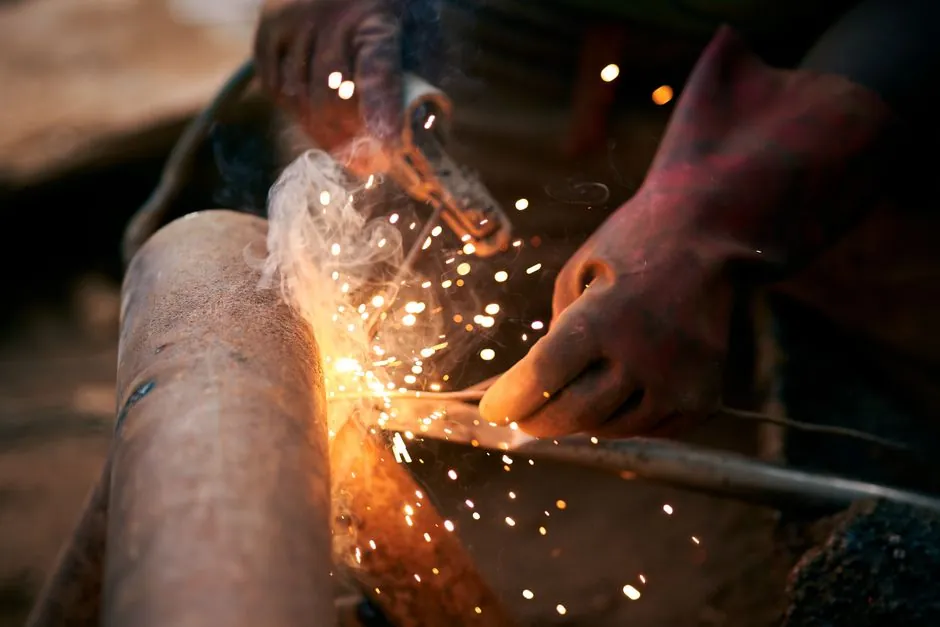
An oxy-fuel cutting torch for landscaping jobs is sized to mild-steel plate from 1/8 in. up to roughly 3/4 in. with a standard acetylene or propylene tip, a 1-1-101 size-class nozzle, and a seat type that matches the torch handle [S4][S5].
Most landscape crews are cutting rebar, sheet-steel edging, plate-steel fire-pit rings, and structural tube, all of which sit inside the standard hand-cutting envelope of 3 mm to about 19 mm (1/8 in. to 3/4 in.) mild steel [S1][S4].
Why mild steel is the only realistic landscaping target
Oxy-fuel cutting is an oxidation process: the preheat flame must bring mild steel to roughly 1,600 to 1,800°F before the cutting oxygen stream can sustain the burn [S2]. That kindling window is why the process is best suited to ferrous material, with carbon and mild steel as the workhorse substrate [S2].
For landscapers this matters because the steel that shows up on site (rebar, mild-steel edging, plate for fire-pit rings, sign posts, fence-tube framework) is almost all low-carbon. Stainless, aluminum, and cast iron do not ignite cleanly in the cutting oxygen stream and need plasma or abrasive methods instead; a cutting torch is the wrong tool for those materials [S2].
The four-step selection method applied to landscape work
Selection collapses to four variables: seat type, metal thickness, application, and fuel gas [S1]. For a typical landscape crew buying a new outfit, the seat type is dictated by the torch handle family, the thickness window is the plate they actually cut, the application is handheld, and the fuel gas is almost always acetylene or propylene [S1].
Seat type is the first gate: a tip from one torch family will not seat safely in another, and forcing it risks flammable gas leaks at the oxygen-fuel mixing chamber [S1]. The common medium-duty cutting-attachment kits sold for farm, ranch, and light-construction use, such as the Victor-type 1-1-101 family, ship with a single tip rated to roughly 3/4 in. steel, with larger tips available separately [S4].
Tip sizing and preheat for landscape plate thicknesses
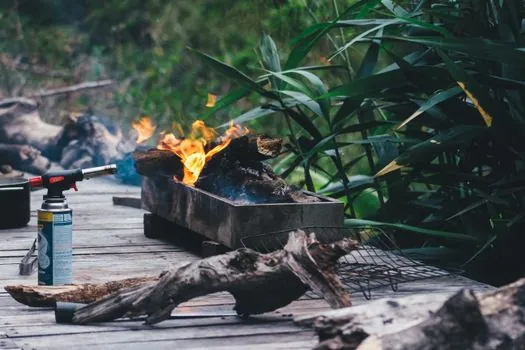
Tip selection is governed by the plate thickness, not by operator preference: the center hole of the cutting tip is sized to deliver a specific cutting-oxygen flow at a specific pressure for a specific thickness, and the preheat orifices are sized to bring that same thickness up to ignition temperature [S1]. Oversize the tip and thin plate warps, burns through, and leaves heavy slag; undersize it and a 1/2 in. plate never reaches kindling [S2].
A practical landscaping map: 1/8 in. to 1/4 in. sheet and thin edging use a small tip with lower oxygen and fuel flow for clean kerf; 1/4 in. to 1/2 in. plate (fire-pit rings, sign-post bases, gusset plates) sits in the mid-range; 1/2 in. to 3/4 in. plate and heavy tube needs the largest commonly stocked tip in a medium-duty kit [S1][S2][S4]. For plate thicker than 3/4 in., a heavier hand torch or machine torch is the safer step, matching the 3 mm to 300 mm (1/8 in. to 12 in.) overall oxy-fuel cutting envelope, with the small end owned by hand tools [S1].
Acetylene vs. propylene for a landscaper's rig
Acetylene is the hottest common fuel at roughly 5,600 to 5,800°F flame temperature, gives the shortest preheat time, and is the most versatile choice across cutting, gouging, and heating, but it is also the most expensive fuel gas [S1]. Propylene (and propane/propylene mixes) burns cooler, so preheat takes longer and cut quality on heavy plate drops, but per-cubic-foot cost is lower and cylinder handling is simpler for crews that only cut occasionally [S1].
For a landscaping outfit that mostly cuts plate under 1/2 in. and values fast cold-start preheat on rusty or scale-covered salvage steel, acetylene is the better fit, with the understanding that rusty plate needs a longer preheat soak to burn off the oxide layer before the cutting oxygen can engage the clean steel underneath [S2]. This is a recurring field condition when cutting recovered rebar or salvaged plate, and it is the single biggest reason preheat time, not tip size, is the variable crews get wrong.
Equipment and consumable cost for a starter landscaping kit

A complete oxygen-acetylene torch and regulator set, including a cutting attachment, several tips, goggles, and striker, runs roughly $250 to $350 for the high-end consumer/prosumer tier, and a gas cylinder can be rented rather than bought to lower the entry cost [S1].
Replacement tips for acetylene hand cutting are sold by tip number (e.g., 1-1-101 family) and by plate-thickness range, with general-purpose hand tips covering a wide plate range and longer-reach style 164 tips specified for material over 7 ft where the operator needs standoff from the heat [S5]. For a landscaper, a three-tip kit covering thin sheet, mid plate, and thick plate is usually sufficient before stepping up to a machine or track torch, which is the same logic that frames a demolition-spec tip map for heavier work.
Comparison of common landscaping fuel-gas choices
On four decision criteria the typical fuels line up as follows. Preheat time: acetylene is fastest, propylene is moderate, propane is slowest [S1]. Flame temperature: acetylene peaks near 5,600 to 5,800°F, propylene and propane burn cooler, which lengthens preheat on heavy plate [S1]. Per-cylinder cost: acetylene is the most expensive, propylene and propane are cheaper, which matters for high-volume cutting [S1]. Cut quality on rusty or scaled mild steel: acetylene wins because the hotter flame burns through the oxide layer faster, propylene is acceptable under 1/2 in. plate, propane struggles on heavy or contaminated plate [S2].
The hidden fifth criterion is field safety: acetylene is unstable above about 15 psig and must be regulated down, which is why every acetylene setup ships with a dedicated regulator; propylene and propane can be drawn at higher pressures and tolerate simpler regulators, but their longer preheat time on rusty plate is the practical trade-off for landscapers cutting recovered steel [S1].
What a landscaper should not try with an oxy-fuel torch
Skip the oxy-fuel torch entirely for stone, concrete, brick, cast iron, stainless steel, and any non-ferrous metal: the oxidation process simply does not work, and forcing it either produces no cut at all or a hazardous stream of unburned fuel gas [S2]. A cutting machine with the appropriate abrasive or diamond tooling is the correct tool for masonry, exactly as laid out in the masonry selection guide, and a welding cutting tool approach is only valid if the workpiece is mild steel.
Two hard limits to keep on the truck: never cut a sealed container, drum, or pipe that might hold residual flammable vapor or pressure, and never cut galvanized or zinc-coated steel without forced ventilation, because the zinc fumes are a documented acute respiratory hazard. Both rules apply whether the operator is using a riser-cutting machine on a casting or a hand torch on a fence post.
Watch also for new general-fabrication fuel-gas selection guides that may shift propylene/propane recommendations for sub-1/2 in. plate work where most landscaping cutting happens.
