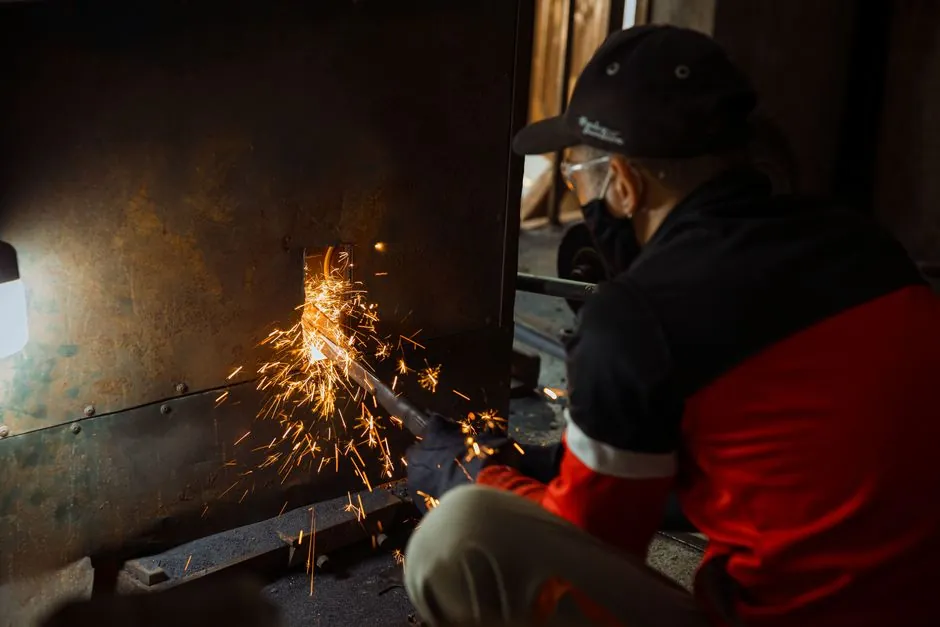
For plumbing-installation cutting, the oxy-fuel torch remains the default field tool because it needs no electricity, accepts mild-steel plate from 1/8 in. up to 12 in. with the right tip, and lands between $250 and $350 for a complete outfit [S1][S5].
Plumbing crews typically work in the 1/8–1 in. steel range for pipe saddles, hangers, and structural sleeves, which puts the job squarely inside the size 00 to size 3 cutting-tip band rather than heavy plate territory [S5].
Tip Sizing Bands for Plumbing Steel
Cutting tip orifice size must match plate thickness, and the OEM sizing table maps cleanly onto plumbing work: a 0 or 00 tip is sized for 1/8 in. to 3/8 in. stock, while a 1 to 3 tip handles 1/2 in. to 3 in. stock, with tips above size 4 reserved for heavy plate [S5].
For plumbing hangers, unistrut, and small bore-pipe saddles, the size 00–0 tip is the workhorse; once the wall plate or sleeve crosses 1/2 in., step to size 1–2, and only reach for size 3 when cutting 2 in. or 3 in. base plates [S5]. Selecting a tip one size under the plate thickness is the most common mistake, and it shows up as a stalled kerf and excess slag rather than a clean cut [S3][S5].
Fuel Gas Choice on a Plumbing Site
Acetylene produces a flame temperature between 5,600 °F and 5,800 °F, which shortens pre-heat time and is the hottest, most versatile fuel for general cutting, gouging, and heating [S1]. The trade-off is cost: acetylene is the most expensive fuel gas available and is not the most efficient for heating large areas [S1].
Propylene-family gases (often sold as "propylene" but frequently propane mixed with ethylene) burn hotter than propane alone, but pre-heat times are longer than acetylene on the same tip, and cutting-tip geometry is fuel-specific, so a tip optimised for acetylene will not give the same cut on propylene or propane [S1]. For plumbing-installation work where the cuts are short, frequent, and on thin steel, the acetylene kit pays for itself in cycle time; for a roofer or HVAC crew heating large areas, propylene is the more economic pick [S1].
Seat Type and Torch Brand Match
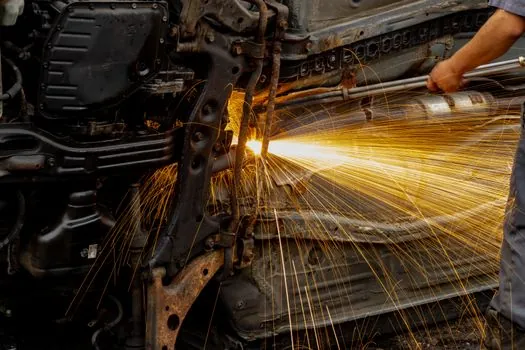
Seat type is determined by the torch manufacturer and model, and must match the replacement tip part number; if this step is skipped, the seat can be damaged or the joint can leak flammable gas [S1]. A common plumbing-shop failure mode is mixing a Harris tip into a Victor torch or vice versa: the threads and seat angles look similar but are not interchangeable, and the leak path may not show up until the regulator is pressurised.
For a plumbing installation outfit, lock the seat type to one brand family (Victor, Harris, ESAB, or Koike) and stock only that brand's tips; this also keeps the flashback-arrestor and check-valve threads on a known standard [S1][S2]. Refer to the oxy-fuel cutter reference for how seat geometry, bore diameter, and pre-heat orifice interact inside the tip.
Setup Sequence for Field Plumbing Work
Setup matters as much as tip choice: incorrect gas pressure or flame adjustment shows up as jagged edges, slag buildup, and uneven cuts, and increases fuel and oxygen consumption per foot of cut [S3]. The 10-step pre-cut checklist from Miller covers cylinder inspection, torch check, safety valves, ventilation, and a clear work area before the regulator is even cracked [S6].
On the regulator side, always crack the cylinder valve briefly before attaching the regulator to blow out dust, then stand the cylinders upright and chain them to a cart or wall, never lay acetylene tanks flat [S3][S4]. Install reverse-flow check valves and flashback arrestors at the torch and regulators before any pressure is set; these are the components that stop a flashback, which is a flame that travels backward into the torch, hoses, or regulators and is often accompanied by a high-pitched hissing or whistling sound [S3]. A working plumbing-site baseline is acetylene at 5–7 psi (cutting oxygen at 30–40 psi for thin plate), but always cross-check the exact pressure range in the manufacturer instructions for the tip size in use [S3].
Flame Adjustment and Cut-Quality Acceptance
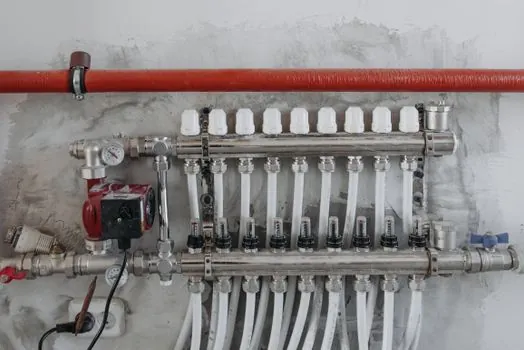
A neutral flame is the acceptance criterion for cutting: if the flame is too long or shows an orange tip, increase oxygen flow; if it is too short or shows a purple tip, decrease oxygen flow [S3]. A properly adjusted cutting flame leaves a clean kerf with minimal slag, while a carburising (acetylene-rich) flame leaves carbon deposits on the cut face that interfere with downstream welding or threading.
For plumbing-installation cuts that feed into a welding pass, the visual acceptance is a bright, near-metallic cut face with no visible carbon smear; if the face is dark and sooty, back off the acetylene and re-cut rather than trying to grind the contamination out later [S3]. For more on how tip bore, seat, and pre-heat orifice geometry feed the flame, see the cutting machine reference page.
When Oxy-Fuel Is the Wrong Tool on a Plumbing Site
Oxy-fuel cutting only works on ferrous metals that oxidise in the oxygen stream; aluminum and stainless do not oxidise properly, so a plasma cutter is the better pick on those materials [S4]. For plate 2 in. thick or less, oxy-fuel remains much less expensive than plasma or laser, but the kerf is wider, so for tight tolerance work or CNC production runs, plasma gives cleaner edges at higher speed [S4].
On plumbing jobs that mix ferrous pipework with copper, stainless, or PEX, the torch is still right for the steel hangers and sleeves, but the copper and stainless branches belong to a different process. Crews that try to cut cast iron, concrete, or masonry with an oxy-fuel torch are using the wrong tool entirely and should reach for a demolition saw or a riser cutting machine instead. For the steel-only subset of plumbing structural work, the spec map in Oxy-Fuel Cutting Torch Selection for Steel Construction extends the same seat-type, tip-size, and fuel-gas logic to heavier plate and longer kerfs.
Trackable signals for the next spec window: any revision to AWS/ANSI Z49.1 (current edition 2021, cited as the free safety reference by Koike [S3]) and any tightening of cylinder-chain or flashback-arrestor rules at the state or provincial level; both will reset the safety-valve count on every plumbing-site torch setup.