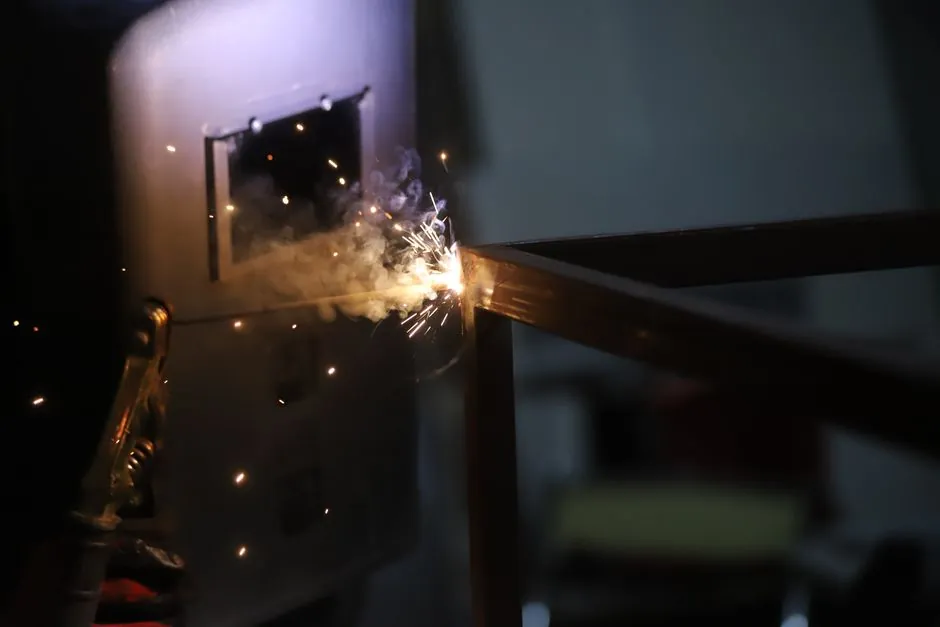
An oxy-fuel cutting torch uses a preheat flame around 5500 F plus a high-pressure oxygen jet to oxidize and sever carbon steel up to 12 in thick [S1], and that thermal-oxidation reaction is what limits its usable substrate to mild and low-alloy steel [S2].
Masonry, meaning concrete, brick, block, stone, and mortar, has no iron phase to oxidize, so the cutting oxygen has nothing to react with, and the preheat just spalls the cement matrix. Specifying a torch on a brick or poured-concrete wall is a process error, not a preference call.
Why the Process Chemistry Disqualifies the Torch on Masonry
Oxy-fuel cutting depends on the iron in steel igniting in the cutting oxygen stream and the resulting iron oxide being blown out of the kerf as molten slag [S2]. Concrete, brick, and stone are aggregate-and-cement systems with no continuous iron phase, so the exothermic reaction never sustains, and the cut simply stops [S1]. At best the operator chars the binder, at worst they drive a 5500 F flame into a moisture-saturated wall and flash-vapor the pore water.
Thermal shock on cured concrete also spalls the cement paste, and limestone aggregate calcines above about 1500 F, releasing CO2 and weakening the matrix. The result is a ragged, friable edge that fails any structural survey, and the tool itself runs hot and unstable trying to maintain a kerf that does not exist.
The Right Tool Family for Masonry Cutting and Demolition
For clean cuts on cured concrete, reinforced concrete, brick, and stone, the standard tool is a diamond blade, hand-held on a cut-off saw for small work or walk-behind for slabs and walls. Diamond blades cut by abrasion, not thermal reaction, so they handle the aggregate and rebar in a single pass. Where the geometry is rough, hydraulic concrete pulverizers, stone splitters, and tank cutters from the same demolition kit take over [S2].
In a typical reinforced-concrete deconstruction, the sequence is: crack the section with a concrete pulverizer or hydraulic splitter, expose the rebar, then bring a cutting torch in only to sever the exposed steel. The torch never touches the concrete itself; it works strictly on the steel the pulverizer has already uncovered [S2]. This separation of duties is the rule on plant strip-outs, tank demolition, and bridge rehab.
Where a Torch Earns Its Place Inside a Masonry Job
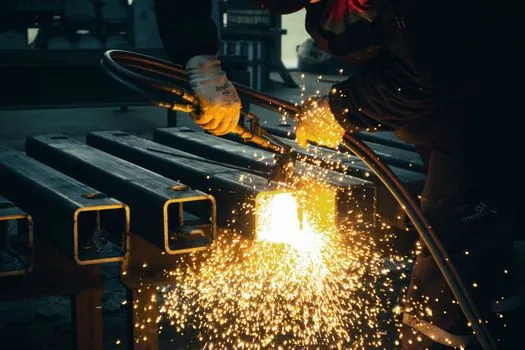
The torch earns its place on the rebar, embedded steel, anchor bolts, base plates, and rebar cages the masonry hides. Oxy-fuel equipment cuts mild steel cleanly from 3 mm (1/8 in) to 300 mm (12 in) in a single pass when the tip and pressure are matched to the thickness [S3]. A medium-duty tip with acetylene preheat is the most common configuration for exposed rebar in demolition work because acetylene reaches 5600 to 5800 F and shortens preheat time [S3].
For longer, steadier rebar cuts on a slab demolition, propylene and propane tips run cooler and are cheaper per cubic foot, at the cost of a slower preheat [S3]. Propane also tolerates rougher field handling because it is more stable in transport and storage than acetylene, which matters on a road or bridge job where cylinders get bounced around. For more on tip sizing and fuel-gas trade-offs, see the Oxy-Fuel Cutting Torch Specs for Demolition: Tip Size, Fuel Gas, and Reach Map reference, and for the underlying mechanics the Oxy-Fuel Cutting Torch Selection for Steel Construction: Spec Gates and Capacity Map covers the same physics on a construction site.
Four-Step Selection Logic When the Torch Is on Rebar
American Torch Tip's 4-step method applies to any oxy-fuel job and is the cleanest way to lock down the consumable once you have decided the torch is warranted: seat type, metal thickness, application, fuel gas [S3]. Seat type is a brand fit, and skipping it risks gas leaks and damaged torch heads. Thickness drives the center orifice size, which sets cutting oxygen flow and pressure. Application splits the catalog into cutting tips, gouging tips, and heating tips, and the materials of construction vary, including one-piece solid copper versus a two-piece brass-and-copper hybrid [S3].
Fuel gas changes the geometry of the preheat orifices around the central cutting oxygen jet, so a tip is a tip for a specific gas, not interchangeable. Acetylene tips have smaller, more numerous preheat holes because the flame is hotter and more localized; propane and propylene tips have larger preheat ports because the flame is cooler and needs more mass flow to bring the steel up to ignition temperature [S3].
Decision Table: Torch vs Diamond vs Hydraulic on Masonry

Three criteria separate the options cleanly: substrate reactivity, edge quality, and ignition source. A diamond blade scores well on substrate reactivity (it cuts anything mineral) and edge quality (clean, square kerf), and has no ignition source, so it is safe in hot-work-permit-restricted zones [S2]. A hydraulic pulverizer or splitter also has no ignition source and handles heavy sections where a saw is oversize [S2]. An oxy-fuel torch fails the substrate test on any mineral substrate, but wins decisively on exposed rebar and structural steel, where its 3 mm to 300 mm thickness range and a torch-and-cylinder kit that costs $250 to $350 to enter make it the most economical field tool [S1][S3].
The first sentence of any specification note on a masonry scope should be a substrate clarification, not a torch preference. For comparison with plasma on a steel-heavy site, the Plasma Cutter Sizing for Bridge Construction: 2026 Spec Map lays out where plasma replaces oxy-fuel on thinner, stainless, or non-ferrous work.
Safety and Permit Constraints on a Masonry Site
Hot-work permits, fire watch, and combustible-clearance rules treat an open-flame torch as a managed ignition source. On a concrete or brick wall with embedded conduit, old post-tension cables, or unknown voids, the permit reviewer will often reject the torch in favor of a cold-cutting method because the wall can hide flammables and the operator cannot see the back side of the kerf. Tank cutters and hydraulic shears exist specifically for these hot-work-restricted cases [S2].
Where a torch is allowed, acetylene cylinder handling adds another permit layer because acetylene is unstable above about 15 psig and must be regulated down, with the cylinder secured upright. Propane sidesteps some of that but slows preheat, so the fuel-gas choice is a permit-driven decision as much as a productivity one [S3].
Selection Criteria When a Torch Is on the Bill of Materials
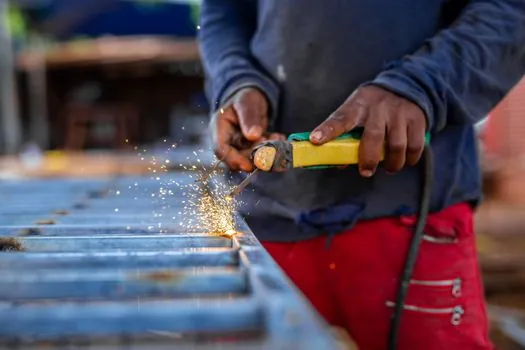
Lock the seat type to the torch brand on the equipment list. Most catalogs carry 71 or more torch SKUs across oxy-acetylene, oxy-propylene, and oxy-propane [S5]. Specify the tip by the matched thickness range the manufacturer publishes, not by an orifice number guessed in the field. Reserve acetylene for short, hot, precision rebar cuts in mild steel up to roughly 6 in, and switch to propane or propylene for longer runs, larger diameter rebar, and any case where cylinder logistics dominate the cost model [S3].
Confirm oxygen purity and dryness before sizing the regulator; wet or oil-contaminated oxygen destabilizes the cutting oxygen jet and roughs up the kerf [S2]. The complete oxy-fuel cutter reference documents the same preheat and oxygen-jet parameters for a wider process survey.
Trackable signals for the next planning cycle: concrete and masonry abrasive SKU movement at industrial distributors, which moves before new diamond-blade specifications show up on drawings, and hot-work permit denial rates on demo scopes, which usually spike first on hospital, refinery, and occupied-building work where torch access is most often restricted. These two indicators surface the shift from torch to diamond or hydraulic about a quarter before the spec sheets catch up.
Spec-level background on the components involved: masonry insulation, and cutting machine.