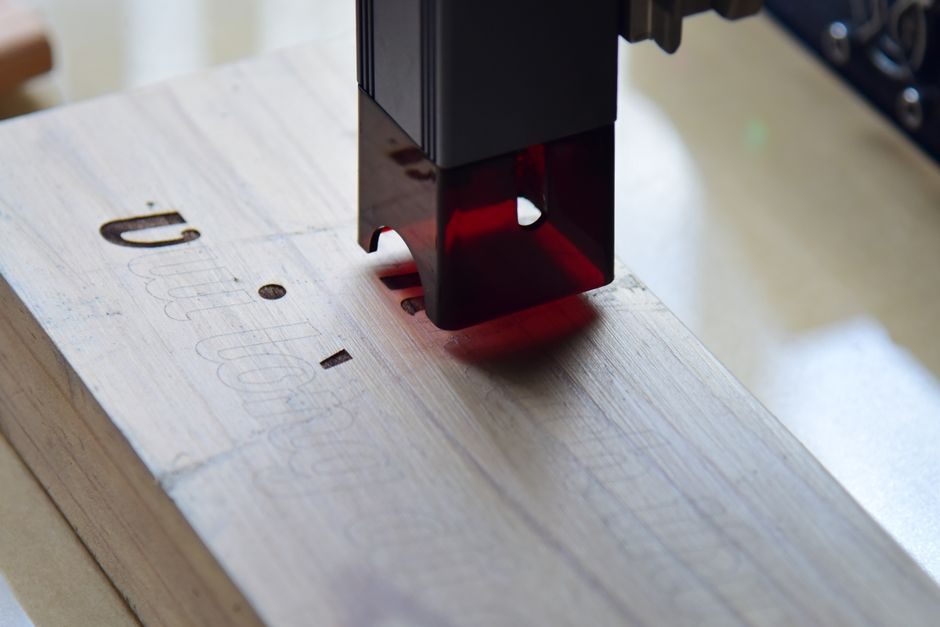
Handheld laser distance meter units on the 2026 export market cluster between US$0.70 and US$85 per piece at 1-piece MOQ, with a clear split between sub-US$25 DIY models (Tianjin Lion Tool 40 m laser tape, US$0.70–US$25.35) and US$30–US$85 industrial rangefinder-grade units from Chongqing Dontop Optics [S4][S5]. The driver is spec creep: a 20 m continuous-measurement consumer unit (Ryobi RBLDM20) sells for tool-brand retail while a 25 m fixed industrial sensor (TR-Electronic LE25) is sold for closed-loop machine integration, and a 50 m AEG LMG 50 with angle sensor targets the tradesman tier [S1][S2][S3].
Cost is driven by four levers, in this order: laser class and emitter type (Class II 620–690 nm vs long-range 905 nm), optics and receiver (photodiode vs APD array), onboard compute (Pythagoras, area/volume, Bluetooth/BLE), and housing/IP rating. Specifications matter because a 0.1 mm precision fixed sensor (LE25) sits in a completely different procurement category from a 3 mm-accurate DIY tape substitute [S2][S5].
2026 FOB Price Bands by Class
Three brackets dominate the wholesale market surveyed in May–June 2026 [S4][S5][S9]. Tier 1 — DIY/consumer tape-replacement: 40 m units listed at US$0.70–US$25.35 with LCD and rotation-angle display, 1-piece MOQ, ISO 9001:2015 factory origin [S5]. Tier 2 — prosumer/rangefinder: 20–60 m units from Chongqing Dontop and DOBIY at US$30–US$85, MOQ 50–1000 pieces, with golfing/hunting optical configurations [S4][S7]. Tier 3 — industrial/fixed sensor: TR-Electronic LE25 fixed-format laser distance sensor with 0–25 m range and 0.1 mm precision, sold for non-contact closed-loop control [S2].
Premium branded portable reference points sit well above the FOB brackets. The Fluke 417D, a 40 m (131 ft) IP54-rated, 1 m drop-tested unit with continuous measurement, is listed at A$251 in Australia as of March 2025 [S8]. This is the unit engineers compare consumer-grade imports against when justifying a brand-name procurement decision.
Spec vs Price: What the Levers Actually Cost
Range scaling is the single largest price driver. Going from 20 m to 50 m typically moves a handheld unit from the US$15–US$30 tier to the US$30–US$85 tier, as the 50 m AEG LMG 50 demonstrates with its 3-line graphical LCD, Pythagoras 3-type calculation, and corner-measurement pin [S1]. Switching from a portable hand-held form factor to a fixed industrial sensor changes the price architecture entirely: TR-Electronic positions its LE25 as an optical sensor for closed-loop control, not as a measuring tool, with 0.1 mm precision over 0–25 m [S2].
Precision and optics form a second cost axis. Sub-3 mm accuracy is the DIY default; 1 mm class is the prosumer baseline (Sinomeasure LDM-S2 at US$15–US$20, MOQ 1,000 pieces, supplied by Xi'an Lonn M&E) [S9]; 0.1 mm precision is reserved for fixed-mount optical sensors with industrial-bus interfaces [S2][S9]. A third axis is the housing/environmental package: IP54 with 1 m drop test, as on the Fluke 417D, adds cost versus an unrated DIY shell, and is a hard procurement gate for site survey and exterior trades work [S8].
Portable vs Fixed: Choosing the Right Format
Portable laser distance sensors are built for one-person point-and-shoot workflows with area, volume, height, width, and Pythagoras functions on a graphical LCD. The AEG LMG 50 (50 m, 3-line graphical LCD with auto white backlight) and Ryobi RBLDM20 (20 m, continuous measurement) bracket this category from the tradesman and DIY sides [S1][S3]. Fixed laser distance sensors are a different procurement class, designed for non-contact measurement over long distances at speeds compatible with closed-loop control, which is the explicit positioning of the TR-Electronic LE25 [S2].
Selection gate is straightforward. If the use case is layout, estimating, or as-built survey on a job site, portable wins on ergonomics, cost (typically 60–80% below an equivalent-range fixed unit), and battery operation. If the use case is in-line machine control, position feedback, or any application where the sensor becomes part of a control loop, fixed sensors with sub-millimetre precision and industrial interfaces are mandatory — and the price jumps an order of magnitude.
MOQ, Lead Time and Sourcing Risks in 2026
MOQ structures observed across May–June 2026 quotes are inconsistent and worth pricing carefully [S4][S5][S7][S9]. Tianjin Lion Tool and similar factory-direct listings accept 1-piece MOQ on the 40 m laser tape at US$0.70–US$25.35; CHINA GTL TOOLS requires 1,000 pieces on the LDM-S2 (US$10–US$18); Chongqing Dontop Optics quotes 1 piece on the golfing digital rangefinder at US$45–US$85; DOBIY Optoelectronics requires 50 pieces at the SKU level but advertises 20,000 pieces/month supply ability [S4][S5][S7][S9]. Mixing tiers within a single PO is the standard approach to balance unit price against inventory exposure.
Three sourcing risks are visible in the current listings. First, certification drift: CE status on import listings is often flagged as "contact issuer for current status" rather than confirmed [S4]. Second, MOQ inversion on cheap units: sub-US$10 factory-direct pricing on 40 m LCD units can come with shipping terms that erode the unit-cost advantage on small orders [S5]. Third, calibration stability on fixed industrial sensors is a separate spec, not a price lever, and should be confirmed against the actual measurement task rather than the headline 0.1 mm figure [S2].
Comparison Matrix: 2026 Laser Distance Meter Options at a Glance

Four reference units line up cleanly against the four decision criteria most procurement engineers weigh: range, precision, format, and indicative FOB or retail price. [S1]
• AEG LMG 50: 50 m range, 3-line graphical LCD with Pythagoras 3-type, portable, tradesman retail positioning [S1]. • TR-Electronic LE25: 0–25 m range, 0.1 mm precision, fixed industrial sensor for closed-loop control [S2]. • Ryobi RBLDM20: 20 m range, continuous measurement, portable DIY, brand retail [S3]. • Fluke 417D: 40 m (131 ft) range, IP54, 1 m drop tested, 1-button continuous, A$251 retail [S8]. On the FOB/import side: Tianjin Lion Tool 40 m LCD unit at US$0.70–US$25.35 (1-piece MOQ, ISO 9001:2015) [S5]; Chongqing Dontop 20–60 m golfing/hunting rangefinder at US$45–US$85 (1-piece MOQ) [S4]; Xi'an Lonn Sinomeasure LDM-S2 at US$15–US$20 (1,000-piece MOQ) [S9].
For a procurement check, the matrix reduces to: range tier (≤25 m / 40 m / 50 m / 60 m+), precision tier (3 mm / 1 mm / 0.1 mm), format (portable handheld / fixed industrial), and unit cost band (sub-US$25 / US$25–US$85 / US$200+ retail). The decision collapses once two of the four are fixed by the application.
Adjacent Cost Reference: Where Laser Distance Meters Sit in 2026 Tool Pricing
Laser distance meters in 2026 sit at the precision-measurement end of the hand-tool cost spectrum, well above cut-off machine consumables on a per-unit basis but below capital equipment such as a crawler crane by several orders of magnitude. They are also a different cost class from consumables covered in guides such as the pneumatic nail gun 2026 price and cost guide, where framing vs finishing drives the spec split. For buyers building out a 2026 site-survey or fabrication-tool kit, the laser distance meter is the spec-driven purchase — not the volume-driven one. [S2]
Verifiable Next Signals to Track

Three signals are worth tracking in the second half of 2026. First, FOB price floors on 40 m LCD units — the Tianjin Lion Tool US$0.70–US$25.35 quote sets a marker that subsequent 2026-07 sourcing pages will either confirm or compress [S5]. Second, MOQ drift on prosumer 1,000-piece SKUs such as the LDM-S2 (US$10–US$18), which is the bracket most exposed to factory-direct competition [S9]. Third, certification status updates on CE-listed import units where the listing currently reads "contact issuer for current status" [S4]. A buyer pulling the same three searches again in 2026-Q3 will have a clean read on whether the May–June 2026 bands held or moved.
For component-level specifications, see linear guide.