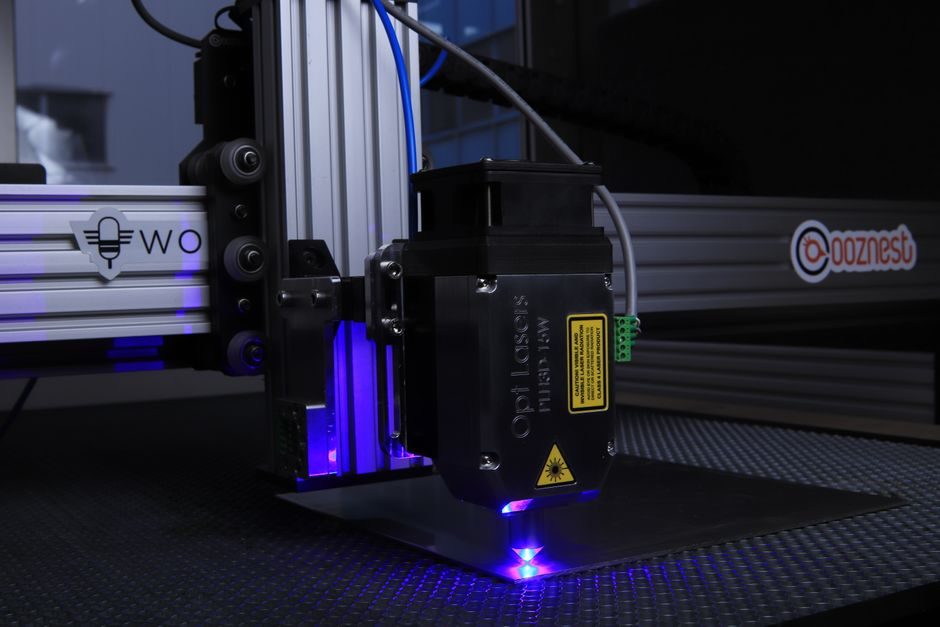
A 0.1–30 mm working range, 0–10 V plus ProfiNet dual output, and real-time focus adjustment define the precision-cut sensor envelope exposed on the DirectIndustry CutBox Pro listing [S1].
Short-range triangulation units (AR100/AR200/AR500/AR550/AR700) and long-range time-of-flight units (AR1000/AS1100/AS2100/AR2700) sit on the same vendor lineup at Acuity Laser, illustrating the two dominant architectures a buyer must choose between [S3].
Three Sensing Architectures and Their Operating Bands
Laser triangulation sensors resolve sub-millimetre stand-off distances — typically 10 mm to 200 mm — by intersecting a projected laser spot with a position-sensitive detector, making them the default for displacement and thickness on diffuse targets [S3].
Time-of-flight sensors, by contrast, measure the round-trip of a pulsed or phase-modulated beam and dominate the 0.5 m to 300 m window where triangulation geometry breaks down; the SKD-1000D variant from Xi'an Zhizun, for example, is specified for monitoring the gap between mining cars in Brazilian operations [S2]. A concise primer on the time-of-flight class versus triangulation is kept on the reference page.
Confocal chromatic sensors form a third branch, engineered for mirrored, transparent, or curved surfaces where triangulation suffers from specular reflection; the Acuity product tree lists this family alongside the AR/AS displacement lines [S3]. Selection logic for the displacement family as a whole is covered in the laser displacement sensor entry.
Four Spec Gates That Decide the Shortlist
Measuring range and stand-off: a buyer must lock both the start and end of the range. The CutBox Pro quotes 0.1–30 mm (0–1 in) — a tight band that fits head-distance control in 2D/3D laser cutting but is unsuited to bulk-bin level work [S1]. Long-distance AS1100-class units extend that ceiling to tens of metres [S3].
Target surface and material: matte diffuse surfaces are friendly to all three architectures; polished metals tilt toward confocal; transparent films and liquids force chromatic or specialised optics. A short-range laser distance meter on a 2D/3D cutting head, for instance, must hold a stable reading on the molten kerf edge where reflectivity varies each pass [S1].
Output and fieldbus: the CutBox Pro exposes 2× analog inputs (0–10 V), 2× analog outputs (0–10 V and -10 to +10 V), and an EtherCAT or ProfiNet fieldbus — i.e. an industrial-Ethernet choice, not a 4–20 mA loop [S1]. Discrete IO, analog voltage/current, RS-232/422, IO-Link, and industrial Ethernet remain the five output families seen across the SKD and AR/AS lineups [S2][S3].
Update rate and laser class: high-speed lines such as the AR550 and AR2700 are explicitly marketed for high-speed measurement, with kHz-class update rates typical of triangulation parts. Class 2 (≤1 mW visible) is the default for most triangulation and ToF sensors; Class 3R or 3B appears in long-range and confocal specialised devices.
Selection Matrix: Triangulation vs ToF vs Confocal
A Pugh decision matrix is the cleanest tool here — criteria down the left, alternatives across the top, scored -1/+0/+1/+2 against a baseline [S4]. The four criteria that move most shortlists are: range, target surface, accuracy, and unit cost.
Triangulation scores best on sub-millimetre accuracy and unit cost at short range; ToF wins on range and outdoor robustness; confocal wins on shiny/curved targets. Update rate favours triangulation, while interface flexibility (analog, fieldbus, IO-Link) is broadly comparable across the three once industrial Ethernet is included.
Where the matrix rules out options: a buyer needing >5 m stand-off on a hot, dusty conveyor should drop triangulation immediately; conversely, a buyer measuring 0.05 mm vibration on a watch gear should drop ToF — the time-base jitter alone is larger than the signal.
Integration Constraints Buyers Underestimate
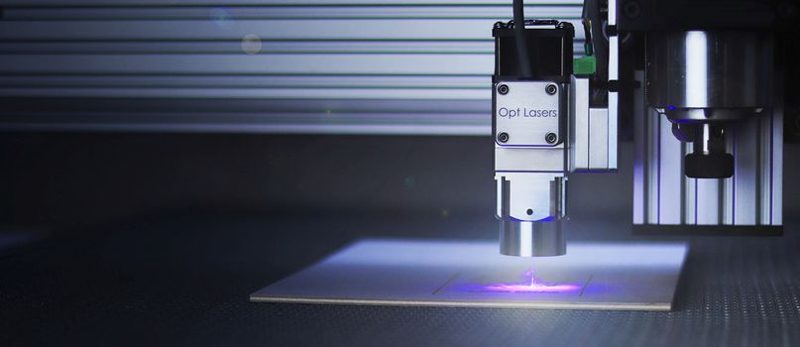
Mounting rigidity is the silent killer of triangulation accuracy: even 0.1 mm bracket flex translates directly into stand-off error because the geometry amplifies it. The CutBox Pro's real-time focus feature, BeamTec, was introduced precisely to compensate for thermal drift in the cutting head — confirming that mechanical stability remains a primary integration concern [S1].
Ambient light and cross-talk: outdoor ToF and triangulation sensors can saturate under direct sunlight unless fitted with optical bandpass filters; cross-talk between adjacent sensors forces frequency, time-multiplexed, or coded-pulse schemes. The SKD-200H sea-port application note from Xi'an Zhizun is a textbook high-ambient case [S2].
Laser safety classification dictates enclosure, interlock, and PPE. Industrial triangulation and ToF sensors almost always ship as Class 2 (visible, ≤1 mW) and are treated as eyesafe for brief accidental exposure; Class 3B units demand keyed interlocks and OD-rated eyewear during alignment.
Vendor Landscape and Sourcing Channels
Acuity Laser's catalog (last updated 13 July 2026) is the cleanest short/long taxonomy: AR-prefixed short-range triangulation (AR100 to AR700), AS-prefixed long-range ToF (AS1100, AS2100), and AR2700 high-speed long-range [S3].
PRECITEC OPTRONIK's CutBox Pro is a domain-specific specialisation — the 0.1–30 mm range plus ProfiNet/EtherCAT targets laser cutting-head OEMs, not general factory automation, and the BeamTec focus servo is the differentiating value [S1].
Xi'an Zhizun International Trade (top1sensor.com) splits the offering into the SKD series and a 2D Lidar series, with application notes covering sawmill, sea-port, mining-car gap, and grain-silo duties — i.e. a price-positioned industrial range aimed at integrators who want analog/RS-232 outputs and custom firmware [S2]. The wider laser level and laser profiler reference pages round out adjacent procurement tracks.
Application-to-Sensor Mapping
Short-range displacement and vibration (≤200 mm, sub-µm): AR100/AR200/AR700-class triangulation or confocal — the latter preferred on polished metal. A useful cross-reference is the Ultrasonic Sensor Selection Guide, which contrasts acoustic vs optical in the same short-range niche. [S3]
Mid-range distance and position (0.5–10 m) on diffuse targets: ToF sensors like the AS1100 or SKD-200H. A 2D Lidar profile scanner, covered in the laser marker adjacent reference, is the natural escalation when an area scan is needed rather than a single point.
Cutting-head stand-off (0.1–30 mm) with industrial Ethernet: Precitec's CutBox Pro is the canonical fit, and its ProfiNet/EtherCAT dual interface defines the modern integration contract [S1].
Long-range distance (10–300 m) on bulk solids, silos, and stacks: long-range ToF such as AR2700-class devices, often paired with a reflector or natural-surface return. For vendor cross-checks, the Top Industrial Laser Companies 2026 spec map shortlists the principal suppliers active in 2026.
Shortlist Logic: A Six-Step Filter
Step 1 — lock the range band (mm vs m). Step 2 — fix the target surface (diffuse, specular, transparent). Step 3 — choose the output family (analog 0–10 V/4–20 mA, RS-232, IO-Link, industrial Ethernet). Step 4 — confirm update rate against the process bandwidth. Step 5 — verify laser safety class and IP rating against the installation. Step 6 — apply a Pugh-style matrix against two or three shortlisted parts, weighting accuracy and total cost of ownership highest [S4].
Signals to watch in the next sourcing cycle: vendor migration from RS-232 toward IO-Link on mid-range SKD-class devices; ProfiNet/EtherCAT proliferation on cutting-head class devices, where the CutBox Pro already ships dual-stack [S1]; and a steady upward shift in triangulation update rates, with the AR550 and AR2700 lines already branded high-speed at the Acuity catalog dated 2026-07-13 [S3].