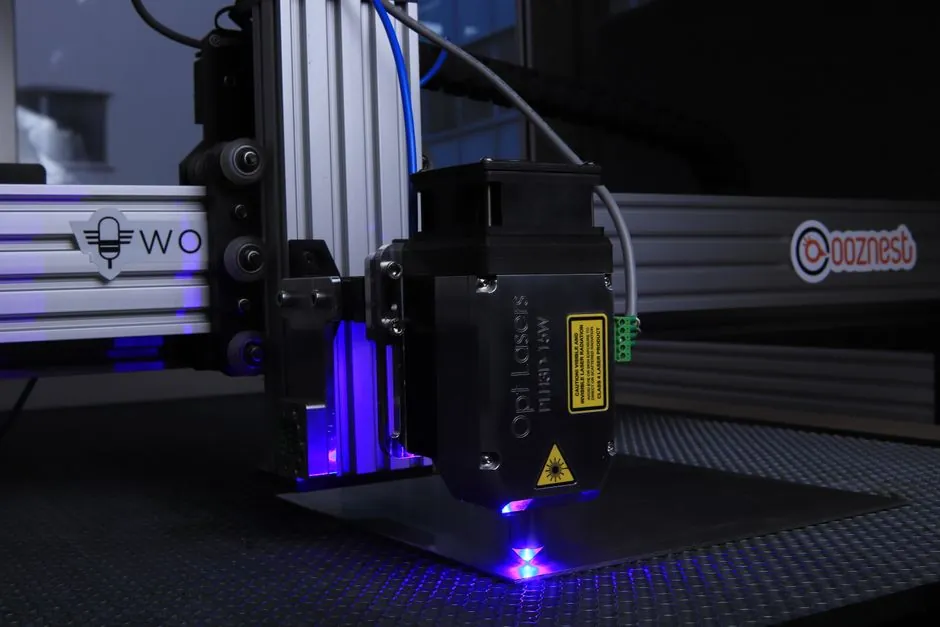
A laser profile scanner is a non-contact sensor that emits a laser line or beam and converts the reflected spot into distance data, with current 2026 supplier listings covering 225 products across 88 manufacturers [S3].
Selection pivots on stand-off distance, profile rate, and output type: the Gridbots GB-zSCAN, for example, delivers 1000 profiles per second in binary or text format and reads black marks on black surfaces, which is a real problem for diffuse-reflectance CCD scanners [S1].
Duty classes and what each one actually does
Industrial laser scanners break into four functional groups based on the 2026 DirectIndustry taxonomy: 3D units (154 products), 2D units (52), 1D units (8), and multi-axis scanners (5), with applications split across measurement (150), profile (36), quality control (24), robotic guidance (18), and CMM mounting (17) [S3].
2D triangulation is the workhorse for in-line profile work: the EYEME 3iScan2 specifies length 120–650 mm, width 80–120 mm, and measuring distance 50–1200 mm, which covers most rail, edge, and weld-bead checks [S3]. 2D LiDAR is used for longer-range scanning where triangulation geometry breaks down, such as bucket-wheel and stockpile mapping, where the RETTAR 3DPro2502 emits a 2D laser line and pairs it with the movement trajectory of the carrier to build a 3D point cloud [S2]. 3D time-of-flight units, including models like the Stonex X70GO, cover measurement distances up to 250000 mm and target large-volume as-built capture with on-device mapping and an integrated GOapp preview [S3]. 1D units, such as the Metrologic MS 7600 Series, are barcode-only and are not interchangeable with profile sensors [S5].
Three selection criteria that decide the model
Stand-off distance, profile rate, and light source colour are the three criteria that most often force a different SKU. A blue-laser source, like the displayPROFILE-Probe kit prokaryotic11, is specified where dark, red-hot, or transparent surfaces suppress red-diode contrast [S4].
Stand-off distance drives geometry: triangulation sensors need a clear angle between emitter and detector, so closer stand-offs (30–120 mm in the ZLDS202AVIKScan, 50–1200 mm in the 3iScan2) give finer lateral resolution while longer stand-offs trade that resolution for reach [S3]. Profile rate decides whether the scanner can resolve a moving target without aliasing: the GB-zSCAN at 1000 profiles per second is enough for conveyor speeds of a few metres per second, while sub-millimetre tire or rail inspection typically demands tens of kHz which is outside the listed 2026 supplier data and should be verified per quote. Enclosure and integration details matter on the plant floor: the ZLDS202AVIKScan housing uses anodised aluminium with a top touch panel and dual laser windows, an important clue for washdown or panel-mount retrofits [S3].
Comparison of the four main options against decision criteria
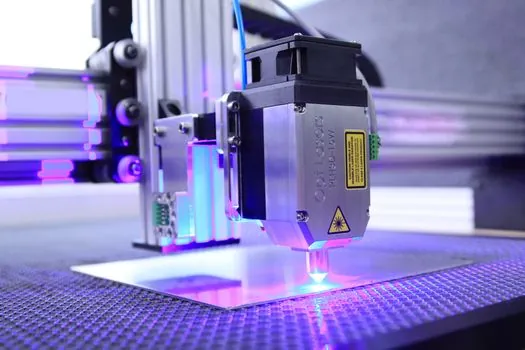
Buyers in 2026 typically choose between 2D triangulation, 2D LiDAR, 3D time-of-flight, and 1D barcode, and the right pick depends on four criteria: stand-off, profile rate, surface compatibility, and output. [S3]
2D triangulation wins on stand-off flexibility (50–1200 mm in the 3iScan2) and sub-millimetre resolution on matte surfaces, and pairs well with a laser profiler workflow on conveyors and edge checks [S3]. 2D LiDAR wins on range and dust tolerance, and is the standard sensor for bucket-wheel and stockpile volume work, where the carrier motion supplies the third axis [S2]. 3D time-of-flight wins on per-frame coverage (0–250000 mm range on the Surphaser), at the cost of lower point density and higher unit price, which is why it is specified for as-built and reverse-engineering jobs rather than in-line QA [S3]. 1D barcode units such as the MS 7600 Series are only valid for identification, not profile measurement, and buyers who try to use them for dimensioning will fail [S5].
Who should and should not pick the 2D triangulation default
2D triangulation is the default for any in-line profile or dimensioning job, but it is the wrong tool on mirror-finish metals, transparent films, and moving targets that need more than 1 kHz of profile rate. [S3]
Specifiers who should not default to triangulation are those measuring highly reflective stainless, clear PET, or red-hot surfaces above roughly 600 °C, all of which either blind the detector or saturate the receiver. For those surfaces, a blue-laser source (450 nm class) is the documented workaround, as in the displayPROFILE-Probe kit, because shorter wavelengths reduce speckle and improve contrast on dark or hot substrates [S4]. Buyers who need a 3D point cloud from a static setup should look at 3D time-of-flight first: a single-survey 0–250000 mm range and on-board mapping on the Surphaser eliminate the need for an external traverse, which is the typical reason 2D LiDAR gets rejected for indoor metrology [S3]. For applications that only need to read a code, a laser marker-adjacent 1D barcode reader such as the MS 7600 Series is the lower-cost fit [S5].
Standards, sourcing, and integration anchors
No single IEC or ISO standard governs laser profile scanners as a product class; instead, buyers inherit laser-safety (the IEC 60825 family for laser product classification) and application-specific standards such as ISO 10360 for CMM-grade acceptance tests. [S1]
For procurement language, 2026 supplier data shows lead signals worth tracking: in-line conveyor QA, robotic seam tracking, and the regulatory backdrop for plant equipment procurement, where items like TSCA compliance dates for PCE and CTC shift solvent-cleaning work that is often adjacent to laser-profiler stations. For sizing and cost calibration against a 2026 reference point, a strain gauge price breakdown gives a useful comparable sensor-economics read, because both share the same analog front-end and calibration overhead. Adjacent metrology kit such as a linear guide for the traverse axis, or a crossed roller guide for a CMM mount, should be specified in the same RFQ package so the stand-off, weight, and vibration behaviour of the scanner are validated against the actual mechanics [S3].
Track three signals over the next 6 months: 2D triangulation suppliers adding blue-laser options to address hot-metal and dark-surface applications, 3D time-of-flight vendors quoting lower point prices as SPAD arrays mature, and integrator RFQs that bundle a profile scanner with a linear slide so the mechanical envelope is locked at quote stage instead of in commissioning.