
The 2026 VFD market sits at USD 24.7B in 2025 and is projected to reach USD 32.0B by 2030, with AC drives taking the largest share of new shipments and pumps, fans and compressors together representing the dominant end-use load profile [S4].
Buyers evaluating VFDs in mid-2026 face a supplier base spanning Honeywell, CAREL, Hedy, LAEG, AnyHz and global automation majors; matching the drive class (AC drive, DC drive, servo drive) to load is the first gate that decides bill-of-material cost [S1][S3][S4][S5][S6].
What a VFD actually is, and what classes are on the table
A Variable Frequency Drive (VFD, also called inverter or variable-speed drive) modulates both frequency and voltage amplitude applied to an AC induction motor, replacing mechanical throttling, hydraulic coupling or DC-motor speed control with electronic speed/torque regulation [S3]. For a deeper reference on the underlying topology, see the variable-speed drive entry.
Three product classes dominate the 2026 buy list: AC drives (most common, induction-motor driven pumps, fans, compressors), DC drives (legacy hoist/extruder retrofits), and servo drives (high-dynamic positioning). The MarketsandMarkets forecast breaks the market exactly along these three types and projects AC drives to retain the dominant share through 2030 [S4]. For motion-control and positioning applications, buyers should also reference the servo-drive and VFD selection criteria 2026 companion pieces, which line up axis count, bus and feedback requirements against drive class.
Six spec gates that decide the build
Gate 1 — power rating: drives are segmented into micro (sub-5 kW), low (5–40 kW), medium (40–200 kW) and high (above 200 kW); mis-sizing the power band is the most common capex overrun, because medium-voltage stacks step the BOM up sharply [S4].
Gate 2 — voltage class: 380–480 V low-voltage units dominate HVAC and water/wastewater; 3.3 kV, 6 kV and 10 kV classes address mining, cement and large pumps, with isolation transformer cost added on the medium-voltage side [S3][S4].
Gate 3 — load profile: constant-torque (conveyors, extruders, positive-displacement pumps) needs 150% overload for 60 s; variable-torque (centrifugal fans, centrifugal pumps) needs only 120% for 60 s, which lets the buyer down-rate the drive [S3].
Gate 4 — enclosure and environment: IP20 for panels, IP54/NEMA 12 for dusty plants, IP66 for washdown; field cabinet ambient derating above 40 °C is a hard rule across Chinese OEM datasheets reviewed in 2026 [S5][S6].
Gate 5 — harmonics and EMC: 6-pulse rectifiers draw 30–40% THDi; adding a passive or active harmonic filter (or specifying a low-harmonic / AFE rectifier) is the lever that lets the drive comply with IEEE 519 limits at the PCC, although specific THDi target values must be confirmed against the project specification, not assumed.
Gate 6 — feedback and control: V/f, sensorless vector, closed-loop vector and direct torque control define the regulation bandwidth, from 1–5 Hz minimum speed (V/f) down to 0.1 Hz full torque (closed-loop vector with encoder) [S3][S5].
Vendor landscape: what 2026 catalogues actually show
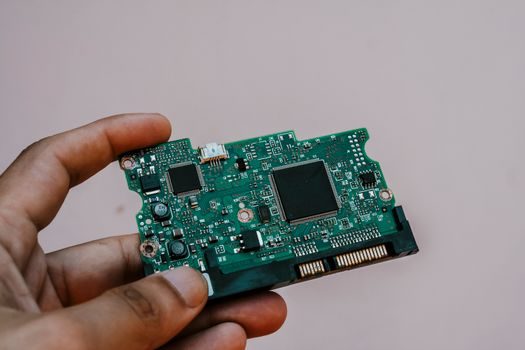
Honeywell's Building Management VFD line emphasises field-device integration with the Honeywell Forge API layer for secure BMS/IoT data exchange, targeting HVAC and chiller applications in commercial buildings [S1].
CAREL positions its VFD as a thermodynamic-circuit flow modulator, explicitly targeting fans, pumps and compressors in refrigeration and air-conditioning, with speed modulation as the energy-saving mechanism [S3].
AnyHz (FST-500, FST-610L, FST-650L) and Hedy (HD300, HD700, HD710, HD800, HD900, HS100) represent the Chinese OEM segment, with dual-CPU general-purpose series, dedicated solar-pump inverters, and closed-loop / high-performance encoder-feedback SKUs covering roughly the 0.4 kW to several-hundred-kW range based on 2026 catalogue listings [S2][S5].
LAEG's AD10 mini frequency inverter ships with a 36-month full-unit replacement warranty, an unusually long consumer-grade term for industrial drives, and covers machine-tool, plastics, lifting, construction and textile applications [S6]. For controller-side compatibility, the motion controller cost guide is a useful cross-reference for axis-count and bus decisions that sit upstream of the drive.
Use-case fit: pumps, fans, compressors, conveyors
Variable-torque centrifugal pumps and fans benefit from VFD speed control, which allows flow-rate to adapt to instant load requirements and lower energy consumption, although project-specific savings must be modelled from the actual load curve rather than assumed from generic rules [S3].
Constant-torque conveyors and positive-displacement pumps require 150% overload capacity, encoder feedback for low-speed hold, and regenerative braking when downhill or decelerating; for these loads, closed-loop vector or regenerative DC-bus topologies are the only correct choice [S3][S4].
Compressors sit between the two — screw compressors behave near constant-torque, centrifugal compressors near variable-torque — and the wrong choice shows up as drive tripping on acceleration or wasted energy on partial load [S4].
What a VFD is NOT for, and common failure modes
VFDs are not the right tool for ultra-low-speed, high-torque positioning, which is the servo-drive domain; trying to substitute a VFD into a servo axis gives poor repeatability and high standstill losses. [S1]
The most common failure modes documented across 2026 OEM literature are: (1) input-side harmonic overheating of transformers and cables, (2) output dv/dt damaging motor winding insulation on long cable runs, (3) bearing fluting from common-mode voltage on ungrounded systems, and (4) condensation damage in idle drives in humid environments. Each of these has a defined mitigation — line reactor, sinus filter, insulated/shaft-grounding bearings, and cabinet heaters — and the BOM impact of those mitigations can equal the drive cost itself on small frames [S2][S5][S6].
Buyers in regions with weak mains or high single-phase-to-three-phase conversion requirements (typical in remote agricultural solar-pump sites) should evaluate dedicated solar-pump inverters with MPPT stages, like the Hedy HD300, instead of retrofitting a general-purpose industrial VFD [S5].
Standards, certifications and sourcing signals to watch in 2026
CE marking, UL listing, and for hazardous-area deployments ATEX/IECEx certification define the legal floor for cross-region sales; marine and offshore applications add classification-society type approval on top [S1][S2][S3][S5][S6].
Sourcing signals worth tracking: lead times on IGBT modules (still volatile into 2026 per multiple OEM notes), regional-content requirements on utility-scale renewable projects, and the gradual shift of HVAC VFDs to onboard BACnet/Modbus/Ethernet-IP gateways that feed directly into BMS dashboards, exemplified by Honeywell's Forge-API-integrated field-device line [S1][S3].
One trackable 2026 signal: CAREL's continued focus on thermodynamic-circuit flow modulation, where inverter-driven speed control replaces mechanical inlet-guide-vane throttling on chiller and refrigeration compressors, an energy-saving pathway that overlaps with the broader VFD retrofit cycle [S3]. Another is the warranty aggression in the entry-level segment, with LAEG's 36-month full-unit replacement on the AD10 mini inverter setting a new floor for buyer expectations at the low-power end [S6].
For component-level specifications, see line frequency furnace.