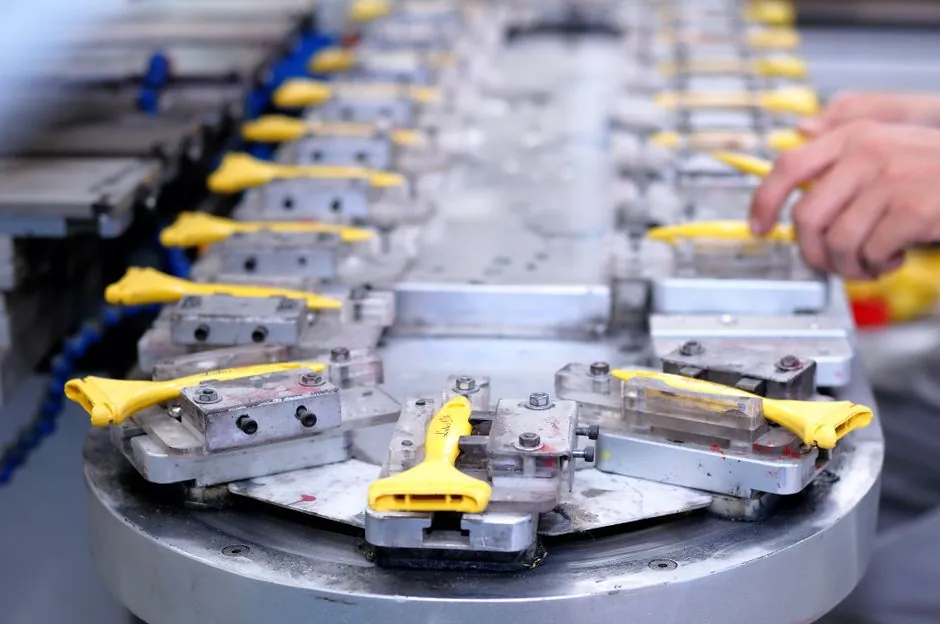
Post-processing on a production-grade additive manufacturing line consumes 30-70% of total part cost and an even larger share of lead time, which is why a printer running unattended is meaningless unless support removal, surface finishing and inspection are also automated [S3].
The 2026 RAPID + TCT show in Boston framed the question bluntly: build times are falling so fast that operators now need to be at the printer every 10 to 15 minutes in high-throughput cells, so without downstream automation the human-attention loop, not the laser, becomes the throughput ceiling [S5].
What "lights-out AM cell" actually means in 2026
A lights-out additive manufacturing cell is a fenced work envelope where the additive manufacturing material feed, the build, the part removal, the support removal, the surface finish, the inspection and the dispatch to the next operation all execute without a human on station, with remote monitoring and predictive maintenance handling exceptions [S2].
Lights-out manufacturing in general is documented in automotive, aerospace, electronics and pharmaceutical plants, where the goal is removing humans from dull, dirty and dangerous tasks while improving consistency over shift work [S2]. The additive variant adds a specific constraint: every printed part needs a sequence of finishing steps that vary by geometry, alloy or polymer, so a true dark cell has to be CAD-driven, not recipe-driven [S3][S4].
Where the throughput gap actually sits
A metal laser powder bed fusion (LPBF) part typically leaves the build plate with support structures welded to it, residual powder in internal channels, surface roughness in the 6-15 micrometre Ra range, and locked-in residual stress, and the downstream queue of support removal, heat treatment, surface finishing, dimensional inspection and interface machining is where the time disappears [S3].
At RAPID + TCT 2026, EOS launched the M4 ONYX six-laser metal LPBF system, claiming up to 50% higher throughput, up to 97% uptime, and roughly 30% per-part cost reduction versus predecessors, while 3D Systems' SLA 825 Dual hit 30% faster print speeds with a dual-laser configuration targeted at aerospace and investment casting [S5]. HP's polymer Multi Jet Fusion 1200 system dropped industrial polymer production under a $60,000 entry price, which broadens who can afford a lights-out polymer cell [S5].
The 2026 U.S. Department of Defense additive manufacturing allocation of $3.3 billion reinforces that serial AM, including drone production, is now a budgeted industrial line, not a prototyping lab [S5].
Where automation pays back first
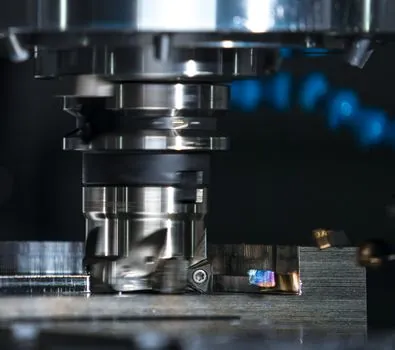
Not every post-processing step has the same automation payback, and the highest-return targets are repetitive, labor-intensive, quality-sensitive or hazardous operations [S3].
Support removal: metal supports come off with CNC machining, wire EDM for delicate internal features, or force-controlled robotic grinding cells, while polymer parts on soluble supports drop into heated agitation tanks with cycle control, which is the easier win [S3]. Surface finishing: tumble and vibratory deburring cover external surfaces of small to medium parts, automated blasting cabinets run programmable recipes for repeatability across shifts, electrochemical polishing and chemical etching handle internal channels and medical implants, and CNC machining of critical interfaces uses custom or adaptive workholding because AM parts rarely share consistent datum features [S3]. Powder removal and cleaning: residual powder in internal channels is a safety and qualification issue, not just a cleanliness issue, so it sits at the top of any lights-out checklist [S3].
How vendors are stitching the cell together
PostProcess Technologies markets itself as the first company to pioneer fully automated post-processing solutions specifically for AM, with product lines covering FDM support removal, large-format resin cleaning, PolyJet support removal, wax support removal, and a RADOR surface finish line, mapped across automotive, aerospace, consumer goods, dental, medical and military end markets [S4].
NASA Ames Research Center patented a method that embeds instructions into the Fused Filament Fabrication toolpath so the deposition head itself fabricates a linear spring on the build platform, then bends, cocks and releases that spring to physically strike the finished object off the platform, eliminating the human in the loop for clearing the build volume, and the same actuator can be used for in-line quality, calibration and counterfeit checks [S1].
EOS publicly tied its M 400-4 and Dual Setup automation story to uptime and cost-per-part metrics, framing automation as the multiplier on existing capital rather than a new line item [S7]. Aerospace Manufacturing & Design noted in 2024 that automated post-processing solutions cut manual labor costs most clearly in higher-volume production runs, where the amortised cell cost beats an operator's hours [S8].
Comparison: manual post-processing vs lights-out AM cell
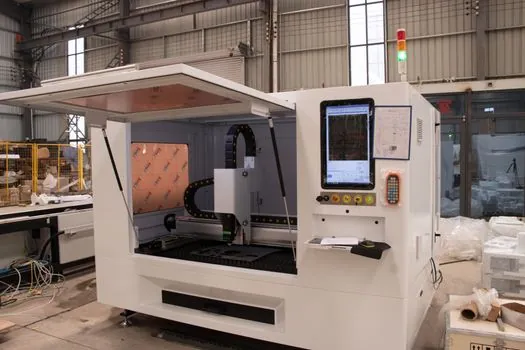
On three decision criteria the gap is now wide enough to be a project gate rather than a project preference.
Throughput per operator: manual post-processing scales with headcount, so a printer that finishes a build every 10-15 minutes forces a second or third operator onto the floor [S5]. A lights-out cell scales with cell count, not headcount, and the post-print sequence is sequenced by conveyor, robot or AGV handoff. The AGV robot class is the conventional answer for moving totes of printed parts between printer, support-removal station, finishing cell and inspection, especially in plants that already run Industry 4.0 stock movement.
Process consistency: hand sanding and bead blasting vary operator to operator, which feeds scrap and rework, while programmable blasting recipes, electrochemical polishing baths with controlled chemistry, and force-controlled robotic grinding all hold a tighter Ra window across shifts [S3]. For fatigue-critical or sealing interfaces, that variance alone is often the justification for capex.
Hazard profile: residual metal powder, polymer dust, and chemical baths are real exposure issues that lights-out cells handle with contained enclosures, local exhaust and interlocked access, and Kristin Mulherin, Director of Additive Manufacturing Technology at Hubbell, summarised the operator view from a RAPID + TCT 2026 panel with: "Automation (and good software) is everything." [S5].
Limits, failure modes, and where lights-out still does not work
AM cells are not all equally automatable, and the decision tree is sharper than the marketing implies. Low-volume, high-mix prototyping where geometry changes weekly is still cheaper on manual post-processing, because programming a robotic grinding cell or a CNC support-removal toolpath takes more engineering hours than the part is worth [S3].
Support geometry variation is the core programming challenge: each new part needs either CAD-driven offline programming or adaptive sensing (force/torque feedback, vision) to follow irregular surfaces without gouging parent material, and small AM shops typically do not run that software stack [S3]. Fixturing is the second constraint, since AM parts rarely have consistent datum features, so adaptive workholding is the difference between an automation cell that earns its keep and one that sits idle between jobs [S3].
Residual stress and heat treatment sit outside the printer envelope but inside the lead-time clock, and skipping or poorly sequencing that step shows up as distortion in finishing, not on the printer, which is why a lights-out cell is only as strong as its heat-treatment handoff [S3].
Standards, signals, and what to track next
No single international standard currently certifies a "lights-out AM cell" as a unit; instead, cell builders layer machine safety standards for the printer and robot, plus the AM process standard for the build recipe, and qualify the cell against the end-market part standard, for example aerospace or medical device specifications [S1][S4].
Trackable signals: NASA Ames' TOP2-301 patent status and any FFF platform OEM licensing it, since the in-situ spring actuator removes a fixtured robot from the cell and would compress cell footprint and cost [S1]. PostProcess Technologies' 2026 Post-Processing Survey: Trends Report, which is the most-cited industry dataset on finishing throughput and is due in the 2026 release cycle [S4]. The next RAPID + TCT 2027 announcements on integrated cell partnerships, which are the leading indicator for whether printer OEMs and post-processing vendors are co-selling rather than co-existing [S5]. The industrial valve and pressure sensor supply chains, which are downstream signals: if those component lead times stay tight in 2026, the bottleneck for scaling lights-out AM cells sits in the cell integration itself, not the bought-in hardware.
Background reading: Anaerobic Threadlocker vs Lock Washer: A 2026 Spec-First Decision.