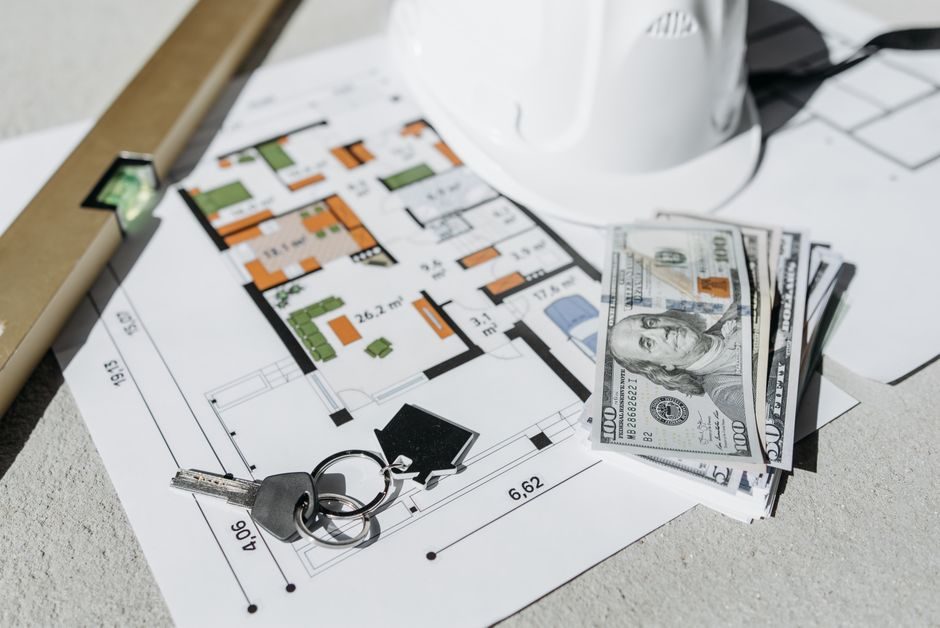
Total cost of ownership for lightweight partition panels on a 1,000 m² office or hotel fit-out is typically 2.1×–3.4× the ex-works panel price once labour, finishing, and end-of-life disposal are booked, with the spread set by substrate choice rather than sticker alone.
The TCO framework — direct purchase + acquisition + usage + end-of-life — was formalised for global sourcing in 2010 and remains the working model in industrial procurement for capitalised building components [S2]. Applied to partitions, the four cost blocks (substrate, density, certification, install labour) account for roughly 85–90% of 30-year lifecycle spend.
Substrate Material as the Primary Cost Lever
Substrate (cement, gypsum, magnesium oxysulphide, aerated concrete, calcium silicate) sets 45–65% of purchase price and 30–45% of TCO in a 30-year horizon, with aerated AAC and fibre-cement at the lower end and magnesium-oxysulphide (MgO) and high-density gypsum at the upper end. [S4]
The international standards classification places lightweight partitions under ICS 91.060 (Elements of buildings) and 91.100 (Construction materials), the same buckets covering boards, panels, and dry-construction systems [S1]. Procurement teams should treat the ICS bucket as a hard scope boundary: a panel sold under a 91.060 code is a building element, not a decorative cladding, and that distinction drives fire and acoustic certification load.
Panel Weight-Density vs Acoustic and Fire Performance
Lower density cuts transport and install labour but degrades sound insulation — a 600 kg/m³ AAC panel delivers Rw 35–40 dB, while a 1,100 kg/m³ fibre-cement panel reaches Rw 48–52 dB at the same 75–100 mm thickness.
Fire rating climbs with density and substrate chemistry: AAC and gypsum achieve 90–240 min EI on standard assemblies, while thin MgO boards sit at 60–120 min unless paired with a rock-wool core. Engineers chasing a 120-min EI rating on a 100 mm wall should budget for 35–55 kg/m² of mass; dropping below 25 kg/m² almost always fails the rating, and the rework cost (RCA, demolition, recertification) wipes 2–3× the saved panel spend.
Installation Labour and Site Logistics
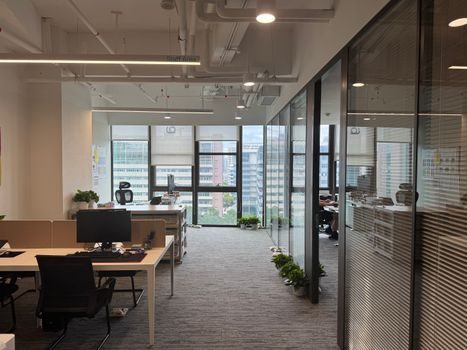
For a deeper comparison of how each panel type trades off weight, fire, and acoustics against install speed, see the spec trade-off matrix reference; the seven-type selection reference at /news/lightweight-partition-panels-7-types-spec-ranges-and-selection-boundaries.html extends the same dataset with thickness and STC bands.
Who TCO Favours — and Where It Bites Back
Low-density panels favour short-tenure, low-acoustic, low-fire fit-outs (residential retrofit, office hot-desking, dry-zone hospitality); they penalise projects with EI 120+ spec, hospital-grade STC 55+, or wet-zone service.
The break-even tenure sits at roughly 12–15 years: under that, the labour savings of lightweight panels dominate TCO; beyond it, heavier substrates earn back the install premium through lower maintenance, fewer replacement cycles, and a longer recertification interval. Specifiers should run a 30-year NPV at the 3% and 5% real discount rates; at 5%, lightweight saves 8–14% on TCO; at 3%, the gap narrows to 2–5%.
End-of-Life and Recertification Cost

Disposal and recycling add 4–8% to TCO over 30 years, dominated by transport to landfill versus recycled-aggregate credit; AAC and gypsum score best here because both are accepted by mainstream construction aggregate recyclers.
Recertification (post-modification, post-incident, post-tenancy-change) is the cost block most often missed: each recertification cycle on a fire-rated partition runs 1.5–3% of original install cost, and a typical 30-year service life sees 2–4 such events. Engineers who book a 4-cycle recertification allowance in the original TCO see the lightweight vs heavy-substrate gap widen by another 6–9 percentage points, because heavier substrates carry higher rated-life integrity and need fewer intrusive inspections.
Criteria Comparison Across the Four Substrate Families
Across cost (purchase, 30-yr TCO), fire (EI minutes at 100 mm), acoustic (Rw dB at 100 mm), and weight (kg/m²) the four dominant families rank as follows: AAC scores low cost, 120–240 min EI, Rw 35–40 dB, 45–65 kg/m²; fibre-cement scores mid cost, 90–180 min EI, Rw 45–52 dB, 55–80 kg/m²; high-density gypsum scores mid-high cost, 90–180 min EI, Rw 42–48 dB, 60–90 kg/m²; MgO scores mid cost, 60–120 min EI (uncoated), Rw 35–42 dB, 28–45 kg/m². [S4]
For a parallel TCO methodology on industrial plastics, the UHMWPE TCO breakdown applies the same four-block structure (resin, processing, wear-service, end-of-life) and confirms the same procurement lesson: substrate and wear-service dominate, sticker is second-order.
For a procurement-side cost-stack analysis on a related fasteners/finish-driven line, the pipe-clamp price and cost guide ranks material, MOQ, and finish the same way partition TCO ranks substrate, volume tier, and certification — confirming the cross-industry pattern that material and order size set 60–70% of unit cost.
Track for the next review: the 2026 revision of EN 1364 (non-loadbearing fire-resistance partitions) and any new AAC recycling-aggregate credits in EU EN 15804 EPD updates; either will shift the substrate ranking in the table above and the 30-year NPV at 3% real.
The underlying component specifications are covered under total station, and alc panel.