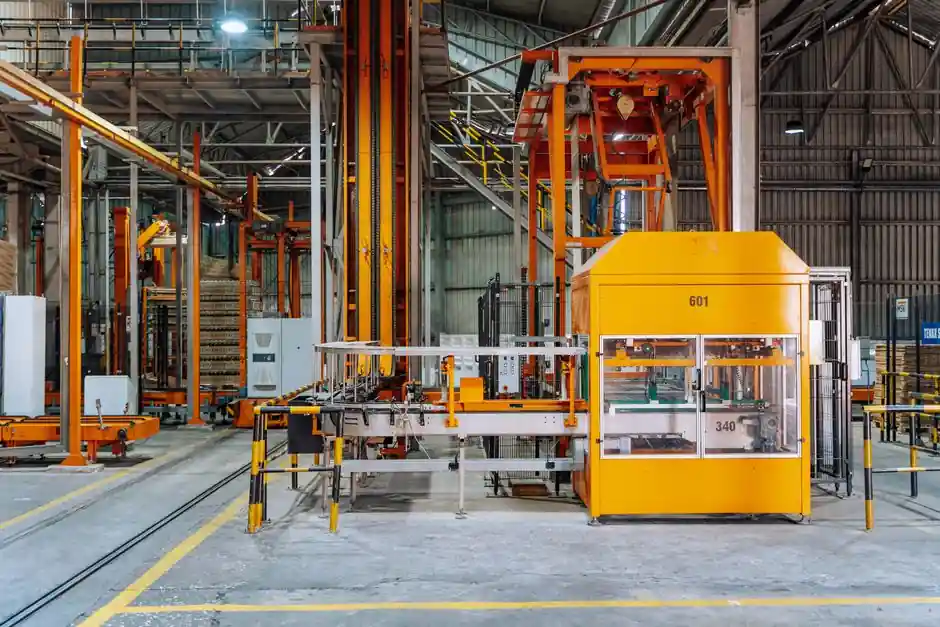
A retrofit linear-bearing spec for a packaging machine must state rail type, shaft diameter, dynamic load rating C, accuracy class, lubrication mode, sealing, material, mounting pattern, and duty cycle, because omitting any one of these nine lines forces the supplier to re-quote with a 30-50% margin uplift [S1][S7].
Most packaging retrofits use either profile rail (square, e.g. 15 mm HGH15CA, 20 mm HGR20) for high-speed cross-seals, or round shaft (e.g. 16 mm, 20 mm, 25 mm) supported by closed or open linear bushings for slower, longer-stroke conveyors, with polymer plain bearings reserved for washdown or grease-free zones [S2][S4][S6].
Rail Type and Geometry: Profile Rail vs Round Shaft
Profile rail (also called square rail or linear guideway) uses a hardened carriage running on four point contacts; the AISI 1055 carbon-steel BBRAILMHSR301240 datum line, for example, is a metric profile-rail blank that accepts a standard length L0 suffix per catalog convention [S1]. Round-shaft systems pair a 16-50 mm induction-hardened shaft with an LME-series (metric) or LMUU (inch flanged) bushing, and remain the dominant lower-cost option for slow packaging conveyors running below 1.5 m/s [S6][S7].
Select profile rail when the retrofit requires repeatability under 0.02 mm, dynamic load above 1.5 kN per carriage, or travel above 500 mm with cantilevered loads; select round shaft when the rail can be supported every 300-500 mm and the stroke is straight, simple, and the duty cycle stays under 70% [S2][S5].
Load Rating, Accuracy Class, and Preload
Dynamic load rating C is the fatigue-life basis: for a packaging-machine cross-seal retrofit, plan on C = 5-15 kN for a 15 mm profile rail, C = 8-25 kN for a 20 mm, and C = 15-50 kN for a 25 mm, with the static load C0 roughly 0.4-0.6x C [S1]. Accuracy classes for profile rail run N (normal), H (high), P (precision) in normal-to-tightening order, and packaging retrofit specifications typically accept H or P, with P reserved for volumetric-fill or label-alignment axes [S2].
Preload is a separate RFQ line: Z0 (light clearance), ZA (very light preload), ZB (light preload), ZC (medium preload); cross-seal carriages usually ship ZA, label-feed carriages ship ZB to ZC, and over-spec'ing preload burns drive torque and shortens grease life [S1][S6].
Material, Corrosion, and Food-Grade Compliance
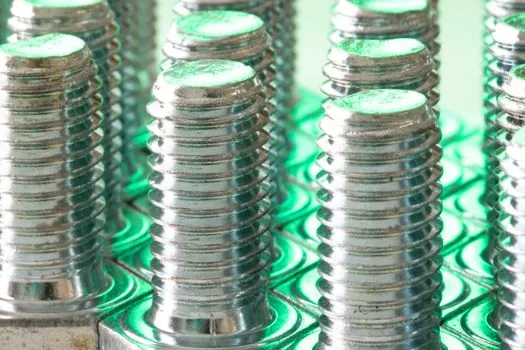
Standard rails are AISI 1055 carbon steel with induction-hardened raceways; for washdown or saline packaging environments, the spec must call out 440C stainless rail, zinc-nickel plated carriage, or a polymer plain bearing such as igus drylin W or CSB-LIN, where polymer plain bushings can run continuously at 0.5-2.0 m/s on stainless or anodized shafts with calculated system life expressed in the supplier's selection tool [S1][S4][S9]. FDA-grade and food-grade retrofits add a mandatory RFQ line: "FDA-compliant lubricant (H1) OR food-grade solid lubricant, no mineral oil, no silicone migration into product zone" [S4].
For high-humidity or chilled-pack lines, the corrosion-protection spec on a packaging retrofit should be explicit: zinc plating, black oxide, or hard chrome on the rail, matched to the same coating on the shaft, otherwise galvanic cells form at the rail/shaft interface within 6-12 months [S6][S8].
Lubrication, Sealing, and Maintenance Interval
Specify the lubrication delivery at the RFQ stage, not as an afterthought: grease-lubricated (most common on packaging machines, relube interval 6-12 months), oil-mist (centralized, common on 24/7 bottling lines), self-lubricating polymer (zero-lube, typical on drylin or CSB-LIN for medical packaging), or food-grade H1 grease where incidental product contact is possible [S4][S8][S9]. Seals are a second RFQ line: end-cap SS (standard), double-lip DD (dusty lines), or scraper + seal combination for paper-fibre or film-debris environments typical of flow-wrap and shrink-wrap retrofits [S1][S6].
Packaging retrofits that ignore sealing typically see life drop from a calculated 30,000-50,000 km L10 to under 5,000 km in 12 months, because the dominant failure mode in this industry is seal-bypass contamination, not raceway fatigue [S1][S4].
Mounting, Dimensions, and Reference Pages

The RFQ should reference or attach the machine's existing rail-to-rail dimension (rail pitch), carriage hole pattern, and overall length, because retrofit rails are commonly supplied as a cut-to-length profile-rail blank where the catalog number is completed by appending the L0 length code, e.g. BBRAILMHSR301240 + L0 = 1240 mm cut [S1]. Common metric carriage foot patterns (HGH15, HGH20, HGH25) and inch flanged bushing standards (MISUMI 110302150770 family, 1/2" to 1-1/4" bore) are interchangeable only within a tolerance of 0.05-0.1 mm on bolt centers, so a measured drawing on the RFQ is non-negotiable [S7].
For a broader system view of packaging retrofit choices, the packaging machinery upstream and downstream spec map covers how the linear-bearing decision sits inside the wider line, and the linear bearing reference page defines the dimensional conventions used by most suppliers [S2].
Lead Time, Supplier Pool, and Sourcing Signals
Lead times on a packaging-retrofit linear-bearing RFQ in mid-2026 break down roughly: 3-6 weeks for catalog metric profile rail (HGH/EGH/HGR 15-25) from regional stock, 6-10 weeks for stainless 440C or FDA-grade polymer, and 10-14 weeks for cut-to-length specials with custom hole patterns [S1][S2][S6]. Standard suppliers in the market include Designatronics (Quality Bearings & Components), PBC Linear, NB Corporation (Nippon Bearing), igus, and MISUMI, with London identified as a supplier location in the retrieved evidence [S1][S2][S4][S5][S6][S7][S8].
For integration, the linear actuator reference covers how the bearing mates to the belt or ball-screw drive on the same axis, and the vacuum packaging machine page documents the typical carriage loading profile for retrofit pull-downs in vacuum form-fill-seal lines [S4][S5].
RFQ Spec Mistakes That Force a Requote
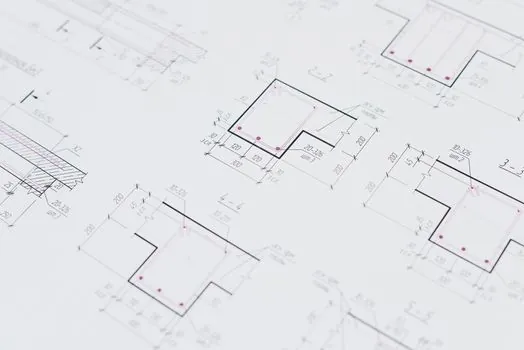
The four most common requote triggers on a packaging-retrofit linear-bearing RFQ are: (1) omitting accuracy class, which lets a supplier default to N (normal) and underspec a label or volumetric axis; (2) omitting seal type, which lets the supplier ship SS end-caps into a film-debris environment; (3) omitting lubrication class, which lets the supplier ship standard mineral grease into a food zone; (4) specifying only the carriage and not the rail, or only the rail and not the carriage, which causes a 2-3 week cross-reference delay [S1][S4][S7].
Trackable signals: watch for 2-3 new metric profile-rail sizes entering European distributor stock in Q3-Q4 2026, and monitor whether polymer plain-bearing lines (drylin, CSB-LIN) add FDA-grade H1 solid lubricant options, both of which would shift the cost-vs-compliance balance on washdown packaging retrofits [S4][S9]. The packaging material reference also pairs with the bearing spec when the line contact zones include film, foil, or paper debris that drives the seal selection.