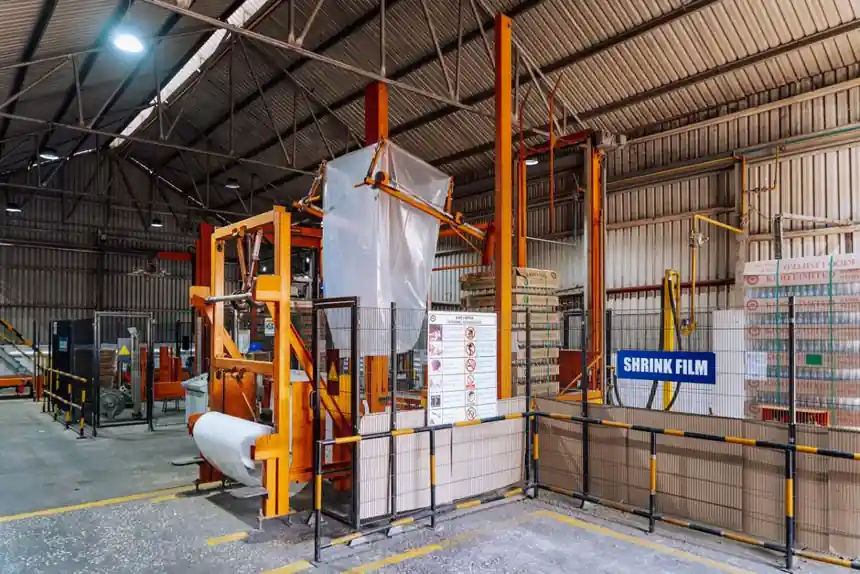
Packaging machinery sits between a materials upstream (films, corrugated, paper, strapping tape) and a converting downstream (form-fill-seal, case packing, palletizing, labeling), with the line typically specified for throughput in bags or cases per minute, material compatibility, and ISO quality gates [S2][S3].
The most common upstream material specs in 2026 are 200#/ECT-32-C corrugated cartons, poly bags from ISO 9001-certified extrusion lines, and stretch films rated for 250–300% pre-stretch, while downstream the dominant machine categories are VFFS (vertical form-fill-seal), HFFS, case erectors, shrink wrappers, and stretch-wrapping palletizers [S2][S6].
Upstream materials: film, corrugated, and tape spec bands
Upstream inputs to a packaging line are dominated by three families of materials: shrink and stretch films, corrugated cartons, and pressure-sensitive tapes, each with its own spec gate that the downstream machine must be rated against [S2].
Practical Packaging Solutions lists shrink films, stretch films, poly bags, AirPouch EZ Tear pillows, and EarthAware biodegradable air pillows as standard upstream SKUs, with the corrugated line specified at 200#/ECT-32-C flute and 100% recyclable stock, plus 1,500 box sizes held in inventory [S2]. Stretch films in this catalog are rated for high pre-stretch and puncture resistance, which downstream stretch wrappers must match with 250–300% pre-stretch capability to avoid film breaks at the carriage.
Tape upstream feeds case-sealing downstream: DAAP International, a Yantai-based OEM, builds semi-automatic and fully automatic double-sided tape applicators for the same printing, e-commerce, and packaging plants that consume those upstream films, making tape a co-specified material with the packaging machine on the same bill of materials [S4].
Downstream machine categories and throughput bands
Downstream of the materials feed, the line breaks into six standard machine classes: bagging systems, form-fill-seal (VFFS and HFFS), case erectors and packers, shrink wrappers, stretch-wrapping palletizers, and marking/coding [S2][S3][S6].
Control Techniques (Nidec) defines the typical packaging machinery application set as form/fill/seal, labelers, case packers, carton and case erectors, baggers, bundlers, shrink wrappers, smart belts, and indexing tables, with the engineering targets being shorter design times, quicker changeovers, broader material range handling, higher throughput, and improved line integration [S3]. Nidec's drive portfolio covers general-purpose AC (Commander C/S), high-performance servo (Digitax HD, Unidrive M700), and dedicated elevator/pump/HVAC drives, which is the architecture most VFFS OEMs reach for when a line needs to hit 80–120 bags/min on a servo-driven jaw.
Unified Flex's catalog narrows the downstream picture to flexible-packaging-only: VFFS machines for solids (granules, powders, liquids in sachets) and stick pack machines for slim elongated packs, both engineered for industrial-scale runs rather than lab or pilot batches [S6]. For operations needing higher speed or modified-atmosphere capability, a dedicated vacuum packaging machine sits alongside the VFFS as a separate spec family, typically rated by chamber volume and seal-bar length rather than bags per minute.
Selection criteria: matching line speed to material spec
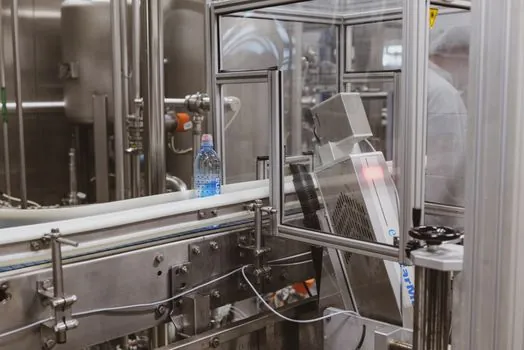
Selection comes down to four criteria that bind the upstream material spec to the downstream machine spec: throughput, material compatibility, changeover time, and integration protocol. [S3]
Throughput is the first gate: a VFFS running pillow bags at 60–100 bags/min on poly film is a different machine class than a stick pack running 200–400 sticks/min on laminated foil, even though both are technically "form-fill-seal" [S6]. Material compatibility is the second gate, and the upstream 200#/ECT-32-C corrugated dictates the downstream case packer's load rating and case-erector flute clearance, while the upstream shrink film's shrink initiation temperature dictates the downstream shrink tunnel's three-zone profile (typically 150–200°C).
Changeover time is the third gate, and Nidec's value framing (shorter design times, quicker changeovers, broader material ranges) tells you which way the engineering has moved: servo-driven machines with recipe-based HMI beat mechanical-cam machines on this dimension, and that is why the Digitax HD and Unidrive M700 platforms show up in VFFS and shrink wrapper tenders [S3]. Integration protocol is the fourth gate, where practical packagers bundle upstream materials and downstream machinery under a single integrator scope, with Practical Packaging explicitly positioning itself as a one-stop shop across materials, machinery, and integration [S2].
Who upstream-downstream packaging is for, and who it is not for
Integrated upstream-plus-downstream packaging is built for mid-to-high volume operations (typically 500,000+ units/year) that need ISO 9001 traceability on materials and validated throughput on the machine, and it is not the right fit for low-volume artisanal producers or pilot lines below 50,000 units/year [S2][S3].
It is for contract packagers, food and beverage fillers, e-commerce fulfillment centers, and CBD/cannabis packagers who need to source both packaging material and converting machinery from a single accountability chain, with service and installation bundled [S2]. It is also for global printing and packaging plants that buy high-precision paper converting equipment plus automated taping solutions from one OEM such as DAAP, which exports from Yantai to printing, e-commerce, and packaging plants worldwide [S4].
It is not for small-batch cosmetics or specialty coffee roasters running under 50,000 units/year, who will over-capitalize on a servo VFFS and under-utilize a 1,500-SKU corrugated inventory, and it is not for frozen or temperature-sensitive pharmaceutical lines, which need a separate cold-chain spec map covering refrigeration upstream and insulated shippers downstream rather than ambient film and corrugated [S2].
Comparison: VFFS vs HFFS vs case packer on four decision criteria
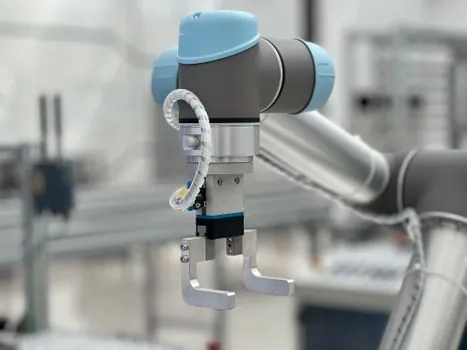
The three dominant downstream machine types line up as follows on cost, throughput, changeover time, and material range, based on the catalog data from Unified Flex, Nidec/Control Techniques, and Practical Packaging [S2][S3][S6].
Cost (capital, relative): VFFS is the lowest entry point, HFFS is mid-range (often 1.5–2x VFFS), and a fully integrated case erector plus case packer plus palletizer cell is highest, often 3–5x a standalone VFFS. Throughput: stick-pack VFFS leads at 200–400 sticks/min, pillow-bag VFFS runs 60–100 bags/min, HFFS on premade pouches runs 30–60 pouches/min, and case packers sit at 10–30 cases/min depending on pack pattern. Changeover time: servo-driven VFFS with recipe HMI changes over in 10–20 min, HFFS in 20–40 min (more film threading), and mechanical case packers in 30–60 min. Material range: VFFS handles PE/PP/laminated film from the upstream roll, HFFS handles premade pouches and doypacks, and case packers handle the upstream 200#/ECT-32-C corrugated plus dividers and inserts [S2][S6].
Failure modes and integration limits
The most common failure modes at the upstream-downstream interface are seal contamination (film-side), flute crush (corrugated-side), and tape adhesion loss in cold or dusty environments, with each one mapping to a specific spec gap rather than a generic "quality" issue [S2][S4].
Seal contamination on a VFFS is typically traced to upstream film not meeting the seal-jaw temperature window (usually 140–180°C for PE/PP), and the corrective action is to re-spec the upstream film rather than re-tune the seal jaws, which is why Practical Packaging sources shrink and stretch films rated for a specific shrink temperature range and stability window [S2]. Flute crush in a case packer is traced to upstream corrugated running below 200#/ECT-32-C, and the corrective action is to upgrade the upstream spec, not to slow the downstream machine. Tape adhesion loss in cold-chain or dusty environments is the failure mode DAAP's double-sided tape applicators are engineered against, with high-speed taping machines specified for flat surfaces in printing and packaging plants [S4].
Integration limits: a stretch wrapper cannot compensate for upstream film with poor pre-stretch, and a shrink tunnel cannot compensate for upstream film with inconsistent shrink initiation, so the engineering rule of thumb is to lock the upstream material spec before commissioning the downstream machine, not after. For operations scaling from one shift to two, cold chain equipment upstream/downstream map covers the parallel spec track for temperature-sensitive SKUs that cannot ride the ambient film-and-corrugated chain.
Standards, sourcing signals, and what to track next

The dominant standard cited across the upstream materials side is ISO 9001 for film and bag manufacturing processes, with the corrugated side specified at 200#/ECT-32-C and 100% recyclable content, and the downstream side governed by CE machinery directive and application-specific food-contact or ATEX requirements that are not in the public catalog data [S2].
Sourcing signals to track from this point: Practical Packaging Solutions (practicalpackaging.com), DAAP International in Yantai (daapmachinery.com), Unified Flex (unifiedflex.com), and the drive-side suppliers behind Control Techniques / Nidec (acim.nidec.com) are the four catalog anchors that show up in 2026 RFPs, and a fifth signal is the industrial refrigeration upstream and downstream spec map for lines that also need temperature-controlled packaging [S2][S3][S4][S6].
Trackable next nodes: published 2026 price lists for VFFS and stick pack machines from Unified Flex, DAAP's tape applicator lead-time updates for Q4 2026, and any new ISO or ASTM revision that touches 200#/ECT-32-C flute or pre-stretch film rating, all of which would shift the upstream material spec and force a downstream re-spec in lockstep.