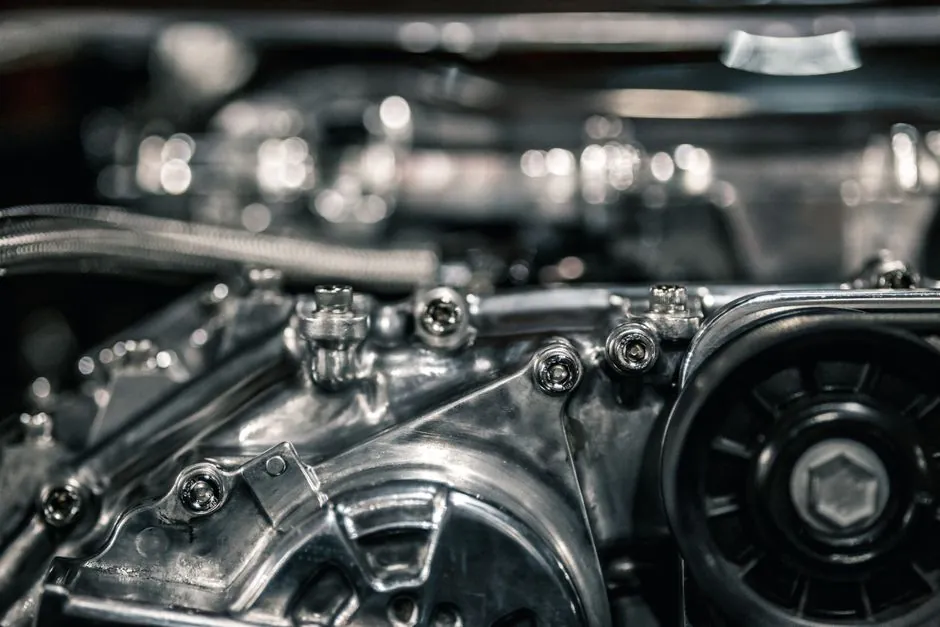
Automotive assembly and tier-1 component plants specify three linear bearing families on round-rail and profile-rail axes: polymer plain bushings, precision steel ball bushings, and square-rail recirculating ball or roller units [S1][S3][S4]. Round-rail ball bushings cover dynamic loads up to 5,000 lbf at shaft diameters from 0.25 to 4 in, while plain polymer bushings typically run static loads up to 11,000 lbf and dynamic loads up to 2,023 lbf at speeds up to 100 fpm [S4].
Wash-line and pre-treatment cells on body-in-white lines add a corrosion constraint: igus publishes a polymer plain bearing case study for a washing-machine/automotive wet zone where metal bushings failed and the polymer alternative removed the need for re-lubrication [S2]. Ningbo Meiyate (MYT) lists an explicit automotive-application channel covering 3C, rail traffic, intelligent logistics, new energy, and automatic assembly lines, with the company holding 11 invention patents and operating to ISO 9001 [S1].
Round-rail ball bushings vs plain polymer bushings vs profile-rail blocks
Round-rail ball bushings deliver point-to-point contact on a fixed plate, supporting dynamic loads up to 5,000 lbf at 0.25–4 in diameters and offering the lowest friction of the three families in dry-running conditions [S4]. Profile-rail (square) units carry higher loads and tighter accuracy, and are typically the more expensive option, while round-rail assemblies with the right bushing type offer distinct cost and reliability advantages for non-critical alignment duty [S4]. Plain polymer bushings give a friction coefficient of 0.05–0.25 and roughly 20% of the load capacity of an equivalent ball bearing, but tolerate unhardened shafting including aluminum or 316 stainless steel, which is useful where corrosion is the gating constraint [S4].
NB Corporation (Nippon Bearing) structures its catalogue the same way for automotive-tier buyers, separating Linear Bushing (Slide Bush), High-Load Topball, Stroke Rotary Bushing (SR/SRE/RK), and the cross-roller NV/SV guides that fall into the profile-rail family [S3]. MYT mirrors that split, listing Linear Motion Ball Bearing, Pressing Bush Bearing, Flange Linear Bearing, Super linear bearing, and a stainless-steel linear bearing line aimed at wet and wash cells [S1].
Selection criteria mapped to the automotive cell type
For body-in-white welding cells where particulate and weld spatter dominate, hard-sealed round-rail ball bushings with steel retainers and wipers are the default, with profile-rail reserved for axis loads above 5,000 lbf or repeat-positioning tighter than roughly 10 µm [S4]. For paint-shop and pre-treatment washers, the igus-published MANUS 2015 case uses corrosion-resistant polymer plain bushings on stainless shafts to eliminate lubricant washout and re-lube cycles [S2]. For press-shop transfer and convertible tooling, NB High-Load Topball and cross-roller NV/SV guides are specified for combined load and moment capacity, while NB Slide Screw / NB Shaft combinations integrate a linear bushing with a driven screw for actuator-style motion [S3].
Spec writers should lock the rail profile, the bushing family, the sealing class, and the lubricant regime together: a round-rail polymer bushing on a 316 stainless shaft is a coherent wet-zone spec, but the same polymer on a 60 HRC case-hardened shaft in a dry robotics cell is the wrong pairing and wears the shaft [S4]. Material cross-reference matters as much as load class, because the contact mechanics of an elastomer-lined plain bushing and a steel ball bushing are not interchangeable on the same shaft surface.
Who round-rail vs profile-rail actually fits
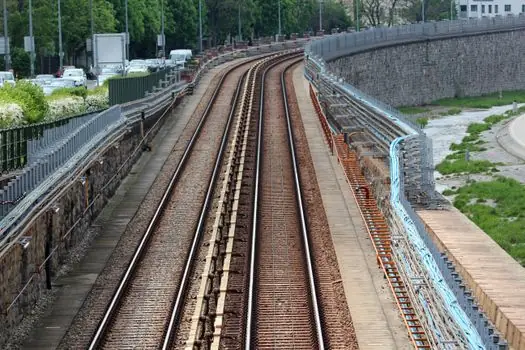
Round-rail with a precision steel ball bushing fits conveyor transfers, gantry pick-and-place, and lighter welding manipulators where dynamic loads stay within the 5,000 lbf envelope and shaft diameters between 0.25 and 4 in cover the frame geometry [S4]. Profile-rail (square) fits high-load press shops, machining centers feeding the line, and any axis where moment loading and parallelism across the stroke are gating accuracy factors, at the cost of higher unit price and tighter mounting-surface flatness [S4]. Plain polymer bushings on round shafting are the right answer for clean, corrosive, or wash-down duty, or for applications where re-lubrication cannot be guaranteed during the maintenance interval [S2][S4].
Specifying engineers should treat polymer bushings as not suitable for high-speed or high-precision axes: the published ceiling is 100 fpm with 0.05–0.25 friction and roughly 20% of a ball bearing's load capacity, so any axis that needs to move faster, hold tighter tolerances, or carry higher dynamic loads needs to step up to a rolling-element bushing or to a profile-rail block [S4].
Failure modes and standards anchors
The most common automotive-line linear-bearing failures are lubricant washout in wet cells, particulate ingestion in weld cells, and brinelling or fatigue spalling when moment loads are miscalculated on round-rail ball bushings [S4]. NB's engineering documentation breaks failure analysis into Allowable Load, Life, Rigidity and Pre-load, Operating Environment, Frictional Resistance and Required Thrust, Lubrication and Handling Precautions, plus a Low Temperature Black Chrome Treatment option for shafts in cold or condensation-prone cells [S3]. MYT runs production to ISO 9001 and operates a Linear Bearing Inspection and Testing Center staffed by 58 mid-to-senior technical R&D personnel, which is the audit trail automotive buyers typically request at PPAP [S1].
For more on how these same families map onto adjacent process industries, see this spec-side companion on linear bearing selection for material handling and the pulp-and-paper line angle in linear bearing selection for pulp and paper, both of which run the same round-rail vs profile-rail decision against different environmental loads. For background on the related motion stack, the linear guide and linear bearing reference pages set out the rail-and-block definitions used above, while the linear module page covers when to integrate the bushing into a driven actuator.
Sourcing and supplier-side signals worth tracking
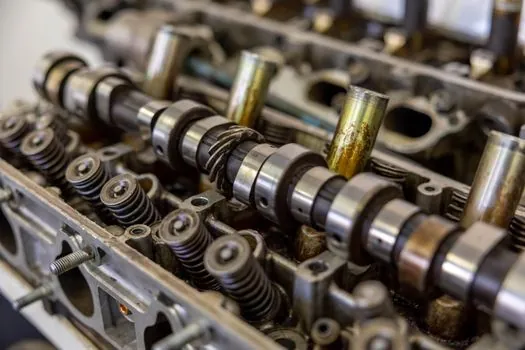
NB Corporation publishes a General Catalog No.178E covering the SEB(S)-A and SER(S)-A series, plus an HV Type cross-roller line and spindle shafts, all visible from nbcorporation.com with CAD downloads and an Actuator travel life calculation program [S3]. MYT sells a 15-year focus, 58-person R&D team, 25 patents (11 invention), and a third-place Science and Technology Progress Award from China National Light Industry, with an authorized-dealer channel aimed at overseas tier-1 buyers [S1]. igus continues to publish polymer-bushing case studies anchored to specific automotive cells, including the MANUS 2015 wash-cell application, which doubles as a corrosion-resistant reference for spec writers [S2].
Trackable signals in the next sourcing cycle: (a) any update to the NB General Catalog revision number beyond No.178E, since catalogue number bumps typically precede a tolerance or load-rating change for the SEB/SER series [S3]; (b) MYT patent disclosures beyond the 11 invention patents listed on en.china-myt.com, which usually precede a new flange or super-linear product family [S1]; (c) any new igus polymer-bushing case study tagged to a paint-shop or e-coat cell, since wet-zone polymer substitution is where the largest automotive-line maintenance savings still sit [S2].
Closing node: a clean PPAP package for an automotive linear axis still routes through four documents, the rail-and-bushing catalogue sheet, the L10 life calculation, the sealing/lubrication matrix, and the ISO 9001 certificate, and any of those four missing will fail a tier-1 sourcing gate.