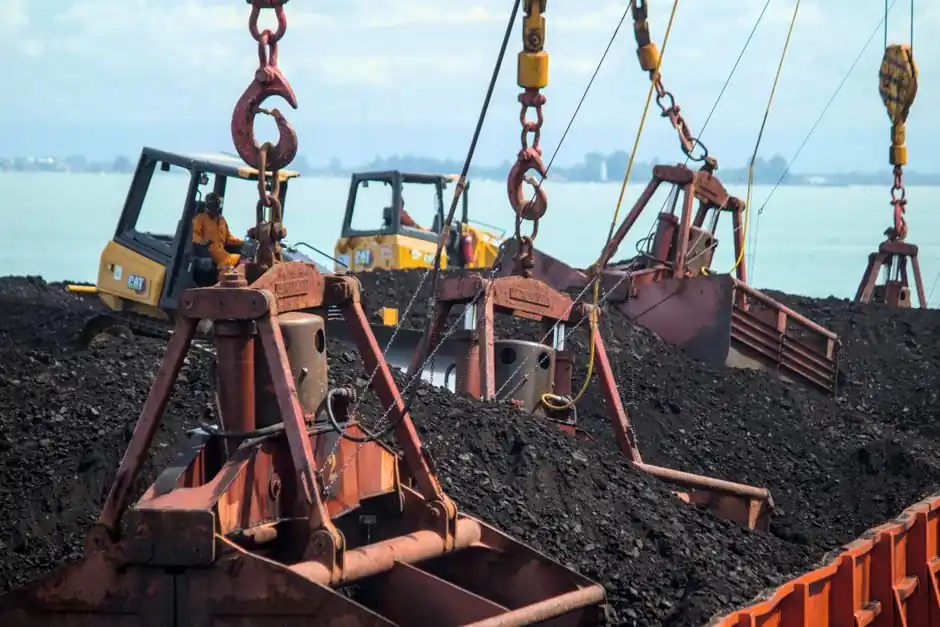
For conveyor, lift, and AMR duty in 2026, the spec gate that drives failures is shaft hardness paired with load rating, not brand: linear ball bushings on 60 HRC induction-hardened shafting handle the bulk of unit-handling conveyors, while self-lubricating plain bushings dominate washdown and dusty bulk lines [S2][S4].
Material handling covers everything from 24 V AMR drawers to 20 tonne overhead crane trolleys, and the relevant bearing families split into four: profile-rail (ball or roller) linear guides, round-rail ball bushings, round-rail self-lubricating plain bearings, and cam/profile rollers. Each maps cleanly to a duty profile, a contamination class, and a maintenance window [S2][S3].
Bearing families and where each one earns its slot
Round-rail ball bushings (Thomson Ball Bushing-style and metric LM-type) are the workhorse for medium-duty, low-noise strokes under roughly 1 m: indexing tables, packaging heads, sliding guards, and small lift columns. They run on supported 60 HRC induction-hardened shafting and tolerate moment loads better than an open plain bearing at the same bore [S2].
Profile-rail linear guides carry the high-load, high-rigidity end: gantry robots, machine-tool z-axes inside conveyor tooling, and heavy AGV transfer decks. Thomson lists profile rail as a standalone product line alongside round-rail bushings, and distributors such as Power Drive Systems cut profile rail to length in-house as a stock service [S2][S3].
Self-lubricating PTFE- or polymer-lined plain bushings (Simplicity-style and Feather Shaft) solve the contamination problem that kills ball bearings: dusty aggregate conveyors, washdown food lines, and non-magnetic medical handling skids where aluminium shafts and polymer liners remove both grease and steel from the food contact zone [S4]. Round-shaft plain bearings cannot match ball-bearing stiffness, so they are rarely used where positioning repeatability under load matters [S4].
Load, life, and the L10 calculation that actually decides it
Linear bearing life is rated in L10 travel (km) or L10 strokes, calculated from dynamic load rating C, applied load P, and a travel per stroke factor. Ball bushings on round rail typically use a 3rd-exponent load-life formula, while profile-rail linear guides use a 4th-exponent formula per ISO 14728 Part 1 (linear motion bearings, ball bearings, Part 2 (roller bearings) and Part 3 (linear ball bearing)), with C defined at 50 km for the LM/U-series and 100 km for many profile-rail blocks [S2].
For a 5 kN continuous load on a single round-rail ball bushing with C = 8 kN, the 3rd-power factor gives roughly (8/5)^3 ≈ 4.1, so a 50 km rated block delivers an indicative 205 km of travel before the 10% failure probability line; halving the load to 2.5 kN lifts that 32x to 6,500 km because of the cubic exponent. The same equation is why a 2x load over-spec is far cheaper than a 2x stroke over-spec in the long run [S2].
Profile-rail blocks quote C in the 10-100 kN range for the 15-45 mm width common in material handling, and Thomson's product selector breaks those numbers out per size, with a column-strength and critical-speed calculator that flags screw-driven trolley applications before the order is placed [S2]. The 60 HRC shafting that the round-rail family depends on is induction case-hardened and ground in a single setup to hold straightness under the bushing [S4].
Contamination, lubrication, and sealing: the 80% of real failures
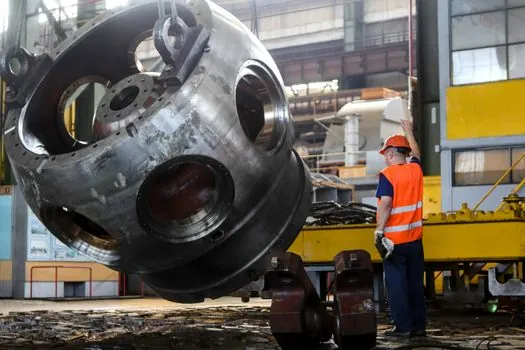
ISO 4406 solid contamination in a conveyor plant regularly runs 20/18/15 or worse near crushers, bag dumps, and unpaved loading bays, and unsealed recirculating ball bearings fail in months under that fluid class. Caged runner blocks with double-lip end seals drop noise by up to 84% and lift load capacity by up to 19% over uncaged versions while keeping the lubricant in and the grit out, which is the spec gate most often missed on first-pass conveyor designs [S4].
Washdown duty is its own selection problem: the spec window spans no sterilisation, daily wipe-down, daily caustic wash, and severe daily caustic plus steam, and a stainless or nickel-plated round-rail bushing with food-grade H1 grease and PTFE shaft seals is the default answer; YTP, for example, lists nickel-plated linear bearings and a stamped KH series alongside its standard LM line for exactly this duty profile [S5].
Self-lubricating plain bushings eliminate grease entirely and are the right call for any line where relubrication is impractical: cleanroom medical skids, ceiling tracks, and lights that move above surgical tables, where the PBC Linear washdown guidance is explicit that the requirement scale runs from no sterilisation to severe caustic wash and the bearing choice has to follow the harshest end of that scale [S4].
Sizing for the actual handling job, not the catalogue
For AMR drawers and transfer decks in a 2026 warehouse, the AMR selection spec map leans on 15-25 mm profile rail with one block per carriage, C in the 15-30 kN band, and a target L10 above 20,000 km so that bearing life matches the 5-7 year AMR service window without mid-life swap. Round-rail plain bushings on aluminium shafts are a strong second choice when the deck is short and the load light. [S4]
For port and terminal gantries, profile-rail block sizing drops to a deflection check, not a life check, because the trolley must hold a 20 ft container within mm tolerances over 30+ m of rail; the crawler crane spec gate article covers the structural and ground-pressure side, while the bearing question narrows to a 45-65 mm profile-rail block class with at least two blocks per trolley.
For unit-load conveyors in a distribution centre, the most cost-defensible spec is a 16-25 mm supported 60 HRC shaft with two LM-style ball bushings per carriage, caged where ambient noise is capped below 65 dBA at 1 m, plain where the line runs near bag dumps or outdoor transfer points. Power Drive Systems sells this exact mix with cut-to-size linear rail as a stock line, which compresses lead time to days for retrofit work and to weeks for greenfield [S3].
Standards, certifications, and the paperwork that wins audits
China-origin linear bearings fall under GB/T 19673.2-2025 for linear bearing attachments, and YTP is a drafting unit of that standard, a useful data point when a Chinese-built LM bushing is being dropped into a North American conveyor build where the spec writer wants traceable compliance evidence [S5]. Yutong also runs ISO 9001:2015 across production, which covers the quality-system side of any CE-marked conveyor OEM audit [S5].
Thomson publishes REACH, RoHS, and ISO/AS compliance packs for its linear bearing and guide lines, and that is the documentation European integrators typically request before signing a PO for a CE-marked conveyor or AGV; ROHS 3 covers the four phthalates added in 2019 and is the version most procurement teams cite [S2].
For heavy industrial use, verify the manufacturer's dynamic load rating is quoted at a stated travel (typically 50 km or 100 km) and that the L10 calculation in the selection software uses the exponent appropriate to the bearing type, 3 for ball, 4 for roller. If a vendor refuses to publish C, the travel basis, or the exponent, treat the catalogue as marketing, not engineering data, and run a parallel quote against a brand that does publish [S2].
Selection checklist for a 2026 material-handling spec
First, define duty profile: stroke length, cycle rate, peak load, moment load, ambient contamination, and required L10 travel. Second, pick the family: profile rail for high load and stiffness, round-rail ball bushing for general medium duty, plain bushing for contamination and no-lube duty, cam roller for cam-driven lifts. Third, pick shaft or rail size to give a target L10 of at least 2x the design service life, not 1x [S2].
Fourth, spec sealing to the contamination class, caged blocks with double-lip seals for general factory duty, stainless or nickel-plated with food-grade grease for washdown, and self-lubricating plain bushings for cleanroom or medical skids [S4][S5]. Fifth, lock the documentation: ISO 9001:2015 quality system, REACH and RoHS for European builds, GB/T 19673.2-2025 for China-built bearings, and published C, travel basis, and load-life exponent in the vendor datasheet [S2][S5].
Track two signals over the next two quarters: whether profile-rail block prices for 15-25 mm widths continue the 2025-2026 softening driven by Chinese and Taiwanese supply, and whether AGV OEMs standardise on a caged ball block for the under-100 kg payload class. Either shift will move the first-cost calculation behind the 2026 default spec. The companion reference page on linear bearing types and the linear guide family tree are the right next reads for a spec writer who has not touched this category since 2024.
Spec-level background on the components involved: material handling.