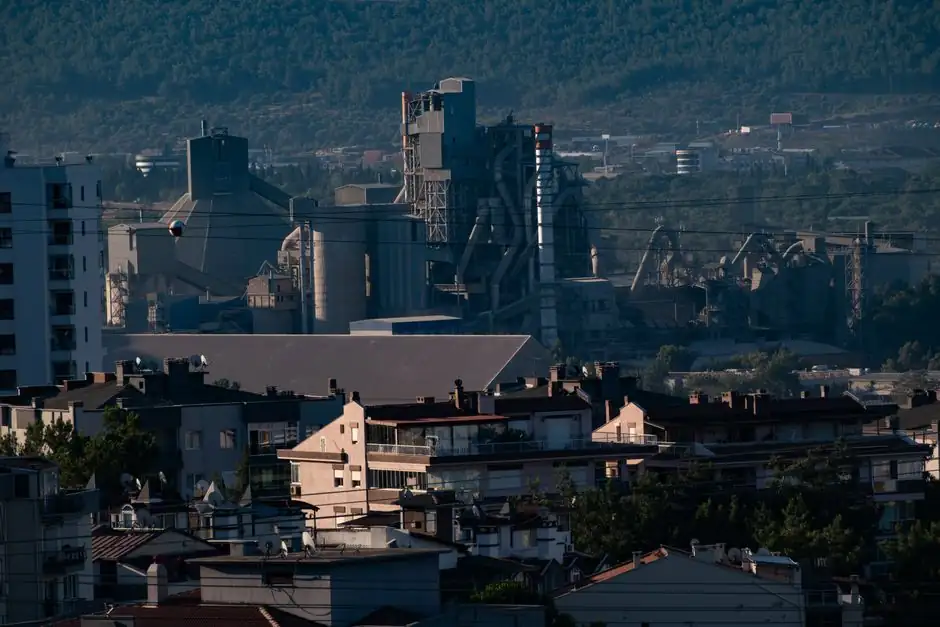
Cement-mill and kiln-area linear motion is dominated by three concrete pain points: respirable cement and clinker dust above 30 µm that migrates past wipers, radiant heat from clinker coolers and preheater towers that pushes local pockets past 150°C, and 5–15 g peak vibration from crushers and roller presses. Any linear bearing choice has to be graded against those three gates before load and speed are even considered [S4][S5].
For a typical cement-works retrofit, a polymer plain bushing on unhardened 316 stainless shaft handles the dusty zones, a sealed profile-rail block with EP2 lithium grease and metal scraper handles the kiln-carriage slides, and a self-lubricating polymer-glide rail handles the dust-prone bag-filter damper actuators where relube is impractical [S3][S4][S5].
Bearing family decision by zone
Cement plants are not one environment; they are five, and the bearing family has to follow the zone, not the OEM brand list. Preheater, kiln hood and clinker cooler zones hit 150–250°C ambient with falling dust, and the only realistic linear bearing candidates here are grease-lubricated profile-rail ball blocks with high-temperature seals or all-polymer plain bushings rated past 150°C [S3][S4].
Raw-mill and cement-mill zones carry the worst dust load, where a 5 µm PTFE-liner plain bushing on hardened 52100 shaft will grind itself out in weeks; the same zone with a sealed polymer bushing on 316 stainless shaft typically reaches 12+ months [S4][S5]. Cooler discharge, pan conveyors and bag-filter areas are dominated by water wash-down, and a 304/316 stainless profile-rail block with NBR wipers is the standard fix [S3][S5].
Load, speed, friction: the numbers that gate the call
Plain polymer bushings with elastomer or PTFE liners deliver roughly 20% of the dynamic load of an equivalent ball bearing and a friction coefficient between 0.05 and 0.25, which is why they stay in the light-duty, lower-speed envelope [S4]. The published ceiling sits at 11,000 lbf static load, 2,023 lbf dynamic load, and 100 fpm (≈0.5 m/s) travel speed for standard round-shaft polymer bushings, and these are the limits designers should write into the spare-parts spec sheet, not wishful thinking [S4].
Step up to a precision steel ball bushing and dynamic load jumps to 5,000 lbf with shaft diameters from 0.25 to 4 in (≈6–100 mm), but only if the seal stack can keep cement dust out; a standard open Ball Bushing in a clinker-cooler zone will fail in days [S4]. A single-groove, floating-plate design can roughly triple the load handling of a fixed-plate bearing at the same envelope, and a profile-rail block with 45° contact geometry moves the operating ceiling another order of magnitude upward for kiln-carriage duty [S4].
Sealing, lubrication and materials for cement dust
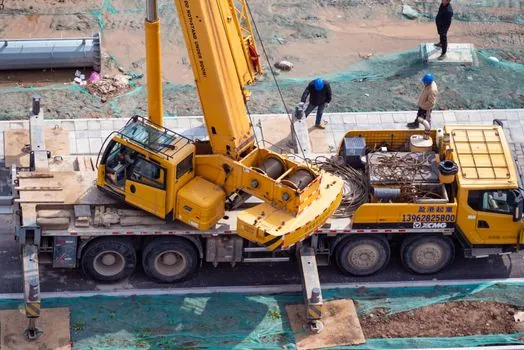
Sealing is the single biggest survival variable. A double-lip NBR or FKM wiper on the bearing plus a metallic scraper on the rail end is the minimum credible package for any linear guide operating near a raw mill or clinker cooler; without it, dust packs into the recirculation path and the block siezes well before the calculated L10 life [S4][S5].
Lubrication policy is the second gate. Grease-lubricated profile-rail blocks running EP2 lithium-complex grease hold 80–120°C continuous and need relube every 1,000–2,000 hours in clean zones but every 200–400 hours in dusty zones; polymer plain bushings remove the relube cycle entirely but pay for it in lower load capacity and speed [S3][S4]. For wash-down zones, food-grade H1 grease is common even in cement plants because it tolerates water better than mineral EP2 [S3].
Material pairing matters because galvanic corrosion will eat a carbon-steel rail in a humid clinker-cooler zone inside one season. The proven combinations are: hardened 52100 shaft with nitrile-sealed steel block (dry, low-dust), 316 stainless shaft with PTFE-liner polymer bushing (dusty, occasional wash-down), and 440C stainless profile-rail block with FKM seals (wash-down, mild chemical exposure) [S4][S5].
Round rail vs profile rail: the cost and accuracy trade
Round rail is the lower-cost option and is easier to retrofit into existing cement-plant steelwork, but it cannot match profile rail for load, accuracy or moment capacity [S4]. For new kiln-carriage slides, cooler-discharge carriages and any stroke over 1 m carrying more than 500 kg, a profile-rail linear guide is almost always specified.
For damper actuators, bag-filter slide gates and small hopper slides under 200 kg, polymer round-shaft plain bearings dominate because the part is cheap, the seal stack is simple, and the failure mode is a soft degrade rather than a catastrophic seizure that takes out a kiln [S4][S5]. The linear actuator market reflects the same split, with screw-driven actuators on profile rail in the higher-load zones and belt- or screw-driven polymer-slide actuators in the lighter zones.
Failure modes engineers actually see in cement plants
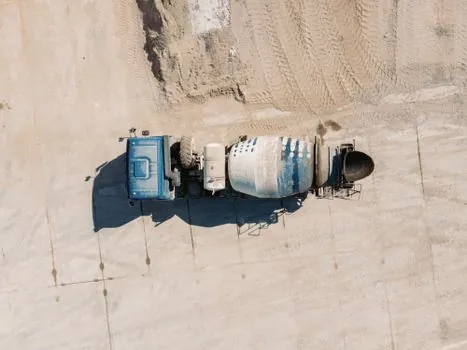
The four most common linear-bearing failures in a cement works are all seal-related, not calculation-related. Worn wipers let dust into the recirculation path, dust mixes with residual grease into a grinding paste, the paste accelerates raceway wear, and the block then siezes or the balls brinell the raceway [S4][S5].
The second cluster is corrosion-driven: a galvanic mismatch between a stainless block and a carbon-steel mounting bolt in a humid zone eats the bolt first, the block then moves on its mounting surface, and the resulting misalignment shows up as edge-loading on the rail [S4]. The third cluster is lubrication starvation: a grease nipple that the maintenance crew cannot reach, on a linear module mounted above a hot clinker conveyor, gets forgotten, and the block runs dry until the polymer retainer fails.
The fourth cluster is vibration-induced brinelling, especially on idle crushers and roller presses where the rail sits still under load for hours at a time; a polymer plain bushing is far more tolerant here than a ball bushing, which is one reason polymer-glide systems win in those pockets [S3][S4][S5].
Selection checklist for a cement-plant retrofit
Write the spec in this order: zone temperature, dust and water exposure, required load (with a 1.5× safety factor for vibration zones), stroke length, speed, then lubrication access. Anything above 150°C continuous or 2,000 lbf dynamic with stroke over 500 mm points to a sealed profile-rail ball block; anything below 200 lbf with stroke under 300 mm and poor lube access points to a polymer plain bushing on stainless round shaft [S4][S5].
For higher-load kiln and cooler slides, a sealed profile-rail block typically scores higher on a 1–5 weighted matrix for load capacity (5), accuracy (5) and moment stiffness (5), versus 3, 2, 2 for a polymer round-rail bushing; the polymer bushing wins on cost (5 vs 2), dust tolerance (5 vs 3) and maintenance access (5 vs 2), which is why most cement plants run a mixed fleet by zone rather than a single platform. For related heavy-industry selections in adjacent process areas, the mining linear bearing spec map covers the parallel round-rail logic for mineral processing, while crawler crane selection for quarrying addresses the upstream raw-material side of the same supply chain.
Trackable signals worth watching: ISO 3408 (ball screws) and ISO 14728 (linear rolling bearings) revision activity, plus the rollout of higher-temperature polymer liner grades (currently rated to roughly 250°C intermittent by some suppliers) that would push polymer plain bushings further into kiln-hood territory. The near-term engineering task is to lock the seal and lube specification per zone, not to chase a single universal bearing family across the whole plant [S3][S4][S5].