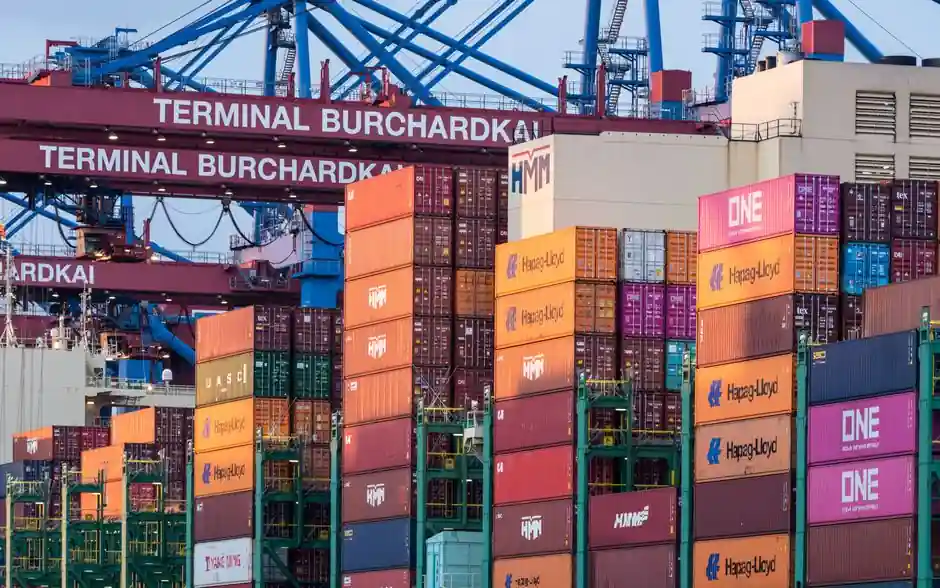
Lattice-boom crawler cranes in the 200–750 t class (Sany SCC2000A-2 200 t, 1152 t·m; SCC3200A-2 320 t, 1820 t·m) dominate heavy port lifts, while telescopic crawler units below 100 t cover rapid container-handler maintenance and barge-side module swaps [S2].
Specifying engineers weigh five gates first: lift-chart envelope at working radius, ground-bearing pressure (typical crawler pad 80–120 kPa), permissible wind speed, compliance with EN 13000 / ASME B30.5, and operator certification per OSHA 1926.1400-1441 [S5][S3].
Lattice-boom vs telescopic: where each architecture wins
Lattice-boom crawler cranes deliver higher capacity at long radius: a 320 t class unit reaches 86 m main boom with auxiliary jib, exceeding the practical envelope of any telescopic design [S2]. Telescopic crawler cranes win on mobilisation time, because no boom assembly is required, suiting terminal roving duties with single-shift redeployments [S1].
Decision rule used at container terminals: pick telescopic under 100 t capacity and 50 m radius, lattice over either threshold. The lattice boom also accepts modular inserts, trading a 2-day assembly for +20 m reach at equal axle load, which matters when stacking container-handler booms or erecting gantry crane rails [S2][S1].
Capacity-to-radius envelope for port lifts
Real spec data from active rental fleets: 100 t / 64 m max boom (SCC1000A-6), 200 t / 85 m (SCC2000A-2), 320 t / 86 m (SCC3200A-2) with corresponding load moments 396 / 1152 / 1820 t·m [S2]. For tandem-lift terminal work, a 600–750 t class crawler is the practical ceiling where single-machine lifts outclass two-crane lifts on rigging and scheduling risk.
Validate the duty cycle against the manufacturer's load chart at 360° slew, not just over the side; outrigger-less crawlers lose 10–20% capacity over the rear quadrant on asymmetrical tracks. Always reserve 25% chart margin for the dynamic amplification factor when lifting on floating barges, where roll and pitch add inertial loads absent on hardstand [S3].
Ground preparation and pad pressure
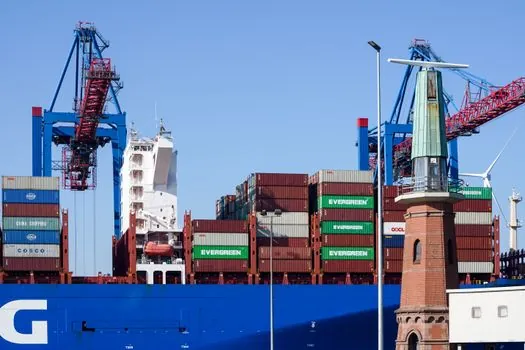
Crawler pad pressures on port fill typically run 80–120 kPa, but reclaimed quay surfaces can spike to 200 kPa if voids exist beneath paving; the crawler crane data on track-shoe load distribution (HITACHI KH180-3, QUY50, KOBELCO P&H7080) drives the steel-mat sizing calculation for site-prep contractors [S1].
Use a minimum 1.5× track-length bearing mat of welded steel plates over geotextile on weak fill. For work over service tunnels, cap pad pressure at 50 kPa and add a structural review: a 320 t class unit concentrates roughly 200 kN per linear metre of track, exceeding common utility-tray ratings [S1].
Wind, sea-salt and corrosion exposure at terminals
Coastal terminals impose salt-spray exposure class C5-I / C5-M per ISO 12944, so wire-rope terminations, slew-ring greases and track-pin seals should be specified to marine duty. Wind limits for crane erection sit at 12–14 m/s (Beaufort 6) and fall to 8 m/s for personnel-basket operations per EN 13000 [S5].
Hurricane season in Gulf and South China ports forces a pre-storm secure sequence: lower boom, retract crawlers on timber, release slew-brake to equalise wind load. Rental fleets tracked through Juyi's 300+ crawler inventory routinely de-rate 20% when sustained winds exceed 10 m/s to keep the load chart defensible [S2].
Operator certification, signalling and lift-plan governance
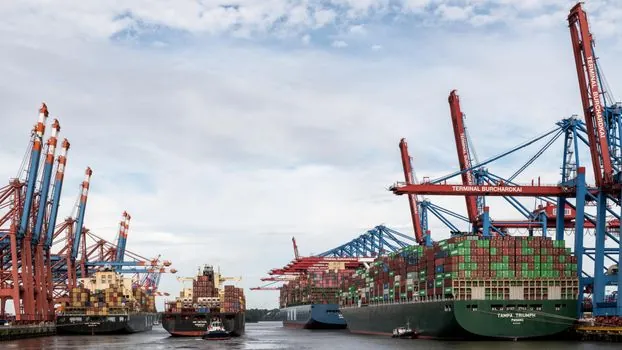
Crane operators in regulated port work must hold a valid Crane Operator Certificate, register as a Construction Worker with a Green Card, and be at least 18 years of age [S5]. US-flagged terminal work additionally requires NCCCO certification for lattice-boom crawlers over 30 t under OSHA 1926.1428.
Critical-lift plans for terminal assets should be filed with the harbour master: load weight verified by crane scale reading, sling geometry shown on a sketch, wind speed logged, and a designated signal person using hand signals or two-way radio per OSHA 1926.1419-1421 [S5]. For lifting near live shore-power or lighting equipment towers, isolate and re-route before the lift; dropped loads onto electrical infrastructure is the most common multi-fatality port-crane incident class.
Track-component sourcing and wear life
Track-roller, idler, sprocket and shoe wear is the largest variable-cost line on port crawler fleets; standard part numbers from RH Reachong (HITACHI KH180-3 bottom roller, KH125-2 track shoe, SCX2800 bottom roller, QUY50 50 t mobile-crawler track roller) show the pattern: replace shoes at 50% original web thickness, and idlers when seal weeping appears [S1].
Used-crane import and remanufacture trend (2026)
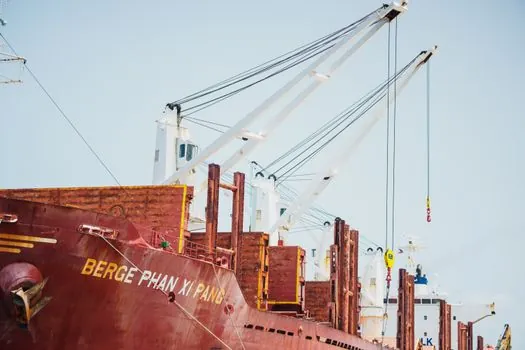
Maxim Crane Works publicly committed to a 14-unit Manitowoc remanufacture programme, signalling that the 2026 secondary market for 200–600 t crawlers is tightening around certified rebuilds rather than new builds [S6]. Used-stock platforms (Construction Equipment Guide, Juyi's 100+ annual secondhand sales) reflect this shift, with 2020–2021 production units still commanding premium prices.
Track this through Maxim's quarterly output disclosures and the Juyi fleet-age distribution: if average fleet age crosses 12 years, expect 10–15% rental-rate uplift on 200 t+ units through 2027 [S6][S2].
Final spec for procurement boards: lock the lift-chart envelope first, then ground pressure, wind class and certification, and finally track-component supply chain. For adjacent PPE planning on the same site, cross-reference Construction Site Safety Glove Selection: Cut Level, Coating, and Standard Gates because rigger glove spec frequently blocks lift-plan approval on terminal work.