Linear bearings fall into two engineering families, rolling-element units (ball and roller) and plain (sleeve/bush) units, and the choice between them is governed by load, speed, stroke, contamination, and lubrication regime rather than by brand familiarity [S2].
Common ball-bearing sleeves ship in 12-50 mm bore sizes, roller-based precision units cover 3-9 mm roller diameters, and plain polymer/metallic bushings cover the rest of the envelope, with each family trading speed against damping, and accuracy against contamination tolerance [S5][S3]. This article maps the types, sizes, materials, and standards to help process engineers and buyers pick the right unit for CNC, automation, packaging, medical, and clean-room duty.
Rolling-element linear bearings: ball vs roller sleeves
Ball-based linear bearings (type LBC, RNG equivalents) remain the most commonly specified rolling family because preloading tightens tolerance and reduces run-out, with standard bores from 12 to 50 mm and options for clearance-adjustable, open, flanged, double-length, and imperial sizes [S5][S6][S7]. Roller-based units, by contrast, replace the ball row with needle or cylindrical rollers (3-9 mm roller diameter in compact RNG/RSDE lines), trading higher load capacity and stiffness for a smaller form factor; Type RSDE is explicitly built for precision applications at medium-to-high loads and is offered as a matched set [S3].
For high-rigidity linear guidance, a linear guide rail-and-carriage system (profile rail with recirculating ball/roller paths) handles moments in all directions from a single rail, whereas a shaft-and-sleeve pair handles mostly radial load and needs a second shaft to carry overturning moments [S8]. Plain linear bearings (LPA-type self-lubricating polymer/metal composites) must be fixed in a housing to prevent axial and turning movement, and Ewellix specifies a light lubrication during installation to optimise running-in [S6].
Plain linear bearings and where they beat rolling units
Plain linear bearings (also called linear bushings or sleeve bearings) carry load through sliding contact rather than rolling contact, using PTFE-, bronze-, or composite-lined steel or polymer bodies, which makes them quieter, more contamination-tolerant, and often maintenance-free when self-lubricated [S2]. They are the default pick for food, medical, and washdown environments where lubricant migration is unacceptable, and for slow, high-load strokes where rolling-element brinelling would be a risk.
The trade-off is well documented: plain units have higher friction, lower speed limits, and lower positional accuracy than preloaded rolling units, so specifying a plain bushing on a high-speed pick-and-place axis is a common over-spec that costs throughput [S2]. When the application actually needs both tight motion control and a guided stroke, an engineer usually pairs a linear actuator (ball-screw or belt driven) with a linear guide carriage, and leaves the plain bearing for low-speed support or pivot duties.
Materials, seals, cages, and the contamination question
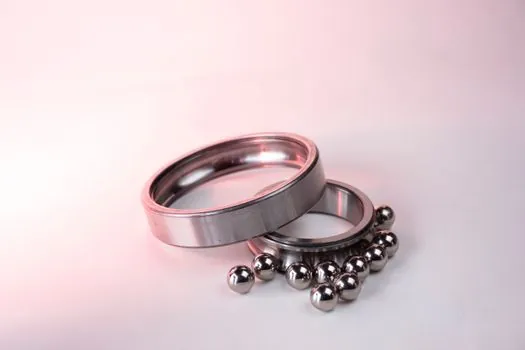
Standard sleeves use through-hardened or bearing-grade steel balls with a steel or polymer cage, dual-side integral seals, and a hardened outer cylinder; SAIBO's interchangeable product line lists steel ball, ball cage, seal, outer cylinder, shaft, and snap ring as the standard bill of materials, with type variants including clearance-adjustable, open, flange, and double-length [S7]. The open-type variants (LBCT, LBHT in the SKF/Ewellix nomenclature) drop one raceway segment so the sleeve can be mounted on a continuously supported shaft, with no significant loss of load capacity as long as the shaft is rigid enough to prevent bending between supports [S5].
Contamination resistance is engineered at three levels: integral nitrile rubber seals on standard sleeves for general factory duty, corrosion-resistant steel (Schneeberger option code RF) and DURALLOY/DryRunner low-friction coatings for harsh or dry-running environments, and cage-control options (FORMULA-S, code KS) that suppress cage creep at high accelerations [S1]. For semiconductor, pharmaceutical, or outdoor service, a linear module with corrosion-resistant rails and bellows covers the same duty a plain bushing would, while keeping accuracy in the single-digit micrometre band.
Size envelope, tolerances, and the standards that pin them
The practical size envelope for off-the-shelf ball and roller sleeves is 3-50 mm, with roller-based precision sleeves concentrated in the 3-9 mm roller-diameter band and ball-based standard sleeves in the 12-50 mm bore band; outside this envelope most users move to profile-rail linear guides or custom recirculating units [S5][S3]. Length, height, and width tolerances, plus hole-pattern tolerances, are tabulated in section 9 of the Schneeberger catalogue, and the load-life calculation is performed to DIN ISO methodology (section 12.3), which is the same basic dynamic load-rating framework used across the industry [S1].
Operating-temperature windows are catalogued per family rather than per standard, but the typical envelopes for steel rolling-element sleeves sit around -20 to +80 degrees C for standard seals, extended to -20 to +180 degrees C with high-temp seals and dry-running coatings, and plain PTFE-lined units often push higher on the upper end at the cost of lower thermal conductivity [S1][S2]. Speeds and accelerations are similarly family-dependent: profile-rail recirculating units are routinely rated for 1-3 m/s continuous and 20-50 m/s squared acceleration in general automation, while plain bushings usually stay below 1 m/s to keep heat and wear in check.
Applications, selection criteria, and how the families line up
Ball and roller sleeves dominate machine-tool, CNC, automation, and robotics duty because preloading suppresses play and run-out, and recirculating units convert that into rigid XY and Z axes when paired with a ball-screw or linear actuator [S4][S2]. Plain bushings dominate medical, packaging, food, marine, and outdoor structures where lubrication-free running, corrosion resistance, and silent operation matter more than micro-metre accuracy.
Compared on four decision criteria, the picture is consistent: ball sleeves win on speed and accuracy; roller sleeves win on load and stiffness in a small envelope; plain bushings win on contamination, noise, and lubrication-free running; and profile-rail linear guides win when the load carries an overturning moment or when long travel lengths are needed [S8][S2]. In practice, the typical industrial cell pairs a profile-rail guide on the main axis with ball-sleeve support on cable carriers or door slides, rather than picking one family for everything.
Service life, lubrication, and failure modes that bite in the field
Service life is calculated from basic dynamic load rating C, equivalent load P, and stroke length per ISO 281 / DIN ISO methodology, with a separate correction for short strokes (under roughly twice the bearing length) where lubrication film cannot fully establish and the empirical life factor drops sharply [S1]. Failure modes in the field track that model: short-stroke applications fail from lubricant starvation and false brinelling, long-stroke high-speed applications fail from cage creep and seal heat, and contaminated environments fail from raceway pitting that the integral seals cannot keep out [S1][S7].
Lubrication intervals, oil versus grease choice, and centralized-lubrication plumbing (Schneeberger option ZS for NRT recirculating units) are the field-level knobs that decide whether a bearing reaches its calculated L10 life or fails well before it, and the catalogue devotes sections 13.7-13.8 to sealing and lubrication for exactly that reason [S1]. For related bearing selection work on rotating shafts, the angular contact bearing types, contact angles, and industrial use map covers the radial/axial split in rolling-element bearings, and the tapered roller bearing types, load ratings, and industrial applications piece covers heavier combined-load cases; both sit naturally next to a linear-bearing specification on a machine tool.