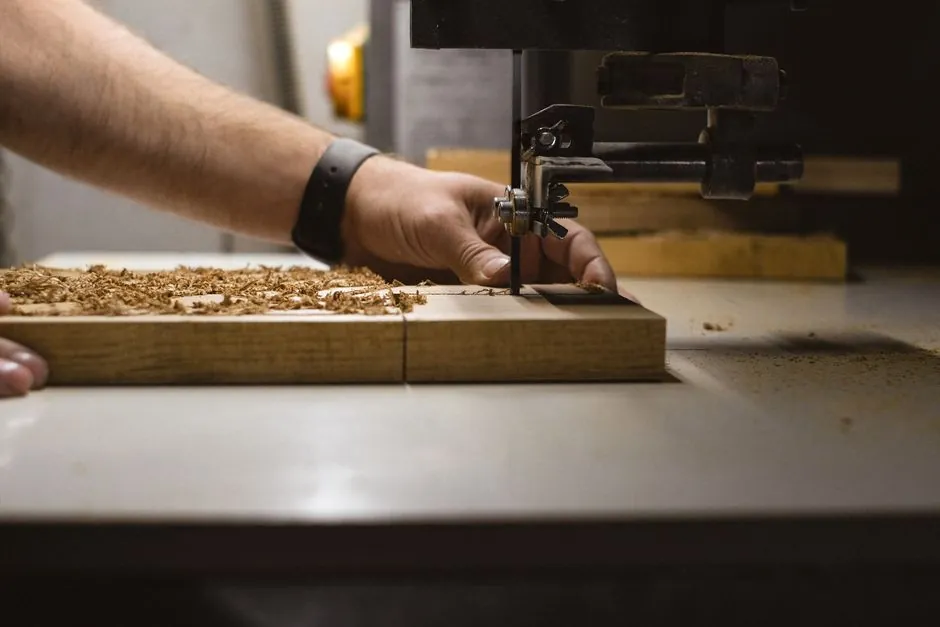
Linear guide rail buyers in 2026 face a clean fork: ship your own CAD to a contract machine shop and call it OEM, or pick a supplier-owned rail platform and rebrand it as ODM. The two paths diverge on design ownership, IP, lead time, and unit cost, and the right choice depends on whether the rail is a commodity block or a proprietary load path [S1][S3].
The underlying market makes the decision more expensive to get wrong. The global linear motion products market was worth USD 12.54 billion in 2024, projected to grow from USD 13.30 billion in 2025 to USD 22.43 billion by 2032 at a 7.7% CAGR, with industrial automation, EV battery lines, and machine tools doing most of the pulling [S2]. When a component sits inside that much capex, the OEM vs ODM choice shapes tooling amortization, recall exposure, and brand liability for the next decade.
Defining the Two Manufacturing Models
OEM manufacturing means the buyer supplies the design: CAD files, tolerances, material spec, and validation plan, and the factory produces to that print under the buyer's brand [S1]. For a linear guide, that typically means the buyer controls the rail profile, the raceway groove geometry, the ball/roller circulation path, the preload class, and the lubrication scheme. Engineering input is high, customization is extensive, and IP stays with the buyer [S1].
ODM manufacturing means the supplier owns the original rail design and offers an existing platform to multiple buyers, who customize branding, packaging, and a bounded set of features (length, carriage count, seals, surface treatment) without redesigning the core product [S1][S3]. The ODM factory's design know-how is the product; the buyer's value-add is distribution, application engineering, and after-sales [S3]. Both models can run inside a contract manufacturing relationship, since contract manufacturing only defines who does the work, not who owns the design [S1].
Linear Guide Specifics: What Actually Changes Between OEM and ODM
The practical difference for a linear guide rail buyer shows up in four places. First, the datum set: an OEM rail can be specified to non-standard hole patterns, custom rail heights (e.g. 15, 20, 25, 30, 35, 45 mm and beyond), and special Carriage lengths for moment loads; an ODM rail is constrained to the supplier's catalogue of widths, lengths, and hole spacings. Second, accuracy grade: OEMs typically run ISO 14728-2 accuracy classes H, P, SP, UP directly into the print; ODMs offer a subset of those grades on existing platforms [S1].
Third, sealing and lubrication. An OEM buyer can specify stainless steel end caps, high-dust scrapers, nitrile or fluoroelastomer seals, and food-grade H1 grease on the print; an ODM buyer picks from the supplier's pre-validated option list. Fourth, the certification chain. OEM buyers can demand PPAP, IMDS, RoHS, REACH, and conflict-mineral documentation flowing back to the steel mill; ODM buyers inherit whatever certification the platform already carries, and adding a missing one is a paid engineering project rather than a print revision. The same logic explains why contract manufacturing for a CNC linear guide block can sit inside either model, and why the work in E-Axle Manufacturing Quality Standards applies to both paths when a guide ends up in a drive subsystem.
Decision Matrix: OEM vs ODM Across Four Criteria
Comparing the two options head-to-head on the criteria that actually move a linear guide program: (1) Upfront cost and tooling: OEM carries higher development and tooling cost because the factory quotes against a new print; ODM uses the supplier's existing tooling, so NRE is lower and tooling amortization is shared across buyers [S1]. (2) Time to market: ODM wins on speed because the platform is already engineered and the buyer mostly configures options; OEM loses weeks to months on DFM review, sample runs, and PPAP [S1][S3]. (3) Specification control: OEM wins because the buyer owns tolerances, materials, preload, and accuracy grade end-to-end; ODM constrains the buyer to the supplier's predefined modification menu [S1]. (4) Margin and brand exposure: OEM contract work typically runs 10-15% gross margin for the factory, while brand-owning models capture 40-50% gross margin but absorb roughly 80x higher cost when a defect reaches the field instead of being caught on the line [S4].
That last ratio is the one a linear guide program manager should write on the whiteboard. A profile-ground linear rail that walks out of spec in the field is not a warranty event, it is a spindle crash, a robot recall, or a battery line downtime, and the bill lands on whoever put the brand on the box.
Who Should Choose OEM, Who Should Choose ODM
OEM is the right path when the rail is part of a proprietary machine, when the buyer needs a non-standard rail height or custom preload behaviour, when the application carries safety or precision liability (machine tools, semiconductor handlers, surgical robotics, EV battery winding), or when the buyer wants to keep the raceway geometry, sealing stack, and lubrication IP in-house [S1][S2]. Tooling cost is amortized over the program, and the buyer's design team is large enough to own a print. Sectors that sit on this side of the line include semiconductor wafer handling, precision machining centres, and medical imaging, where linear guide choice is a system-level decision tied to the linear bearing and linear encoder stack around it.
ODM fits when the rail is a catalogue component the buyer is rebranding for distribution, when the application tolerates standard accuracy grades, when the buyer's value-add is integration, support, and channel rather than design, or when speed-to-market matters more than full spec control [S1][S3]. Typical fits: regional machine builders assembling standard CNC routers, material handling OEMs, and EV battery module lines where the line builder integrates a rail that already meets the required accuracy and load ratings. The ODM path also suits a new entrant that wants to learn what accuracy class its customers will pay for before commissioning its own print [S1].
Limitations, Failure Modes, and Sourcing Risks
OEM's main failure mode is validation drift. A buyer-owned print can include tolerances the factory cannot actually hold, or materials (e.g. corrosion-resistant 440C vs standard 52100 bearing steel) that the heat-treat line is not equipped for, and the gap surfaces only at PPAP. Mitigation: lock PPAP and first-article inspection to ISO 14728-2 class definitions, not internal codes, and require a Cpk report on raceway profile and height-H tolerance [S1].
ODM's main failure mode is platform lock-in. The supplier owns the design IP, so if the buyer needs a non-standard carriage length, a special seal stack, or a different accuracy grade later, the change request becomes a paid engineering project, and the supplier can decline outright or quote against a minimum order quantity [S1][S3]. A second ODM risk is dual-sourcing: if the platform is sold to multiple buyers, lead time on a popular carriage size can stretch during demand spikes, and the buyer has limited leverage. As one sourcing guide notes, ODMs absorb design risk and earn thinner differentiation in return, while OEMs absorb the buyer's manufacturing risk at the cost of margin [S3].
Both paths share a sourcing-discipline risk that matters more than the model itself: confusing contract manufacturing with OEM or ODM. A CNC shop machining a rail block from the buyer's CAD is a contract manufacturer running an OEM job; the same shop machining the supplier's existing rail design is a contract manufacturer running an ODM job [S1]. Specifying the wrong letter costs money, time, and IP.
Trackable Signals for the Next Buying Cycle
Two signals to watch through 2026: (1) whether suppliers are publishing ISO 14728-2 accuracy-grade data and PPAP packages on ODM catalogue rails, which would compress the spec gap between ODM and OEM for standard accuracy classes; (2) whether brand-owning linear guide programs are publishing verified Cpk on raceway profile and preload class on OEM rails, since buyers running a linear actuator or crossed-roller guide stack increasingly demand that data at RFQ. The global linear motion market is on track to roughly 1.7x between 2025 and 2032 [S2], and the suppliers that publish the cleanest spec data will be the ones OEMs and ODMs both end up sourcing from.