
Cell and pack producers in 2026-07 work to a layered compliance stack: cell-level IEC 62133-2 and UN 38.3 transport testing, pack-level UL 1973 / UL 9540 for stationary storage, GB/T 36276 for the Chinese market, and IATF 16949 quality management for automotive-grade packs [S3].
The standards cover four domains — cell electrical safety, pack abuse testing, transport classification, and factory process control — and they intersect at the dry-room electrode coating step, where vacuum and dew-point limits are the most-cited process variables [S1].
Cell-level safety: IEC 62133-2, UN 38.3, GB/T 36276
IEC 62133-2:2017 is the dominant cell safety reference for portable lithium-ion, covering short-circuit, thermal abuse, crushing, and low-pressure tests at altitudes simulated to 11.6 kPa [S3]. UN 38.3 (UN Manual of Tests and Criteria, Section 38.3) is mandatory for any standalone lithium cell shipped by air, sea, or land, and includes eight tests — T1 altitude simulation, T2 thermal, T3 vibration, T4 shock, T5 external short, T6 impact, T7 overcharge, and T8 forced discharge [S3].
In China, GB/T 36276-2018 governs stationary-storage lithium-ion cells and modules, with strict cycle-life and thermal-runaway-propagation criteria above 80% State-of-Charge [S2]. Manufacturers exporting to multiple regions commonly test the same cell against IEC 62133-2, UN 38.3, and GB/T 36276 in parallel to avoid duplicate qualification runs.
Pack and system standards: UL 1973, UL 9540, IEC 62619
UL 1973 covers stationary, motive, and light-rail pack assemblies and references abusive electrical and mechanical tests inherited from the cell-level work in IEC 62133-2 [S3]. UL 9540 (and UL 9540A cell-level fire-propagation testing) is the de-facto U.S. reference for energy storage systems above roughly 20 kWh and is increasingly tied to NFPA 855 siting rules in U.S. jurisdictions.
IEC 62619:2022 is the equivalent industrial-cell standard worldwide and is the document most EU and Korean pack builders reference for cells above 100 Wh [S3]. For a project that must clear both U.S. and EU grids in 2026, qualifying cells to IEC 62619 plus UL 1973 typically costs less than running two fully separate campaigns, because UN 38.3 results are reused [S3].
Automotive quality: IATF 16949 and battery passport
IATF 16949:2016 is the contractual quality-management floor for any tier-1 shipping into a vehicle OEM, and EV pack plants have been transitioning to IATF 16949 since 2018 as cell and pack makers folded in [S2]. Production Part Approval Process (PPAP) is the deliverable: 18 documented elements, with the Control Plan, PFMEA, and MSA studies being the most reworked items for new cell form factors [S3].
Process-control standards inside the dry room
Inside the cell fab, quality is enforced at process boundaries rather than only on the finished cell. Electrode coating and electrolyte filling require a dew point below −40 °C (around 100 ppm moisture absolute), with the most aggressive cathode lines targeting −60 °C dew point (around 10 ppm) [S1]. Vacuum levels during electrolyte degassing and cell formation are specified in the 1×10⁻³ to 1×10⁻² mbar range, which is why Busch-class oil-sealed rotary-vane and dry-pump skids dominate the cell-finishing aisles [S1].
Inline quality data is governed by VDA 6.3 process audits (German automotive), IPC-A-610 for any BMS PCB assembly, and ISO 9001:2015 for the base quality system [S3]. For pack assembly, torque-controlled bolting on busbars and laser-weld pull testing on tab bonds are the two highest-yield process control loops; process vacuum on drying lines needs the same metrology care as any chemical-plant loop because the dry-room dew point is the single biggest predictor of cell cycle life [S1].
Who the quality stack is for, and where it breaks

The full IEC 62133-2 + UN 38.3 + UL 1973 + IATF 16949 stack is required for: EV pack suppliers, stationary storage integrators above 20 kWh, medical and industrial-AGV builders shipping into North America or the EU, and any cell maker shipping standalone cells by air freight [S3]. A small custom pack shop building 18650-based, low-voltage (< 60 V) packs for hobbyist drones or e-bikes typically only needs UN 38.3 plus IEC 62133-2 on the cell, and can skip UL 1973 unless the host equipment is UL-listed [S3].
The standards break at three points: (1) thermal-runaway-propagation testing assumes a single chemistry and a known module geometry — sodium-ion, LTO, and semi-solid packs fall back to bespoke abuse programs; (2) dry-room dew-point specifications above 100 ppm are tolerated by GB/T 36276 for some LFP cells but would fail a tier-1 EV cell plant's internal spec; (3) UN 38.3 does not retest cells after design changes, so any tab-weld, separator-coating, or electrolyte-formulation change forces a full T1–T8 re-run [S3].
Cell chemistry vs applicable standard map
Lithium-iron-phosphate (LFP) cells face less stringent UN 38.3 overcharge margin than NMC because of their lower voltage plateau, but GB/T 36276 thermal-propagation clauses are equally applied to both chemistries in Chinese stationary installations [S2]. LTO and sodium-ion cells fall outside IEC 62133-2's scope and are typically tested to UL 1973 or to manufacturer-specific abuse programs pending IEC 62619 updates.
Lithium-metal primary cells are governed by IEC 60086-4 and a different UN 38.3 section, and are not in scope for EV or large-format storage [S3]. When the same pack is shipped as a 48 V LiFePO4 module for telecom backup and as a 51.2 V NMC pack for residential storage, the cell-level tests can usually be shared via IEC 62619 cross-recognition, but the pack-level UL 1973 test campaign is not always accepted by UL 9540 system-level reviewers [S3].
Equipment-side controls and how to audit a vendor
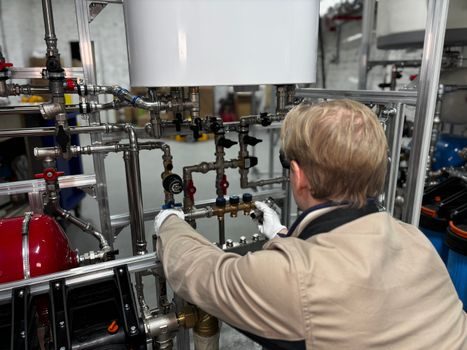
A practical supplier audit in 2026-07 should check five paper items: IATF 16949 certificate scope (must list the exact product family), the most recent UL 1973 or UL 9540A report with cell part numbers, IEC 62133-2 CB test certificate, UN 38.3 summary report, and a GB/T 36276 test summary for China-bound product [S2][S3]. A line-walk should verify dry-room dew-point data-logger calibration (typically once a year, with NIST-traceable reference), vacuum-pump exhaust filtration on electrolyte filling, and the BMS traceability chain from cell barcode to ship-out serial [S1].
For a new pack program in 2026, expect 14–18 weeks from cell PO to first production packs if cells are already IEC 62133-2 / UN 38.3 / GB/T 36276 qualified, and 26–34 weeks if the cell form factor is new and re-qualification is required [S3]. Cross-link: lithium battery equipment selection and 2025-2026 capacity planning are the upstream articles to read alongside this one.
Trackable signals to watch in 2026-07
[S2]