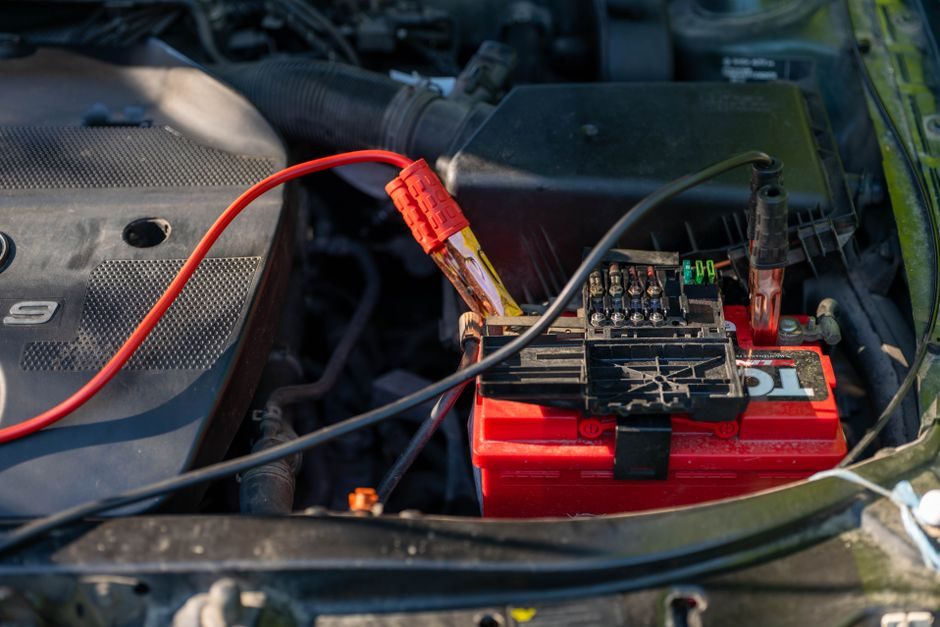
Industrial lithium battery supply stays tight through 2026, with battery-grade rolled copper foil in the 4.5–70 µm thickness range shipping at a quoted 120,000 m²/month from one Chinese supplier, against an industry backdrop where lithium shortages have recurred through multiple EV-demand cycles [S1][S2].
Buyers in 2026 must manage two parallel risks: upstream raw-material pinch (foil, lithium compounds, electrolyte) and the cell-chemistry choice (NMC vs LFP) that sets cycle life, depth-of-discharge and recyclability, with the 80% DoD NMC window contrasted against the 60–80% range typical of LFP cells [S6]. This article maps the spec levers and the 2026 sourcing reality that process engineers and procurement teams are working against.
Thin copper foil: 4.5 µm to 70 µm grades, 520–630 mm web width
One major China-origin rolled copper foil line lists standard widths of 520 mm with a maximum of 630 mm, and a full thickness menu of 4.5 µm, 6 µm, 9 µm, 12 µm, 18 µm, 35 µm, 50 µm and 70 µm, with packaging in wooden boxes, 10–30 day delivery, L/C and T/T payment terms, and production certified to YS/T 1039-2015 [S1]. The 6 µm ultra-thin grade is the one most often quoted for high-energy-density lithium-ion cells where anode current-collector mass must be minimised.
For process engineers, the web-width ceiling (630 mm) matters more than people realise: it directly constrains electrode-coating line design and determines how many cells can be cut per metre of foil, which feeds back into cell cost and defect rate. Procurement teams locking in foil supply should pin the YS/T 1039-2015 standard on the PO, confirm the 120,000 m²/month capacity figure with the mill, and treat the 10–30 day delivery window as a hard floor — not a marketing line [S1].
NMC vs LFP: depth-of-discharge, cycles and recyclability
NMC cells in this 2026 source dataset are rated for roughly 80% Depth-of-Discharge with more cycles than LFP, while LFP cells operate in a 60–80% DoD band, with NMC also flagged as more recyclable in the Thailand-anchored build configuration described [S6]. That three-way trade-off — usable energy per cycle, cycle count, and end-of-life recovery — is the core spec decision a buyer has to make before the supply conversation even starts.
Build geography matters: the Thailand modular-system build cited allows highly customised battery packs with fast local service through a Micropower partnership, which is a useful template for buyers who want regional cell-pack assembly rather than full containerised imports from China [S6]. For stationary industrial storage where weight is irrelevant, LFP's 60–80% DoD window and longer cycle life usually win; for traction and mobile platforms where kWh/kg drives the design, the 80% NMC DoD and higher specific energy typically justify the cost premium.
Cell balancing and pack-level management: where shortage risk hides
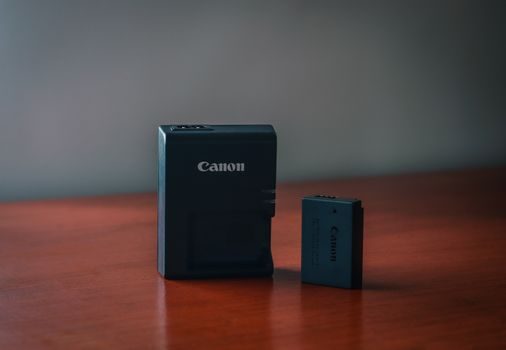
Cell balancing remains a common failure mode in multi-cell lithium-polymer packs — for example, 3-cell packs used in electric RC helicopters — and the principle scales directly to industrial packs of 14s, 16s and beyond [S3]. A cell that drifts high in SoC while its neighbours stay moderate will be over-charged on every cycle, accelerating degradation and creating a safety hazard well before the cell itself is technically "worn out".
The Li-ion battery management system — defined bilingually in industrial vocabularies as 锂离子二次电池管理系统 / Li-ion battery management system — sits between the cell and the load, handling balancing, protection and state-of-charge estimation, and is therefore the single component where a sourcing shortcut costs the most per dollar saved [S5]. Engineers specifying 2026 packs should treat the BMS as a long-lead part, not a commodity, especially when cells are sourced from multiple upstream lots.
Supply-chain intelligence: tracking the full 2026/27 lifecycle
Industrial Info Resources now markets a full-lifecycle lithium battery supply chain database covering mining sites, refining operations, manufacturing plants, EV assembly and energy storage systems, with capital and maintenance project tracking across every stage [S4]. For a procurement team trying to forecast 2026/27 cell allocation, that kind of asset-level visibility is the difference between placing a PO in Q3 and scrambling for allocation in Q4.
The wider 2026 supply picture mirrors other industrial pinch points: see how the electric motor supply squeeze in 2026 compounds cell risk in EV and industrial drive lines, and how rare-earth and SCRM mandates in the aerospace chain echo the upstream concentration risk that lithium and its foil inputs also carry.
Decision criteria: NMC vs LFP vs LPo, side by side

For a buyer writing a 2026 cell spec, the four-criteria comparison is: usable energy per cycle (NMC ~80% DoD, LFP 60–80% DoD, LPo chemistry used in hobby packs around 3s configurations), cycle count (NMC higher, LFP long but at lower DoD), recyclability (NMC flagged as stronger, especially in Thailand builds), and pack-format flexibility (LPo favoured for small RC packs, NMC and LFP dominant in industrial kWh–MWh systems) [S3][S6]. Add upstream foil availability as a fifth gate: 4.5–70 µm rolled copper foil at 120,000 m²/month with YS/T 1039-2015 certification is the current realistic ceiling from the named supplier [S1].
Anyone whose use case is high-power RC, drone or hobby pack should default to lithium-polymer with active cell balancing, not the larger prismatic NMC/LFP format [S3]. Industrial stationary storage, forklift fleets and grid-tied BESS should default to LFP for cycle life and thermal stability; traction, mobile robotics and weight-sensitive EV auxiliaries should default to NMC for the 80% DoD window and the higher specific energy.
Limitations, failure modes and known constraints
Three known failure modes sit on top of the supply story: cell drift without active balancing in multi-cell packs [S3], depth-of-discharge overshoot in LFP cells driven above their 60–80% band, and foil-thickness mismatch in cells that are specced for 6 µm anode foil but end up receiving 9 µm or 12 µm deliveries under allocation pressure [S1][S3][S6]. The first two degrade the pack; the third quietly reduces energy density by 30–50% on the affected lot.
Supply-side constraints to flag in any 2026 contract: the 520 mm standard / 630 mm maximum foil web width caps electrode-coating line choices, 10–30 day delivery from the cited mill is not negotiable downward, and 120,000 m²/month capacity is mill-specific — not a market-wide figure [S1]. Buyers should also note the historical precedent: lithium supply tightness flagged in late 2021 for 2022 ultimately persisted longer than initial forecasts, which is why 2026 allocation planning should be conservative [S2].
Standards, sourcing signals and 2026/27 trackable nodes

The only explicit standard in the 2026 source set is YS/T 1039-2015 for the rolled copper foil grade — pin it on the PO and verify the mill certificate with each shipment [S1]. The lithium-supply context itself is best tracked through asset-level databases such as Industrial Info Resources' battery supply chain platform, which now covers mining, refining, cell manufacturing, EV assembly and storage deployment in a single workflow [S4].
Two trackable signals to watch into late 2026 and 2027: NMC vs LFP chemistry share in new industrial BESS tenders (the 80% DoD vs 60–80% DoD split is the public benchmark), and the quoted delivery window on 6 µm rolled copper foil — if the 10–30 day band widens, the foil market is tightening before the cell market does [S1][S6]. For a broader view of how lithium ties into adjacent industrial pinch points, the lithium supply pipeline and price-band analysis covers the upstream mining and refining layer, while the industrial CPU supplier map covers the BMS-side silicon that also constrains pack-level delivery in 2026.
For component-level specifications, see dc power supply, switching power supply, and pressure transmitter.