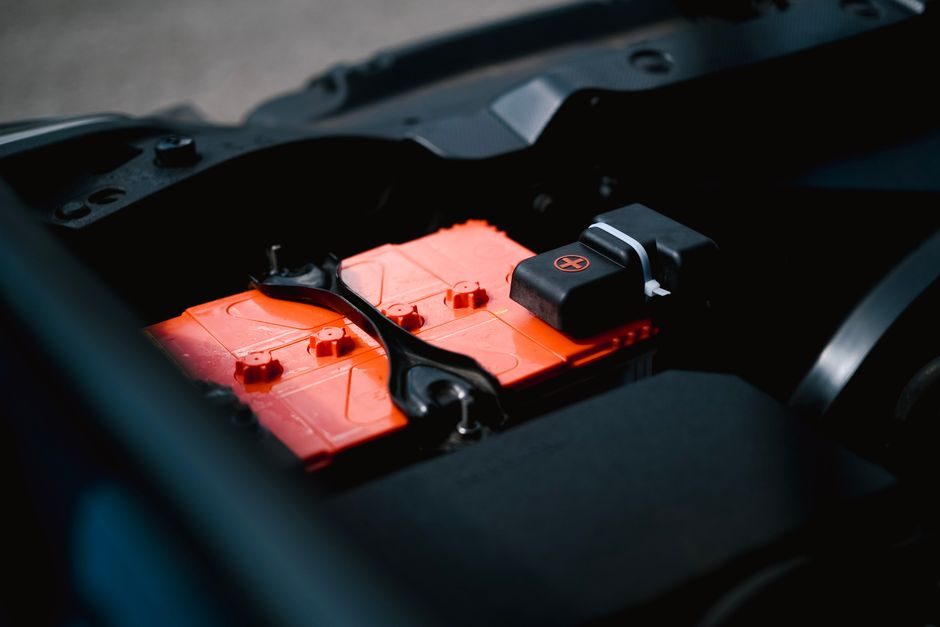
A 2026-spec lithium-ion cell bill of materials resolves into two layers — active electrochemical materials (cathode, anode, electrolyte, separator) and structural hardware (cell cases, covers, busbars, module/PACK enclosures) — and the structural tier is now dominated by IATF16949-certified shops in the Shenzhen manufacturing corridor [S3].
Cell-level product families split into cylindrical, prismatic and pouch formats, with LiFePO4 chemistries dominating Chinese forklift, mining, golf-cart and stationary storage packs as listed by Frey Battery's North American LiFePO4 line [S1], while solid-state programmes continue to push interface engineering as the gating issue for next-generation stacks [S2].
Active materials: cathode, anode, electrolyte, separator
The cathode active material sets energy density and cost; mainstream 2026 commercial chemistries are NMC (nickel-manganese-cobalt), NCA (nickel-cobalt-aluminium), LFP (lithium iron phosphate) and LMR (lithium- and manganese-rich) variants, with LFP holding the stationary-storage and heavy-duty mobility share per the LiFePO4 product line covering forklifts, mining equipment, energy storage, and golf/utility vehicles [S1].
The anode is dominated by graphite (artificial or natural), with silicon-oxide (SiOx) and silicon-carbon (Si-C) blends entering premium cells at 5–20 wt% Si to lift specific capacity, while lithium-metal anodes are confined to solid-state R&D and remain gated by interface stability [S2]. First-principles work on cathode materials continues to screen doping and coating strategies to raise upper-cut-off voltage and cycle life [S4].
Structural components: cell cases, covers, busbars, PACK enclosures
Cell-format hardware is the second BOM layer. Cylindrical cells (18650/21700/46800) use nickel-plated steel or aluminium cans with stamped positive caps and PTC/current-cutoff discs, while prismatic cells use aluminium shells with laser-welded top covers carrying the rupture-disc vent, liquid-injection port, and electrode tabs; pouch cells use aluminium-laminated film (PET/Al/CPP) sealed on three sides during cell assembly [S3].
LeBeiCoo's positioning as an IATF16949 + ISO 9001 structural-component supplier reflects the auto-industry quality push that now extends to ESS and e-mobility PACK hardware, with PCBA, BMS integration, and module-to-PACK assembly commonly bundled at the same vendor [S3]. For comparison with adjacent industrial enclosures and process hardware, see the spec-driven approach in this gas-fired aluminium melting furnace selection guide — the same data-density logic (material grade, tolerance, certification) applies when sourcing battery PACK boxes and busbar assemblies.
Bill-of-materials weight and cost split, 2026 baseline
A representative 2026 NMC811 cylindrical 21700 cell BOM breaks down roughly as cathode active material 35–40 wt% (and ~35–45% of cell cost), anode 15–20 wt%, electrolyte 10–15 wt%, separator 3–5 wt%, aluminium current collector 4–6 wt%, copper current collector 10–12 wt%, and the balance split between cell hardware (can/cap/vent), tabs, and assembly labour. An LFP cell shifts the cost share further toward cathode active material because LFP has lower voltage and therefore needs more active mass per kWh, while the cell hardware share is roughly comparable across chemistries within the same form factor. [S1]
At the PACK level the BOM is dominated by the cells themselves (~70–80% of PACK cost in a typical ESS container), with the balance split across the BMS (battery management system) PCBA, contactors and fuses, busbars and cables, the PACK enclosure (steel or aluminium, powder-coated, IP55–IP67), thermal management (liquid-cooling plates or forced-air ducting), and fire-suppression / gas-detection subsystems. For PACK enclosure and seal selection, FKM/EPDM gasket choices parallel the compound-grade logic detailed in FKM fluororubber selection — the same temperature-and-chemistry matrix governs seal compatibility on PACK lids and coolant manifolds.
Solid-state interfaces: the open problem at the chemistry frontier
All-solid-state lithium battery development is bottlenecked at the cathode-electrolyte and anode-electrolyte interfaces rather than at bulk ionic conductivity, with interfacial impedance, dendrite suppression and contact loss under cycling identified as the gating engineering issues [S2].
The review covers sulphide, oxide and polymer solid electrolytes and concludes that hybrid-cell designs using a gel or localised liquid electrolyte at the cathode interface remain the most credible near-term bridge before bulk solid-state reaches automotive-grade cycle life [S2]. A practical reading for sourcing teams: solid-state cells are not yet a 2026 production line item for forklifts, mining trucks, golf carts or stationary storage — those product lines remain on liquid-electrolyte LiFePO4 cells [S1].
Selection criteria: matching the BOM to the duty cycle
Three decision criteria drive the cell-to-PACK BOM choice: (1) energy density vs power density — NMC/NCA for range-critical EV duty, LFP for cost- and cycle-critical storage and industrial mobility; (2) cycle life vs calendar life — LFP typically rated 4,000–8,000 cycles to 80% capacity in deep-discharge storage service, NMC 1,500–3,000 in the same envelope; (3) thermal-runaway tolerance — LFP's higher onset temperature and lower gas yield per Ah makes it the default for unattended indoor storage cabinets and underground mining equipment [S1].
On the structural side, the choice of cylindrical vs prismatic vs pouch cascades into busbar topology, module compression frames, and PACK weld/bolt strategies; vendors offering PCBA + module + PACK assembly in one IATF16949 line reduce the number of tier-2 hand-offs and the associated traceability gaps [S3]. For adjacent sourcing logic on integrated assemblies, see the hydraulic motor vs valve functional-split map — the same component-to-system allocation logic governs whether BMS, contactors and busbars are sourced as a turnkey module or built up at the PACK integrator.
Standards, traceability and supplier qualification
Structural-component suppliers serving automotive and ESS cell-format programmes are typically required to hold IATF 16949 (automotive quality management) layered on ISO 9001, with PPAP-level documentation, material declarations, and process-capability indices (Cpk ≥ 1.33 typical for safety-relevant dimensions such as can height, vent burst pressure, and laser-weld pull strength) [S3].
Cell-level conformance follows UN 38.3 (transport), IEC 62660 (performance/durability for automotive lithium cells), UL 1973 (stationary storage), and UL 9540 / IEC 62933 for the assembled ESS; the active-material tier references GB/T 36276 in China and the comparable IEC 62620 series internationally. Sourcing teams should request the supplier's IATF certificate scope, the last surveillance-audit date, and a sample PPAP package before locking any cell-format structural supplier. For the comparison logic between a Chinese IATF16949 tier-1 like LeBeiCoo and smaller regional sheet-metal shops, the same evidence pattern (cert ID, audit date, dimensional Cpk) applies as in this aluminium melting furnace supplier map.
Failure modes and traceability signals to watch

Trackable 2026 signals to watch: IATF16949 audit-cycle outcomes for Chinese structural suppliers (next surveillance window: late 2026), solid-cell pilot-line announcements tied to the interface-engineering work in [S2], and any LFP cell cost-per-kWh revision that would shift the active-material share of the BOM in the next 12–18 months. For adjacent cost-tracking patterns in display and consumer electronics, see the OLED price trend 2026 panel bands and sourcing signals — the same quarterly-anchor-and-lead-time logic applies when modelling LiFePO4 cell cost per kWh.
For component-level specifications, see shaft key, pressure transmitter, and flow meter.