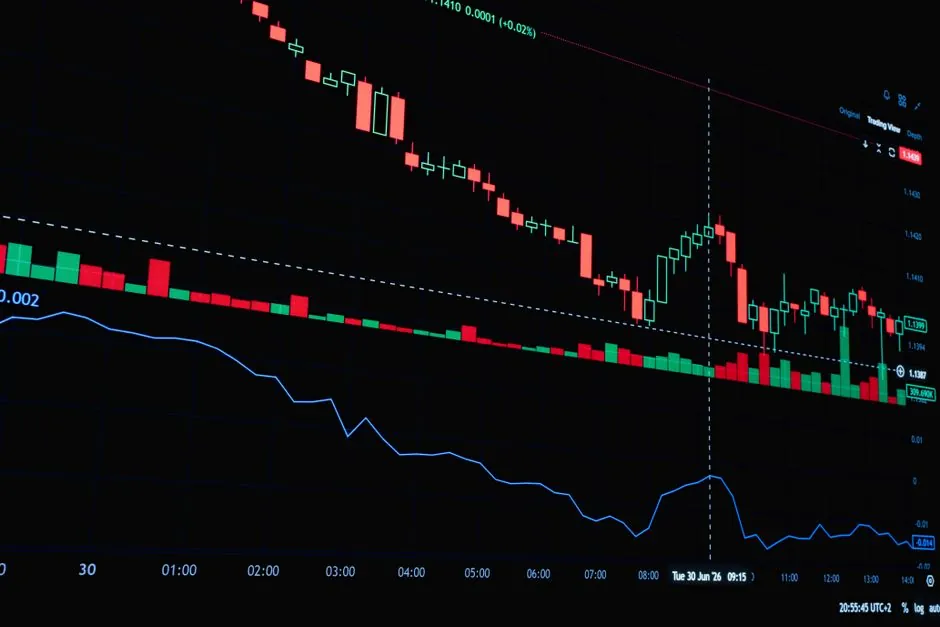
Lithium-ion battery pack prices dropped 8% since 2024 to a record low of $108 per kilowatt-hour as reported on 2025-12-09, even as cell makers prepared for raw-material cost passthrough clauses [S8].
Benchmark Mineral Intelligence's live index, captured 2026-09-08, shows the Lithium Carbonate Index at 300.39 (down 1.86%), the LFP Index at 229.17 (up 4.96%), and the NCM High-Nickel Index at 144.45 (down 3.49%), the exact spread a procurement team needs to size a price-adjustment trigger band [S2].
What "lithium carbonate indexation" actually means in a cell contract
Indexation links a portion of the cell or pack price to a published reference for battery-grade lithium carbonate, usually the cif China/Japan/Korea Benchmark price (code MB-LI-0029) or an equivalent Fastmarkets/Asian Metal assessment, with caps and floors on the monthly delta that can be passed through [S1].
Indexation clauses typically carve out 8-15% of the cell cost as the "lithium-sensitive" share, because lithium raw material itself represents only 2-3% of cell mass but 10-13% of cell cost in NCM-811 packs, and a smaller but still meaningful share in LFP [S1]. The clause triggers when the reference price moves more than a defined percentage over a defined window (commonly 5-10% MoM), and settles on the next shipment price.
For LFP cells, the lithium-carbonate linkage is tighter than for NCM, because LFP cathode precursors contain lithium but no cobalt or nickel cost buffers, so a 100% rise in lithium carbonate can move LFP pack prices by approximately 100% on a materials-only basis before manufacturing overhead is layered in [S6]. Engineers writing these clauses should always quote the index reference, the cap/floor band, and the lag window in the same paragraph to avoid contract ambiguity.
Cost-driver ranking: where the indexation leverage really lives
The 2025 cost build for LFP cells ranges $14-19/kWh at the cell level, with inactive materials and alternative-active-material (AAM) overheads pushing the upper bound, per peer-reviewed modelling cited in 2025 [S3]. The single largest cost driver is the cathode active material, then the anode (graphite), then separator and electrolyte, then cell hardware and labour.
Lithium sits inside the cathode active material line, so its cost-leverage on the finished cell is roughly 10-13% for NCM-811 prismatic cells and a similar order for LFP, depending on Li-metal-to-cathode stoichiometry [S1]. Concretely, a $10/kg move in battery-grade lithium carbonate shifts the cell price by roughly $2-3/kWh in an LFP prismatic format and $3-4/kWh in NCM-811, using August 2026 regional spreads as the calibration baseline [S7].
The second-order driver is policy: China cancelled the export tax rebate on batteries entering 2026, which is treated by sellers as a direct cost add and is often folded into the same passthrough mechanism that carries the lithium index, so a buyer's "lithium-only" clause can quietly inherit a tax-line adjustment unless explicitly excluded [S5].
Regional price spreads your indexation clause should mirror
August 2026 battery-grade lithium carbonate assessments show NE Asia at USD 18.14/kg (down 16.6% MoM), Europe at USD 14.60/kg (up 9.3% MoM), and South America at USD 8.79/kg (up 0.9% MoM), a 2x spread between the cheapest and most expensive regions that is wider than the prior year [S7].
That spread is the technical reason a US or EU cell buyer cannot simply point at a Chinese domestic index: the delivered carbonate into a European gigafactory carries freight, duty, and conversion premiums that an NE Asia cif number does not capture, and the indexation reference must be matched to the buyer's actual delivery region to avoid a structural under- or over-recovery [S1].
The macro context, as written in late 2024, was that lithium carbonate cif CJK and lithium hydroxide cif CJK had collapsed to 14% of their January 2023 levels by August 2024, a 86% drawdown that pulled Li-ion cell costs down 50-60% in the same window, and that earlier 2023-2024 collapse is precisely the volatility an indexation clause exists to dampen [S1].
Comparison: NCM mid-nickel, NCM high-nickel, and LFP on lithium sensitivity
On a per-kWh basis, an LFP cell carries the highest lithium mass (roughly 0.13-0.15 kg Li per kWh of pack), while NCM-811 carries less lithium mass but a higher dollar value per kg of contained lithium because of pairing with cobalt and nickel; NCM mid-nickel (NCM523/NCM622) sits in between on both axes [S1].
NCM high-nickel is also exposed to nickel and cobalt indexation, so a single-commodity lithium clause under-hedges the true material risk for that chemistry.
For industrial buyers pairing storage with pressure transmitter and flow meter instrumentation, the cell-cost line item often exceeds the BoM cost of the supporting instrumentation by a factor of 20-50x, so the indexing mechanic deserves more engineering review than the sensor spec.
Pass-through mechanics, caps, floors, and the 2025-2026 trigger history
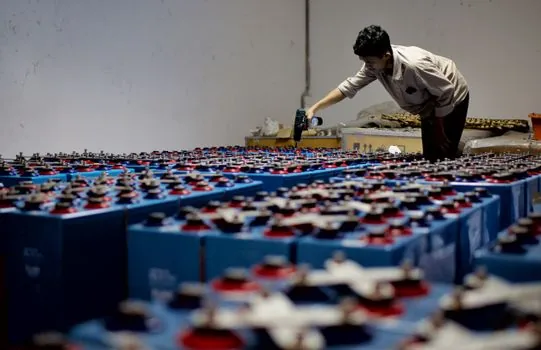
From mid-December 2025 to early January 2026, lithium-carbonate-related spot indices "ranked among the top in spot price increases" and moved by double-digit percentages, with some windows approaching 50%, which is exactly the kind of move that triggers a well-written passthrough and leaves an unwritten fixed-price contract exposed [S5]. Industry expectations stated at the time were for the price centre of gravity to remain elevated for 1-2 years rather than revert to the 2024 trough [S5].
By August 2026, however, NE Asia carbonate had corrected 16.6% MoM, while Europe and South America were up 9.3% and 0.9% respectively, a divergence that shows why a single global index is a poor hedge and a regional basket is the standard procurement-engineering recommendation [S7]. A two-region basket (NE Asia cif + Europe delivered) reduced basis risk on European gigafactory output during the 2026 H1 reversal.
When indexation is the wrong tool
Indexation is the wrong tool for very short contracts under 6 months, because the admin overhead of running monthly true-ups exceeds the expected savings on a small volume; it is also wrong for chemistries with a large non-lithium cost share where the "lithium" label misleads the buyer's risk committee into thinking the cell is hedged when it is not [S1].
For LFP storage packs in a 24/72-month offtake, indexation is the right tool because the lithium share is the largest single material risk and the contract length is long enough to amortise the admin cost, but the clause must specify the regional index, the cap/floor, and the lag window in unambiguous language [S1][S6]. NCM high-nickel contracts benefit more from a basket index covering lithium, cobalt, and nickel than from a lithium-only clause, because a 30% nickel move in 2024 (down 30% exw China) showed that nickel alone can swing cell cost almost as much as lithium [S1].
For a procurement engineer reviewing a draft cell supply agreement, the verification checklist is: (1) the named reference index and code (e.g. MB-LI-0029), (2) the regional basis (cif CJK, delivered EU, exw China), (3) the trigger threshold (%), (4) the passthrough share (%), (5) the cap/floor (%), (6) the lag window (days), and (7) the fallback if the named index is discontinued. Missing any one of these is the most common contract defect in 2025-2026 cell offtakes.
Standards, sourcing, and audit trail
Benchmark Mineral Intelligence's IOSCO-assured price assessments are widely used for contract settlement and risk management across the lithium-ion value chain, with the lithium carbonate, lithium hydroxide, LFP, NCM mid-nickel, and NCM high-nickel indices all published alongside the Lithium Ion Batteries Index (74.53, up 4.53% on 2026-09-08) [S2].
Independent price data for cross-checking is available from the IEA's "Price of selected battery materials and lithium-ion batteries" series, which publishes volume-weighted pack prices by sector and is the most cited public benchmark for non-commercial readers [S4]. For peer-reviewed cost-build verification, the 2025 LFP cell production-cost paper anchors the $14-19/kWh cell-cost range used throughout this article [S3].
For long-term cell offtakes that pair energy storage with industrial valve and load cell process equipment, the same regional and chemistry logic applies: define the regional index basis, lock the trigger thresholds, and audit the published index monthly against your own invoice trail.
Trackable next nodes: (1) the September 2026 Benchmark index snapshot, which shows the lithium carbonate index at 300.39 with a 1.86% pullback, and (2) the next annual pack-price release, with the prior 2025-12-09 reading at $108/kWh, to reveal whether that floor held against the 2026 raw-material rebound [S2][S8].
For related coverage, see Lithium battery overcapacity in 2026: 77% global utilization, regional ratios, and the.