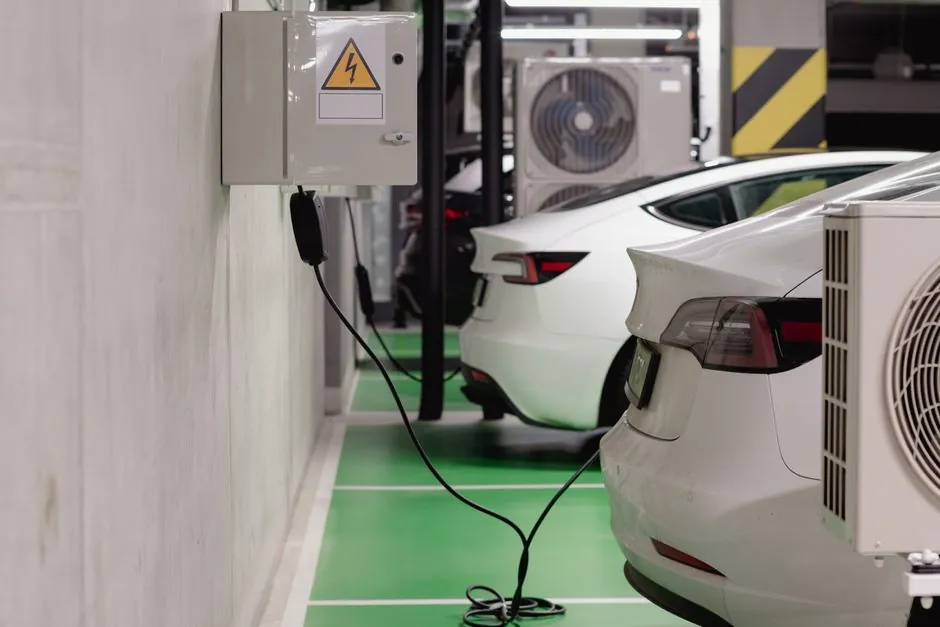
Industrial battery cell lead times in the second half of 2026 are governed by three linked bottlenecks: cell qualification queue depth, the count of customization stages, and a factory's ability to absorb a new order inside its running production rhythm [S1].
Buyers planning repeat orders of standard 18650/21700 Li-ion packs or standard 12V VRLA blocks should budget 4 to 12 weeks from PO to ex-works, while first-article custom packs with mechanical, BMS, and certification rework commonly run 12 to 26 weeks because cell sourcing, pack design, tooling, and UN 38.3 transport classification are run in series, not in parallel [S1][S2].
What the Industrial Cell Lead Time Stack Actually Looks Like
A custom Li-ion pack moves through roughly eight stages that each add their own queue: cell sourcing, protection circuit design, BMS integration, enclosure development, spot welding, insulation, testing, and transport classification, and any one of them can become the binding constraint [S1].
Two structural facts matter for planning. First, the global EV battery market deployed 1.2 TWh in 2025, up almost 30% on 2024 and more than 7x the 2020 level, which means premium cell formats and high-grade LFP/NMC feedstock continue to be pulled toward automotive contracts before industrial orders [S3]. Second, a parallel dynamic is happening in lead acid: the flooded cell format alone is expected to hold 45.0% product-type share in 2026 inside a USD 42.8 billion market, so buyers of stationary SLI and backup strings should still expect 6 to 10 weeks for standard BCI group sizes even with mature supply chains [S2].
Selection Criteria: Repeat-Order Pack vs First-Article Custom Pack
Decision criteria for the lead-time conversation should be written down before RFQ, not after. The four variables that drive the biggest swing are: cell format standardisation, BMS firmware change order count, enclosure tooling state, and required certification scope (UN 38.3, IEC 62133, UL 1973, or medical-grade ISO 13485) [S1].
A useful comparison frame for the procurement team: a repeat-order pack with the same cell, the same BMS firmware, no tooling change, and an existing UN 38.3 summary on file will typically deliver in 4 to 8 weeks. The same pack with a new connector, a higher C-rate, and an enclosure revision commonly runs 10 to 16 weeks. A first-article pack with a new BMS firmware, new enclosure tooling, and a fresh UN 38.3 test campaign typically runs 18 to 26 weeks because certification has to finish before the transport classification step can release the shipment [S1].
Capacity Fit, Not Headline Output

Headline daily output is the wrong number to compare. A factory publishing 30 MWh of daily output across cylindrical, polymer, and LiFePO4 lines may still fail a small industrial order if every relevant line is locked to a long-running automotive schedule [S1].
The real question for the buyer is whether the supplier can absorb a non-standard order without interrupting its running production rhythm. Vertical control of cells, connectors, and enclosures is a positive lead-time signal, while a factory that buys every sub-component externally is a lead-time risk signal that needs a documented mitigation plan, not a lower quote [S1]. For buyers weighing LFP against NMC at the cell level, see the LFP vs NMC spec map, and for the downstream packaging question, the cylindrical vs prismatic casing supply map lays out where lead time compresses or extends.
Why Power Supply Lead Time Volatility Bleeds Into Battery Packs
Battery packs share their long-tail components with the wider power-electronics supply chain, and that overlap is the hidden volatility source. Power supply lead times in 2026 are documented as fluctuating within weeks rather than quarters because shared components (semiconductors, magnetics, capacitors) get pulled by AI server, EV charging, and industrial automation demand spikes at the same time [S4].
The practical consequence is that a pack with an external AC/DC charger, a DC-DC converter stage, or a CAN-isolated BMS will inherit charger-stage lead time on top of cell lead time. A buyer who treats "battery" and "charger" as separate workstreams will see two stacked lead-time curves; a buyer who treats them as one bill of materials will see one curve and can negotiate the combined milestone [S4].
What a Verification Framework Should Require From the Supplier
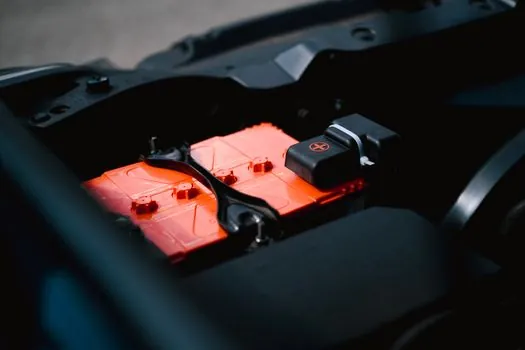
Procurement teams should not accept a single lead-time number. The documented framework that survives a capacity audit includes: published daily output, technical staffing depth, quality certifications, customization workflow, and supply chain controls, matched against the buyer's own order profile and milestone map [S1].
Three written commitments make a real difference. First, a milestone-based lead time split into design freeze, pilot run, pilot sign-off, and mass production, rather than a single verbal date. Second, a named owner for each sub-supplier (cells, BMS ICs, connectors, enclosure) so a slip in one path is visible before it cascades. Third, a documented UN 38.3 test report reuse policy, because a new test campaign typically adds 8 to 12 weeks on its own [S1].
Lead-Acid Reality Check for Backup and Stationary Buyers
Industrial buyers running telecom backup, UPS strings, or forklift motive power should not assume lead acid has been fully de-risked by 2026. The format is mature, but the value base is still USD 42.8 billion in 2026 and projected to USD 58.2 billion by 2036 at a 3.1% CAGR, with flooded cells at 45.0% of product mix and automotive SLI at 65.0% of application mix, so capacity gets prioritised to those segments first [S2].
For stationary buyers, the practical implication is that 2V, 6V, and 12V VRLA/AGM blocks in standard BCI sizes are usually deliverable in 6 to 10 weeks through 2026, while large format 2V cells above 1000 Ah for switchgear and data-centre strings can slip to 12 to 18 weeks when lead smelting capacity is constrained, so booking a slot 4 to 6 months ahead of install is no longer optional [S2].
Failure Modes That Stretch the Plan

The most common ways a lead-time estimate breaks in late 2026 are: a cell supplier reshuffling allocation toward an EV contract mid-quarter, a BMS firmware change request that triggers a fresh IEC 62133 or UN 38.3 review, an enclosure material change that voids a previously signed tooling, and a transport classification hold when a pack's energy density crosses a threshold during a design revision [S1][S4].
None of these are exotic; they are the normal consequence of treating lead time as a single date instead of a chain. The cheapest mitigation is a written change-order clause that ties any buyer-side design change to an explicit lead-time delta, signed before the change is implemented, not after the slip has already hit the production calendar [S1].
For the relevant spec sheets and selection criteria, see lead screw, time relay, and load cell.