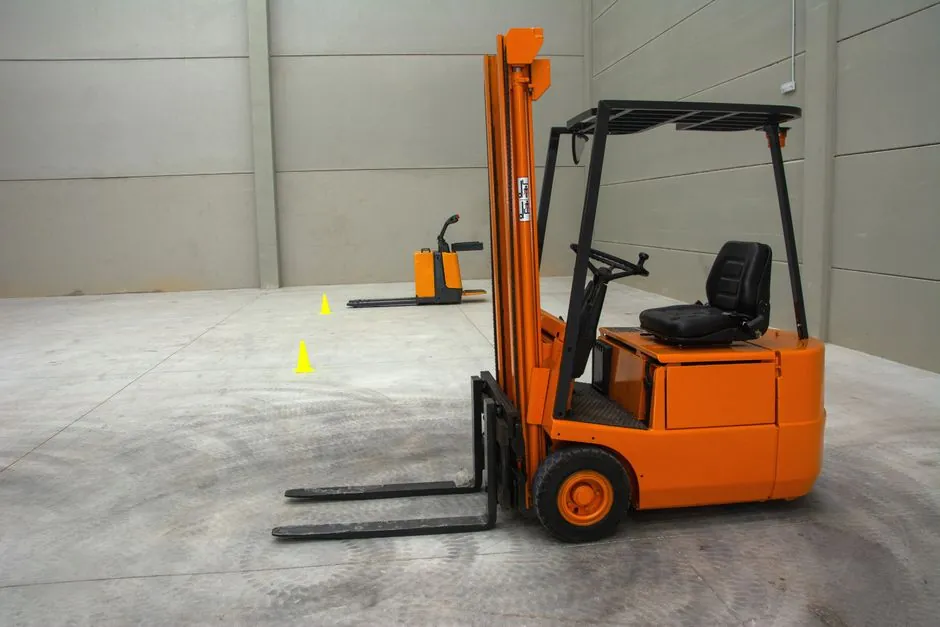
The practical choice depends on shifts per day, charging windows, battery-room labor, counterweight requirements, and the 8-year ownership case, not battery chemistry alone.
Core Comparison: Cycle Life, Charging and Ownership Cost
Lead-acid is the lower-cost option for a one-shift fleet with an established battery room, while lithium-ion fits multi-shift fleets that cannot absorb the time needed for charging and cooling between cycles [S2][S4].
Broader material-handling battery ranges are $150–$1,500 for lead-acid and $700–$2,000 for lithium-ion [S5]. The wide spread reflects battery size and quote scope, so nominal purchase prices are not valid fleet comparisons without matching voltage, capacity, duty cycle, charger, and installation scope.
For the electric forklift fleet, this comparison must use equal usable-energy requirements. That assertion is application-dependent, but it explains why nameplate capacity alone can understate the lead-acid fleet requirement.
Selection by Shift Pattern and Charging Access
Use lithium-ion when operation spans two shifts, runs close to 24/7, or depends on short top-ups during breaks; its 1–2 hour charging window and one-battery-per-truck arrangement reduce exchange and queue time [S2][S3].
Use lead-acid when one shift provides an adequate work and charge window, the site already has qualified watering, ventilation and equalization processes, and the capital budget cannot support a conversion [S3]. A common single-shift sequence is 8 hours of work, 8 hours of charging and 8 hours of cooling [S3].
Do not treat “fast charging” as permission to run lithium-ion continuously without thermal and electrical review. Confirm the charger compatibility, battery-management-system functions, charge termination method, ventilation, protection, cable ratings and site approval before purchase. For automated or autonomous material handling, the power system must be matched to the vehicle platform and charger infrastructure rather than selected from cycle life alone [S3].
Maintenance, Safety and Operating Constraints

Wet lead-acid batteries contain sulfuric-acid electrolyte and require periodic watering, cleaning, equalization, ventilation and controlled handling [S2]. These tasks add labor, floor space and acid-disposal obligations.
Sealed lithium-ion forklift batteries remove routine watering and acid exposure, while a BMS monitors voltage, temperature and charge cycles [S1][S2]. That reduced maintenance burden does not eliminate battery-room requirements: charger sizing, electrical protection, temperature limits, emergency procedures and the manufacturer’s specified charging window remain part of the installation.
Battery mass also affects selection. Lead-acid is heavier, which can aid counterbalancing of conventional lift trucks, while lithium-ion is more compact and energy-dense [S1][S2]. Before converting, verify the forklift battery compartment, center of gravity, retention method, connector arrangement, charger clearance and any manufacturer-specific conversion approval.
Eight-Year Total Cost and Break-Even Test
That case is useful as a calculation template, not a universal quotation.
Build your own model with battery and charger price, electricity consumption, labor for watering and swaps, ventilation and space, consumables, disposal, downtime and replacement timing. A separate source estimates multi-shift return on investment within 36 months [S2], but payback should not be accepted without site-specific inputs.
Low-Temperature and Attachment Constraints
Lithium-ion is commonly preferred for low-temperature use, but the specified discharge and charge limits of the selected pack still govern operation [S4]. Cold-store selection also depends on hydraulic oil, charger location and temperature conditioning, as detailed in cold-store forklift battery and hydraulic-oil specifications.
Attachments change the load and can therefore change runtime and battery sizing. For counterbalanced trucks with substantial loads or attachments, review the rated capacity and derating procedure rather than assuming equal nameplate capacity produces equal work per shift, following forklift attachment capacity derating.
Lead-acid remains defensible where the duty cycle is light, charging occurs overnight, the existing counterbalance specification depends on battery mass, and the fleet is small enough that labor and replacement savings cannot overcome the initial price gap. Lithium-ion is the stronger choice when uptime, rapid opportunity charging, diagnostics, reduced battery-room labor and multi-shift utilization outweigh the higher purchase price [S2][S3].
The next control step is to record daily shifts, recharge opportunities, usable runtime, battery-room staffing and replacement dates, then compare vendor quotations over 8 years. Track charge-cycle count, cooling time, watering labor, energy per charge, truck uptime and realized cost per operating hour.