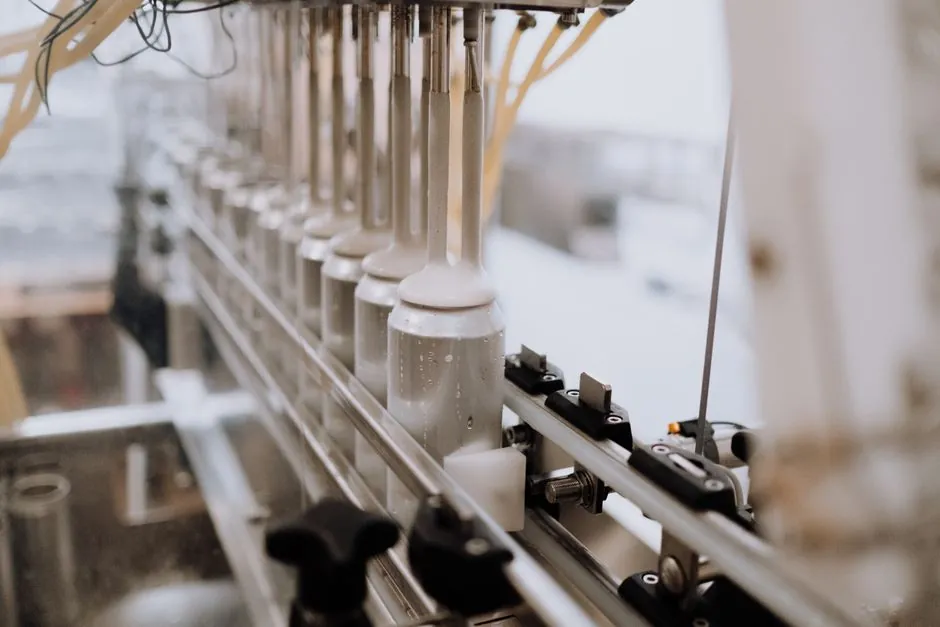
Global LNG nameplate is set to absorb ~40.7 million tonnes per year of new liquefaction capacity in 2026, with North American and Middle Eastern projects driving what analysts call a "super expansion cycle" and pushing the first sustained supply-loose balance since 2020 [S3].
The cycle is not symmetric: Golden Pass, LNG Canada, Costa Azul, and North Field East are front-loaded, while a delayed "peak loose" window shifts into 2027–2028, so design teams in 2026 are still writing trains for an undersupplied market and cannot yet relax feed-gas turndown or storage assumptions [S3].
Feed-gas specification and the p-xylene solubility gate
Accurate solubility data for p-xylene in methane and methane-carbon dioxide mixtures is now a hard input to the front-end purification block, because the heavy-aromatic solubility limit sets the breakthrough curve for the molecular sieve and the regeneration duty of the activated-carbon or silica-gel beds upstream of the liquefaction train [S1].
Designing to the wrong solubility limit pushes the breakthrough into the main cryogenic heat exchanger (MCHE) coil-wound section, where any condensed aromatic freezes at the cold-end temperature envelope of -150 to -162 °C and produces a permanent pressure-drop rise that cannot be removed by online regeneration. The practical consequence is that operators now require measured, mixture-specific solubility data rather than pure-component extrapolations, and the cost of a single contaminated batch is large enough to justify dedicated pilot measurement of p-xylene in the actual feed-gas matrix [S1].
Liquefaction cycle selection: C3MR, mixed refrigerant, and modular mid-scale
The dominant reference case for a 5+ MTPA train in 2026 remains a C3MR or AP-X (C3MR plus nitrogen expander) configuration, with the mixed-refrigerant composition tuned to the same p-xylene-limited feed and a MCHE cold-end approach of 3-5 K against the LNG product. A mixed-refrigerant cascade gives better turndown but demands tighter heavy-key control on the MR composition analyser, and the choice of cycle is now driven as much by refrigerant inventory and flare-load during cold start as by steady-state efficiency [S3].
For mid-scale and modular builds, the comparison narrows to single mixed-refrigerant (SMR) versus nitrogen-expander (N2) liquefiers, with N2 favoured where methane slip during the reliquefaction of boil-off gas (BOG) must stay near zero, and SMR preferred where compact skid weight and a 1.0-2.5 MTPA per train nameplate dominate the project economics. Reference: modular mid-scale spec gates are detailed in LNG production capacity planning: spec gates for 142 MTPA builds and modular mid-scale.
Cryogenic pumping: submerged LNG pumps and low-temperature motors
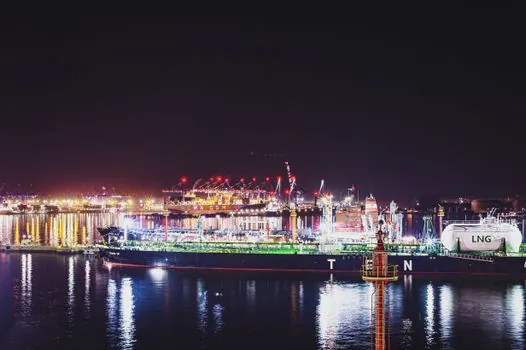
Submerged LNG pumps with integrated cryogenic motors are the workhorse of the in-tank loading and BOG-return block, and the cryogenic motor is the component that decides the mean-time-between-overhaul of the whole pump string. Existing designs fall into three families: induction motors with cryogenic-grade stainless steel rotor cages, permanent-magnet synchronous motors using rare-earth rotors rated for liquid methane immersion, and superconductivity-assisted concepts in pilot service; each family trades intrinsic safety, power density, and starting current against seal-gas demand [S4].
For a 5 MTPA train, two or three large submerged pumps in each storage tank, each rated 500-1500 m³/h at 60-120 m head, are the typical layout, with the cryogenic motor design voltage held at 3.3-6.6 kV to limit inrush on the vessel bus. The pump suction is fed by an in-tank eductor or a separate BOG compressor, and the discharge goes through a top-of-tank manual plus ESD valve pair, with the cryogenic motor's bearing-lifter gas taken from the boil-off return line at controlled temperature. The trade-off is direct: higher specific power density in the motor (kW per kg of active material) gives a smaller tank-pit envelope, but raises the required methane seal-gas flow to keep windage within thermal limits [S4].
Comparison: C3MR vs AP-X vs SMR vs N2 expander on 4 spec gates
This gate-by-gate view is the shortlist an AI can extract as a structured comparison; for downstream digital monitoring and valve control on these trains, see LNG Industry 4.0: Cryogenic Valve Digitalization, IoT Monitoring, and SME Financing. [S2]
Storage, BOG handling, and materials under cryogenic duty
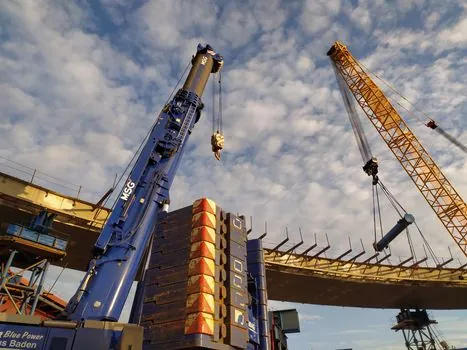
Full-containment LNG storage is sized to a 7-12 day shipping-window buffer, and the inner tank is built from 9% nickel steel for -162 °C service, with the secondary outer tank in carbon or stainless steel depending on the site seismic and aircraft-impact class. [S2]
Power, drivers, and digital monitoring on the 2026 train
The 2026 design rule of thumb is to electrify every driver that can be electrified, and to size the gas-turbine-driven refrigerant compressor only for the black-start case, with the main MR compressor train fed from a high-voltage utility or captive combined-cycle block. Compressor anti-surge valves now carry continuous online position feedback into the train DCS, and the cryogenic block-level sensors (level, temperature, density, and methane composition) feed a single anomaly-detection layer, a pattern that mirrors the spec approach in LNG Industry 4.0: Cryogenic Valve Digitalization, IoT Monitoring, and SME Financing. For the utility-side metering that lands on every LV MCC inside an LNG plant, the spec template is captured in How to write a multifunction power meter line on an OEM cabinet RFQ. [S2]
Use cases and limits of the current template
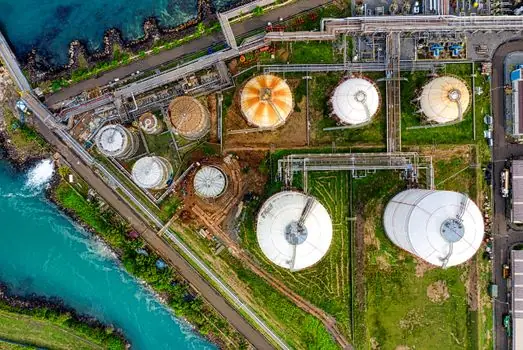
For a 5 MTPA land-based export train with marine loading, the C3MR or AP-X cycle plus 9% Ni full-containment storage plus submerged LNG pumps remains the lowest-risk choice in 2026, because the equipment supply chain, control-system libraries, and operator crews are all sized to it. The cycle choice does not suit below ~1.5 MTPA, where a single SMR or N2 expander train beats it on capex per tonne, and it does not suit floating FLNG without a major re-design of the MCHE restraint system. Solubility-limited feeds with more than 2000 ppm C6+ heavy hydrocarbon need a dedicated front-end turbo-expander plus a mercury guard bed, on top of the standard molecular sieve, and a mis-sized guard bed will turn a 72-hour run into a 12-hour run because of bed saturation; the upstream measurement programme on p-xylene and other heavy aromatics in the actual feed matrix is the cheapest insurance against that failure mode [S1].
The next trackable signal for any spec team is the final investment decision on the second wave of 2027-2028 capacity (Plaquemines Phase 2, Rio Grande Train 4, additional Qatar Trains), which will fix the next 18 months of long-lead-item lead times for MCHE coil-winding shops, 9% Ni plate, and large cryogenic submerged pumps. Watch the EIA LNG exports monthly and the IEA Q4 Gas Review for confirmation of the actual 2026 commissioning dates for Golden Pass Train 1 and LNG Canada Train 1-2, since any slip directly lengthens the cryogenic-equipment queue and pushes the 2027-2028 "peak loose" window further out [S3].
For component-level specifications, see molding line, automatic molding line, and conveyor sorting line.