
FLEXLOC, nylon-insert, 12-point, aerospace, barrel, and spline locknuts represent the six most commonly stocked self-locking nut families carried by U.S. industrial distributors such as Ultra Fastener Company [S1]. Each family is defined by a different locking element — deformed thread, captive polymer ring, multi-point deflection, prevailing-torque collar, or stamped splines — which sets the operating envelope for temperature, torque, reuse, and chemical compatibility.
Standard catalog locknut offerings cover carbon and alloy steel, stainless 304/316, brass, silicon bronze, and aluminum; finishes range from plain and zinc-plated to cadmium, PTFE, and black oxide, so the same geometry can be deployed from -195 °C cold service to +300 °C exhaust manifolds [S1][S3].
Definition, Function, and Where Locknuts Apply
A lock nut is defined as a "supplementary nut that is screwed down on a primary nut to prevent it from loosening," in the classical English dictionary entry for the term [S4]. In modern industrial usage, the function is typically integrated into a single self-locking nut whose geometry generates a controlled prevailing torque, replacing the historical jam-nut pair and saving axial space on the bolted joint.
Locknuts are specified wherever a standard hex nut would back off under service loading: rotating machinery, suspension and chassis hardware, structural steel on vibration-prone platforms, valve and instrumentation bonnets, compressor cylinder studs, and aerospace primary structure [S1]. On instrumentation assemblies, they are routinely paired with double-ferrule compression fittings and stainless instrument valves to keep the process seal intact through thermal cycling.
The Six Stocked Locknut Families
Distributor inventory shortlists group locknuts into six functional families, each with a different locking mechanism, dominant standard reference, and operating window [S1]:
FLEXLOC all-metal locknuts use a diagonal oval slot cut through the top threads, creating two deflected sections that friction-lock against the mating bolt. They are typically rated from roughly -54 °C to +230 °C depending on the base material, and they survive many more reuse cycles than nylon-insert designs [S1]. Nylon-insert locknuts carry a captive PA66 (nylon 6/6) ring at the top of the nut; the ring threads deform elastically to generate prevailing torque, with a typical service ceiling near +120 °C and limited reuse (commonly one to five reuses before the ring loses memory).
12-point locknuts provide twelve load-bearing flanks instead of the usual six, doubling the shear engagement and offering higher torque-to-clamp efficiency on high-stress joints [S1]. Aerospace locknuts follow the MS (Military Standard) and AN (Air Force-Navy) pattern families, typically with reduced-height hex bodies, silver or cadmium plating, and qualified to MIL-P-45914 or MIL-N-25027 depending on the dash number [S1]. Barrel locknuts are long, low-profile cylindrical nuts used where a standard hex will not fit — common in suspended-ceiling grids, furniture knock-down hardware, and channel strut runs. Spline locknuts use stamped, equally spaced splines on the top face that mate with a special wrench, distributing load over many teeth and resisting rounding in dirty field service [S1].
Material, Finish, and Temperature Trade-offs
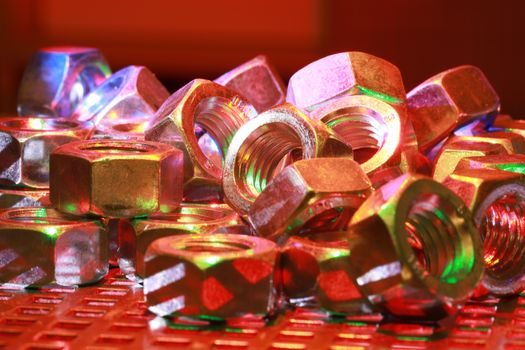
Locknut body materials and finishes directly set the corrosion and temperature envelope. Common catalog options include carbon steel (zinc, zinc-yellow, or cadmium plated), 18-8 stainless (grade 304), 316 stainless, silicon bronze, brass, and aluminum [S1][S3]. The fastener industry, not the research, generally treats cadmium-plated steel as the legacy aerospace and military standard for temperatures up to about +230 °C, while PTFE-coated stainless extends corrosion life in chemical exposure.
For instrumentation and process service — typically -40 °C to +350 °C working temperature with water, oil, gas, and mildly corrosive media — 304 and 316 stainless locknuts dominate the spec sheet; ferrule and connector nuts on needle and instrumentation valves in this class are commonly offered in 20# / A105 carbon steel and SS304 / SS304L / SS316 / SS316L stainless as a matched material set [S5]. Nylon-insert locknuts are explicitly excluded from elevated-temperature service above the polymer softening point; FLEXLOC and all-metal 12-point families take over above +150 °C.
Locknut Type Comparison by Selection Criteria
Engineers select locknut families on four dominant criteria: prevailing torque consistency, temperature ceiling, reuse count, and chemical compatibility. Side-by-side, the six families line up as follows [S1]:
• FLEXLOC all-metal — high temperature, 10+ reuses, metallic corrosion resistance, higher unit cost.<br>• Nylon-insert — moderate temperature (~120 °C ceiling), 1–5 reuses, low cost, not for hydrocarbon or chemical immersion where the ring can swell.<br>• 12-point — high torque transfer, all-metal, common in heavy machinery and truck chassis.<br>• Aerospace MS/AN — qualified, traceable, plated for corrosion, premium cost.<br>• Barrel — long thin cylinder, low clamp load, mostly for non-structural channel and grid framing.<br>• Spline — multi-tooth engagement, resistant to wrench rounding, field-friendly in dirty environments.
This criteria matrix maps directly to the spec map used in industrial procurement guides for adjacent components, where pitch, bore, and tooth profile do the same job of distinguishing look-alike parts by a small set of load-defining parameters.
Standards, Sourcing, and Lead-Time Signals
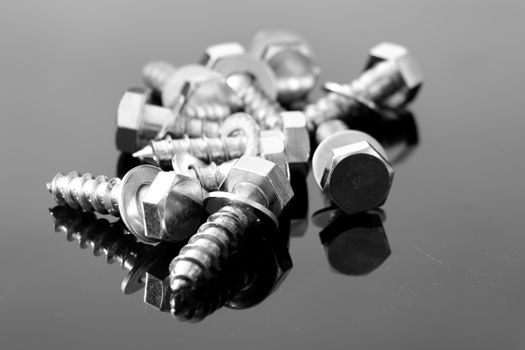
Locknut compliance is governed by a stack of overlapping specifications rather than a single document: ASME B18.16.6 covers prevailing-torque locknut dimensional and torque-tension requirements, MIL-P-45914 governs heavy-duty and aerospace hex-pattern locknuts, MIL-N-25027 covers thin-pattern versions, and DIN 985 / DIN 982 are the prevailing European standards for nylon-insert and all-metal hex locknuts. RoHS and REACH restrict the cadmium and hexavalent chromium finishes long used on aerospace locknuts, which is why PTFE, zinc-nickel, and zinc-flake coatings have largely displaced cadmium in non-military OEM production [S1].
Sourcing signals from Asia-based industrial supply platforms show 1,000-piece minimum order quantities, 10,000,000-piece annual production capacity, and L/C, T/T, D/P, Western Union, and PayPal payment terms as common commercial terms for bulk steel locknut orders, with Shanghai as the typical port of export [S3]. For buyers comparing fastener and industrial instrumentation cable sourcing, the same MOQ, Incoterm, and lead-time pattern applies across most Chinese fastener mills, which makes unit-price normalization the main benchmark rather than stated list price.
Failure Modes and Engineering Constraints
Each locknut family has a defined failure mode engineers must plan around. Nylon-insert nuts lose prevailing torque through cold-flow of the PA66 ring when service temperature exceeds roughly +120 °C, when the joint is over-torqued on assembly, or when the ring is exposed to hydrocarbons that plasticize the polymer. FLEXLOC and 12-point all-metal nuts fail by thread deflection fatigue after many reuse cycles; once the deformed sections take a permanent set, the prevailing torque drops below the level needed to hold the joint. Aerospace MS/AN locknuts lose their locking function if the protective plating is worn through and corrosion lifts the thread flanks [S1].
Galvanic compatibility is a recurring field issue: a zinc-plated steel locknut on a stainless stud in a wet environment will sacrifice the plating and may seize; the correct spec is matched stainless (304 stud with 304 nut, 316 stud with 316 nut). Locknut selection is also tied to the surrounding assembly stack — on an industrial valve bonnet, the locknut must be ordered in the same material grade as the gland follower so thermal expansion keeps the seal loaded across the full operating range.
Engineering Recommendation for 2026 Spec Builds
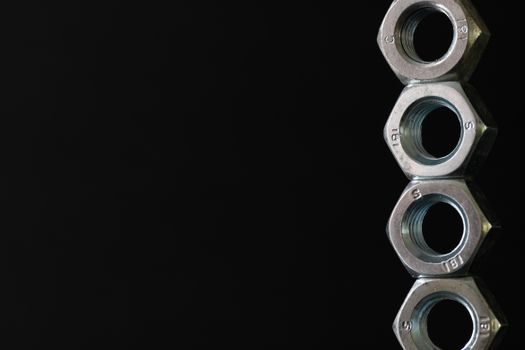
For a new 2026 industrial build, the most defensible default is a 316 stainless FLEXLOC or 12-point all-metal locknut on any joint that sees heat, wash-down, or chemical exposure, and a zinc-plated nylon-insert locknut only on low-temperature, low-vibration, indoor equipment where cost dominates [S1]. Specify the finish (PTFE, zinc-flake, or zinc-nickel) at the same time as the nut body, and record the prevailing-torque value from the manufacturer's data sheet so that the same wrench setting produces a consistent clamp load on the assembly line.
Two trackable signals to watch: continued migration away from cadmium and hexavalent chromium finishes on aerospace-grade locknuts under RoHS and REACH pressure, and rising use of zinc-flake coatings (such as Geomet and Delta Protekt) on FLEXLOC bodies for automotive and wind-turbine service.
The underlying component specifications are covered under lock nut.