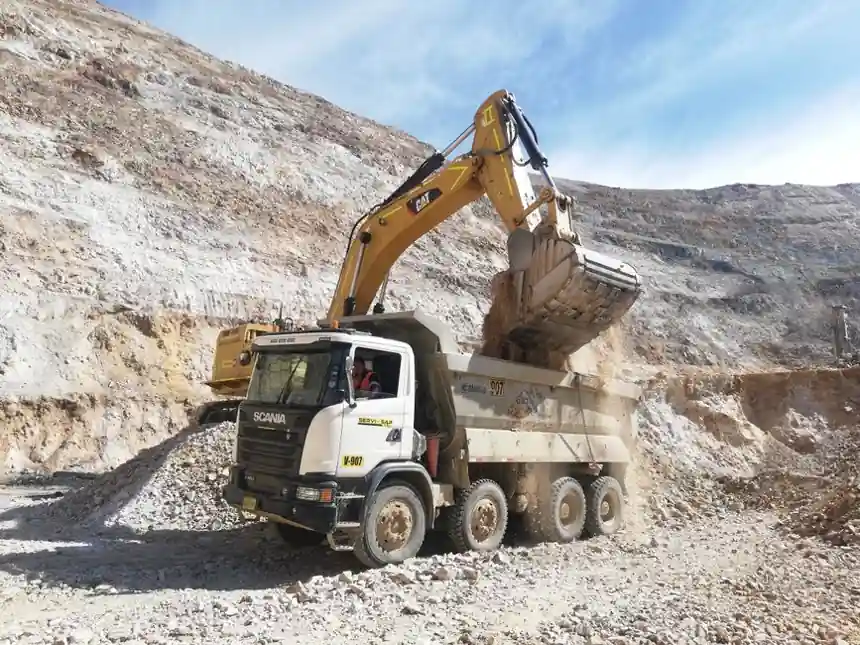
Extending the boom and stick on a hydraulic excavator lengthens horizontal reach from roughly 9–10 m on a standard arm to 15 m or more, but the longer lever arm reduces breakout force at the bucket because the same hydraulic cylinder now acts over a longer moment [S2][S1].
The trade-off is structural, not a tuning choice: the cylinder force is constant, but torque at the bucket teeth drops as the linkage lengthens, which is why long-reach machines are usually paired with narrower, lighter buckets and, in some configurations, added counterweight to keep the machine stable at full extension [S2][S3].
Why a longer stick cuts digging force: the leverage math
A hydraulic excavator stick is a class-1 lever: the bucket pin sits further from the stick cylinder than the cylinder pivot does, so cylinder force is multiplied at the tooth. Lengthening the stick moves the bucket pin further from the boom pivot, which on a class-2 lever pair (boom-cylinder to stick-bucket) reduces the mechanical advantage that converts hydraulic pressure into breakout force at the teeth [S1][S7].
OEM guidance is consistent on the direction of the effect: a long arm has lower breakout force than a standard arm of the same base machine, and a super-long front stretches digging reach by as much as double compared with a standard arm, with a corresponding further reduction in crowd and curl force at the bucket [S1][S6]. Operators notice this most at full extension, where the loss of hydraulic leverage compounds with the geometry penalty of a partially extended cylinder [S2].
Standard, long reach and super long reach: how the three compare
Quotor publishes a side-by-side spec table that lines up the three reach classes on the same base machine: standard arms typically deliver 9–10 m of horizontal reach at full rated breakout force, while long-reach arms commonly reach 15 m or more with reduced digging force and reinforced or rebalanced front ends [S2]. Super-long-reach machines extend the boom and arm again for dredging and high-reach demolition, with a still-further reduction in bucket force, which is why this class is reserved for jobs that genuinely need the extra metres [S2][S6].
For specification work, the practical comparison is on four axes: horizontal reach, digging force at full extension, lift capacity at full extension, and stability treatment. A standard arm wins on digging force and lift at the cost of standoff distance; a long-reach arm flips those priorities. A super-long arm only earns its keep when reach above 15 m is the binding constraint, since each additional metre of stick geometry costs more breakout force than the last [S2][S3][S6].
Bucket, counterweight and attachment choices that recover the lost force
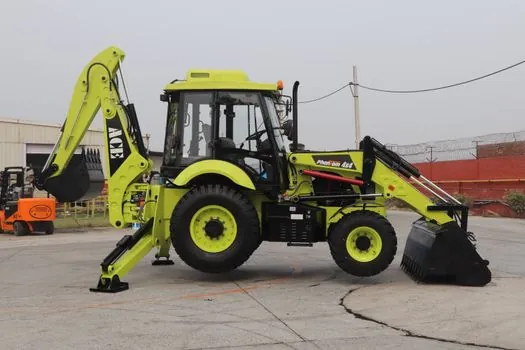
Because the machine cannot regain the leverage it gave up, the usual engineering response is to shrink the demand side: long-reach excavators run narrower, lighter buckets than a standard machine of the same weight class, so the smaller breakout force is still enough to curl a manageable load [S2]. Bucket tooth count and stick geometry, not bucket width, set peak tooth force, so trimming the bucket is the first lever, not the last.
Stability is the second lever. Avesco's selection guidance notes that long-reach front ends are designed to handle higher loads through reinforced structures, with some OEM offerings pairing the longer boom with bolt-on extension sections and additional counterweight to keep the machine within its tipping envelope at full reach [S4]. For demolition work, grapples, pulverisers and shears are common on long-reach machines because the extended reach lets operators pull material down from a safe standoff, and these attachments are sized to the available breakout force, not the standard-arm rating [S2].
Where long-stick geometry fits the job, and where it does not
Long-reach and super-long-reach arms are the right answer for deep foundation excavation, river and pond dredging, pond and canal cleaning, slope finishing, and high-reach demolition where the operator needs to stay off unstable ground or below a structure [S3][S6]. On these jobs the binding constraint is reach, and the lost breakout force is acceptable because the material is typically loose, free-dig, or already broken.
They are the wrong answer for production digging in competent ground, hard-rock trenching, or any cycle where bucket-fill rate drives production. SANY's trackhoe guidance puts long-reach configurations in the long-reach and production-digging split: tracked undercarriages and longer front ends are valued for steady digging cycles on mass earthworks, but a long stick is no substitute for a standard arm when the dig is short and the ground is hard [S5]. In practical terms, if the job plan calls for breakout force above roughly 80% of the base machine's rated value at full reach, the spec should drop back to a standard arm rather than try to recover the gap with a bigger machine.
Operator and stability constraints that come with the longer reach
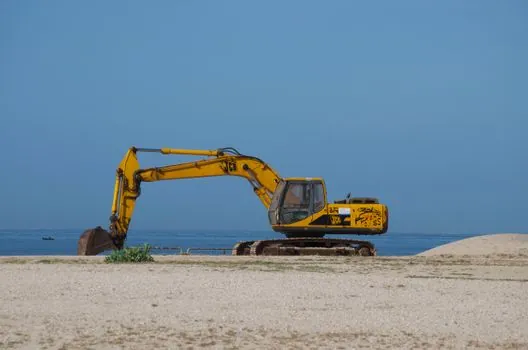
Small joystick inputs translate into larger movements at the bucket on a long-reach front end, which raises the skill floor for safe operation and is why most OEM guidance assumes operators have experience on standard machines first [S2]. The extended geometry also shifts the centre of gravity forward, so load charts at full reach are usually the limiting data sheet, not the engine or pump rating.
Transport is a separate constraint: long-reach booms often exceed standard trailer lengths and may require disassembly or permits for road moves, and the undercarriage still carries the full load with no relief from the longer front end [S5]. For spec writers, the right reference for the digging-force number on the data sheet is ISO 6015, the bench test anchor for rated breakout force across the industry, and a long-reach variant should be quoted at the same ISO condition so it can be compared against the standard-arm rating of the base machine without ambiguity. For a closer look at how ISO 6015 is structured as a benchmark test, the 2006 edition explanation walks through what the rating covers.
Sourcing and selection checklist for a long-stick spec
A defensible long-reach spec quotes four numbers from the OEM data sheet at ISO 6015 condition: standard-arm breakout force, long-reach-arm breakout force, horizontal reach at ground level, and lift capacity at full reach over the side, with bucket width and counterweight configuration called out alongside [S1][S2][S3]. Anything less is a class name, not a specification.
Trackable signals to watch on the next data-sheet revision cycle: whether the OEM publishes the long-reach breakout figure at full extension or only at an optimal curl angle, whether lift charts are given for 360° or over the tracks only, and whether the super-long-reach class is offered as a bolt-on extension to a long-reach base or as a dedicated model, since the former keeps the standard-arm data sheet valid and the latter does not [S2][S4][S6]. For broader context on how a tracked undercarriage supports these reach classes, the excavator reference page covers the base machine geometry this spec is built on.
Detailed specification references: reach truck, and force gauge.