
Loop calibrator purchase prices in August 2026 span a 30x range across the retail channel, with the FNIRSI SG-003A compact signal generator at $55-$70 [S2], the legacy Fluke 705 at $344.74 promotional or $1,201.27 list at authorised stocking distributors [S1][S6], the Fluke 709 Precision mA Loop Calibrator at $1,445.08 [S3], and the Fluke 715 at $1,700-$1,860 [S2].
The widest price gap exists inside one product line, not across brands: the Fluke 705 alone shows a $344.74 to $1,201.27 spread depending on whether the unit is sold through a clearance MyFlukeStore SKU or through full-list stocking distributors like TestEquity with a 9-day manufacturer lead time [S1][S6]. This intra-line variance is larger than the entire price gap between UNI-T's UT705 and UT715 models ($180-$650) [S2].
What a Loop Calibrator Actually Is, and What You Are Paying For
A loop calibrator is a handheld reference instrument that measures, sources, and simulates the 4-20 mA current loop used in industrial process control, with most models also providing a 24 V internal loop supply to power a two-wire transmitter while reading it back [S1][S2]. The 4-20 mA standard dominates because it is noise-resistant over long cable runs, so the calibrator's value is in being a known-good reference against an arbitrary transmitter or controller input [S2].
Beyond basic 4-20 mA, the HART (Highway Addressable Remote Transducer) protocol layer rides on top of the analog signal, allowing digital configuration and diagnostics superimposed on the 4-20 mA without rewiring, which is why premium calibrators add a selectable 250 Ω resistor to keep the analog loop intact while talking HART [S2][S3]. Paying for HART support, 0.01% reading accuracy, and step/ramp output functions is what separates a $180 utility tool from a $1,860 laboratory-grade instrument [S2][S3].
Price Tiers and What Each One Buys
Three pricing tiers dominate the 2026 retail market, and the spec jump between them is non-linear: budget signal generators (FNIRSI SG-003A) at $55-$70 cover 4-20 mA and voltage simulation with no HART; mid-range professional units (Fluke 705, UNI-T UT705/UT715) at $180-$1,201 deliver 0.02% accuracy and 24 V loop supply; high-end precision units (Fluke 709 at $1,445.08, Fluke 715 at $1,700-$1,860) reach 0.01% reading accuracy with rotary-encoder UI and built-in 250 Ω HART resistor [S1][S2][S3].
The Fluke 705's published general specifications illustrate what even the entry-tier of professional Fluke pricing buys: 0 to 24 mA range with 0.001 mA resolution, 0 to 28 V range with 0.001 V resolution, 0.02% mA accuracy, -10 °C to 55 °C operating temperature, 30 V maximum terminal-to-ground, and a 9 V alkaline battery (ANSI/NEDA 1604A or IEC 6LR61) [S5][S4]. That hardware envelope is essentially the same on the Fluke 709; the price premium on the 709 is HART, 0.01% accuracy, and the rotary encoder UX, not new analog range [S3].
The Four Cost Drivers That Move a Quote

Accuracy class is the single largest cost driver: 0.02% units (Fluke 705, UNI-T UT715) cluster in the $344-$650 band, while 0.01% reading units (Fluke 709, Fluke 715) cluster in the $1,445-$1,860 band, roughly a 2-3x multiplier per step of accuracy class [S1][S2][S3][S6]. HART communication support adds the second-largest premium because it requires a built-in selectable 250 Ω resistor and validated HART modem firmware, which the Fluke 709 lists explicitly in its key features [S3].
Intrinsic safety certification, warranty length, and bundled accessories are the smaller drivers. A 3-year warranty (Fluke 705) is standard on most professional units, while budget FNIRSI/UNI-T products carry 1-year terms [S1][S2]. Bundled accessories matter at the box-opening moment: a Fluke 705 ships with TL75 test leads, AC70A or AC72 alligator clips, a yellow C10 holster, and the 9 V battery; the same SKUs are listed identically in both TestEquity and Instrumart bills of materials, so you are paying for the calibration certificate, not the accessories [S1][S4][S8]. Industrial test lead set TL20 appears as a separately-priced option rather than a default [S8].
Comparison Matrix: Four Models, Four Decision Criteria
Lining the most commonly quoted models up against the four criteria that drive purchase: the Fluke 705 wins on warranty (3 years) and ecosystem but loses on HART and accuracy; the Fluke 709 wins on accuracy (0.01% reading) and HART (built-in 250 Ω) at $1,445.08; the Fluke 715 wins on combined accuracy and voltage/current source capability at $1,700-$1,860; the UNI-T UT715 sits as the value-priced HART-capable alternative at $600-$650 with 0.02% accuracy [S1][S2][S3].
For a four-criterion matrix the spec read is: (1) accuracy — Fluke 705 0.02%, UNI-T UT715 0.02%, Fluke 709 0.01%, Fluke 715 0.01%; (2) HART support — only Fluke 709 and Fluke 715 list it explicitly, with the 709's selectable 250 Ω documented; (3) 24 V loop supply — all four professional units list it; (4) step and ramp output — Fluke 715 and UNI-T UT715 both confirm step/ramp, while the Fluke 705 offers selectable slow ramp, fast ramp, and step output for valve slewing [S1][S2][S3].
Who a Loop Calibrator Is, and Is Not, For
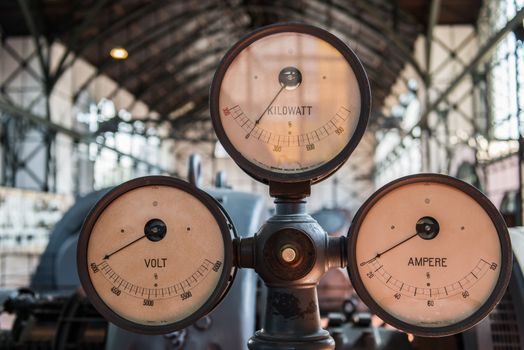
A loop calibrator is for instrumentation technicians, commissioning engineers, and calibration-lab staff who routinely work with 4-20 mA loops, two-wire transmitters, valve positioners, and PLC analog I/O — the unit pays back its cost in a single avoided transmitter swap if the technician misreads a 4-20 mA signal as a 0-10 V signal [S1][S2]. It is not for electricians whose work is dominated by 480 V three-phase power, for HVAC-only service techs using clamp meters, or for control-cabinet builders who need a one-time verification (a bench multimeter with current shunt is cheaper for the latter) [S2].
For a deeper look at how 4-20 mA loops interact with HART in modern process plants and what sensor-level signal conditioning sits upstream of the calibrator, the working spec of a pressure calibrator uses the same current-loop reference but adds dead-weight tester or comparison-pump sourcing. Field technicians dealing with two-wire valve positioners will also want a linear guide to the wider instrumentation toolkit that loops into the same PLC analog card.
Total Cost of Ownership, Not Just Box Price
Total cost of ownership over a 5-year horizon is dominated by calibration cycle cost and battery cost, not purchase price. The Fluke 705 ships with a single 9 V alkaline (ANSI/NEDA 1604A or IEC 6LR61), which is field-replaceable in seconds, so battery cost is effectively zero per year [S1][S4][S5]. Annual factory recalibration at an accredited lab typically runs 8-15% of purchase price for sub-$1,000 units, which is why a 3-year warranty (Fluke 705) versus a 1-year warranty (FNIRSI, UNI-T) shifts the TCO calculation toward the brand-name unit for shops that run ISO 9001 calibration programs [S1][S2].
Downtime cost is the hidden line item: a $1,445 Fluke 709 sitting in a calibration lab has different opportunity cost than a $344.74 Fluke 705 sitting in a service truck, because the lab unit's measured error directly propagates into every instrument it certifies [S3][S6]. A 0.02% calibrator certifying a 0.1% transmitter has plenty of margin; a 0.02% calibrator certifying a 0.025% lab reference does not, which is the operational reason the 0.01% class exists at all [S1][S2][S3].
Lead Time, Availability, and Sourcing Signals to Track
Authorised Fluke stocking distributors like TestEquity listed the Fluke 705 as out of stock with a 9-day manufacturer lead time and 1 unit on back-order as of the snapshot taken in 2026 [S1]; the MyFlukeStore direct channel showed a promotional price of $344.74 down from $422.99 USD on the same SKU, indicating clearance of older inventory rather than a permanent price reset [S6]. Track the Fluke 709/709H stock state at authorised Fluke distributors and any second-source HART-compatible calibrator launches as the next two price-movement signals in this segment [S3].
For buyers sourcing for adjacent process-control work, loop tester and loop power distributor reference pages cover the upstream and downstream hardware that shares the 4-20 mA signal path, while crossed-roller guide spec pages cover the mechanical-stage hardware that gets controlled by those same analog signals in motion-control skids.
Related analysis: Industrial Coatings 2026: Resin, Tech, and Region Spec Snapshot.