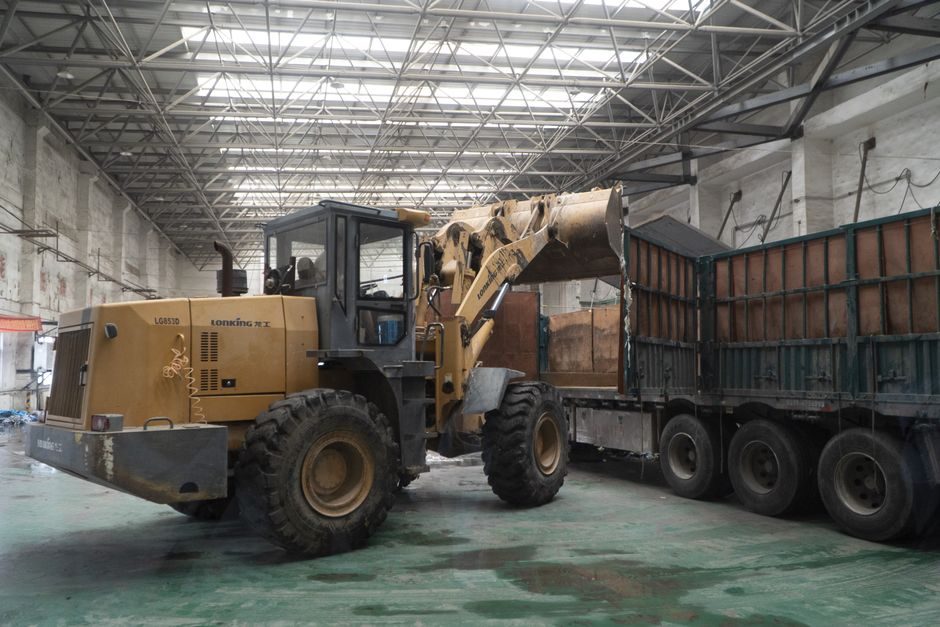
A correctly installed lost-foam casting line segments into three color-coded zones — white (foam pattern), yellow (coating and drying), and black (sand mold, pouring, sand reclamation) — and acceptance is judged by the white-zone pattern density, the yellow-zone coating film weight, and the black-zone dry-sand compaction under negative pressure [S1].
Turnkey packages are sold as complete systems producing motor bodies, cylinder heads, pipe fittings, housings, and engine blocks in grey iron, ductile iron, steel, aluminum, and copper, with throughput built in modules around 3,000 t/yr and 5,000 t/yr [S1][S5]. The line is a type of evaporative-pattern casting process similar to investment casting, but uses foam for the pattern instead of wax, simplifying the investment casting process by removing the need to melt the wax out of the mold [S1][S4].
White-Area Installation: Pre-Expansion, Aging, and Molding
Pre-expansion must hit the EPS bead density window the pattern geometry demands, typically expressed as the bulk density in g/L, because pattern density drives both metal-fill rate and collapsibility during pouring [S1][S4]. The white-area sequence is pre-foaming → aging storehouse → molding → drying → cluster assembly, and the aging storehouse must condition pre-expanded beads for the manufacturer-published dwell time before re-foaming to lock in residual pentane content [S1].
Foam molding machines are commonly steam-chest types with aluminum tooling, and the installer must verify steam pressure, cooling-water flow, and ejector alignment against the pattern-tool drawing before the first shot [S1]. Cluster assembly is the last white-area step; adhesive application rate and clamp-fixture flatness should be checked against the cluster drawing because cluster distortion propagates straight into the casting dimensional deviation at the black-area station [S1].
Yellow-Area Installation: Coating, Drying, and Refractory Film Specs
The yellow area handles the refractory coating that defines surface finish, metal penetration resistance, and gas permeability of the white-area foam cluster; the standard sequence is first coat → first dry → second coat → second dry, and skipping a second pass is the single most common cause of veining and surface folds on iron castings [S1]. Coating rheology — typically a water-based refractory slurry with a hydrated alumina, silica, or mica base plus a binder system — is the parameter the installer can directly tune by adjusting Baumé, viscosity, and dip-drain dwell [S3].
Each dip cycle must produce a uniform, pinhole-free film on every face of the cluster; a measurable film weight of several hundred g/m² on the foam, depending on the coating spec, is typical for iron and steel lost-foam work and the installer should record wet-film weight before drying and dry-film weight after the second oven pass as a baseline QA data point [S1][S3]. Drying ovens in the yellow area should hold cluster geometry, so the installer should spec a low-temperature, low-humidity cycle; warping of coated clusters at this stage is the most expensive defect to reverse because the cluster is already glued [S1].
Black-Area Installation: Sand Compaction, Vacuum, and Pouring Acceptance
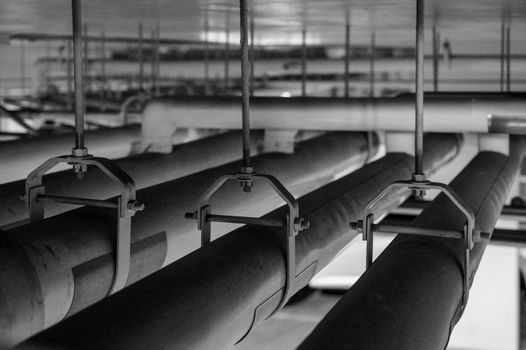
Black-area equipment includes the molding station (vibration table and sand flask), the pouring station with negative-pressure ducting, and the sand-processing station (cooling, screening, and dust removal) — the only zone where the casting is actually formed, so its layout dictates the entire plant flow [S1]. Sand is a dry silica system, and the installer must commission the vibration table to the supplier's frequency and amplitude schedule so the dry sand compacts uniformly around the cluster; under-compaction produces sand inclusions and metal penetration, over-compaction collapses the foam prematurely [S1].
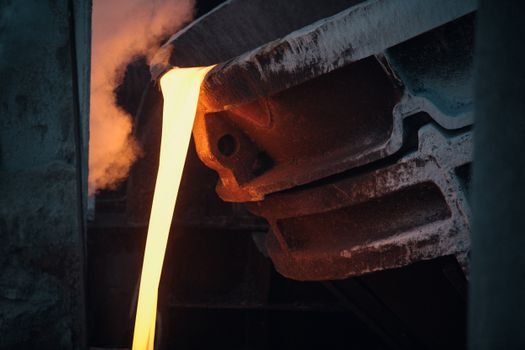
Negative pressure at pouring is the variable that distinguishes lost-foam from green-sand work: a sealed flask connected to a vacuum line lets the decomposing EPS vapor exit the cavity while atmospheric pressure on the cope holds metal against the mold wall [S4]. Acceptance values for a working line include flask vacuum in the several kPa range with leakage rate below the supplier limit, sand bed permeability within the refractory-coating window, and pour weight reproducible within the cluster's mass tolerance [S1][S4]. For buyers comparing an automatic molding line configuration, the same dry-sand and vacuum parameters apply, and the molding line vendor should publish these in the SAT (site acceptance test) sheet.
Selection Criteria: Capacity, Alloy, Automation, and Footprint
Selection is driven by four buy-side parameters that the supplier maps to the equipment list: capacity in tons per year (3,000 t/yr or 5,000 t/yr are standard modules), floor space, automation level (full-automatic, semi-automatic, or manual), and the alloy mix — grey iron, ductile iron, steel, aluminum, copper [S1]. The supplier's option list is wider than the four above; the same package can be extended with shake-out, shot-blast, and finishing cells, but only after the black-area throughput has been sized [S1][S5].
For a buy comparing configurations, the decision matrix comes down to part weight envelope, dimensional tolerance, and annual volume: small-to-medium iron castings for engineering machinery and auto fit the manual or semi-auto line, while high-mix aluminum housings and cylinder heads favor the full-automatic line with a higher cluster-handling robot count [S1][S2]. Producers scaling to a turnkey package for export markets — e.g., the Russia-market turnkey reference — bundle pattern shop, coating, and pouring cells with installation and operator training as one contract [S5].
Comparison of Main Line Configurations

Three configuration types dominate the market today — manual cluster lines, semi-automatic with mechanical cluster handling, and full-automatic with robot transfer — and they map onto different capacity and labor-cost environments [S1][S5]:
Manual line: lowest capex, requires a trained cluster-assembly crew, fits under 3,000 t/yr for one alloy, typical tolerance ±0.5 mm to ±1.0 mm on iron castings when the lost-foam casting line is operated per spec [S1].
Semi-automatic line: mechanical cluster transfer and dip-robot for the yellow area, lifts capacity to roughly 3,000–5,000 t/yr for 1–2 alloys, and reduces cluster-handling distortion as a defect source [S1].
Full-automatic line: full automatic molding line plus robot pouring, dust-controlled sand processing, and inline shake-out; built for 5,000 t/yr and above, multi-alloy flexibility (grey iron, ductile, steel, aluminum), and one-operator cells in steady state [S1][S5].
Use Cases, Failure Modes, and When to Escalate
Best-fit parts are complex, near-net-shape castings that would be expensive to machine from a forged or bar blank — motor bodies, cylinder heads, pipe fittings, valve housings, and engine blocks — where the foam pattern's geometry lets the foundry collapse several cores and draft angles into a single cluster [S1]. Outside that envelope — very thin walls, tight leak-tightness on pressure-bearing nodes, or high-Mg aluminum where the foam residue reacts with melt — the buyer should consider a linear guide of a different process, such as sand or investment casting, before defaulting to lost foam [S2][S4].
The failure modes the installer should watch for during commissioning are: under-densified foam patterns (cold-shuts and misruns), under-dried coating layers (veining and surface folds), under-compacted sand (penetration and inclusions), and low flask vacuum (collapse and porosity) [S1][S4]. When any of these persists after the supplier-prescribed corrective action — bead density reset, coating Baumé reset, vibration table re-torque, vacuum-leak survey — escalate to the foundry-process team because the root cause is typically a pattern-tool or refractory-coating formulation issue, not a mechanical one [S1][S3].
Sourcing, Standards, and Trackable Signals
Procurement is mostly direct from a Chinese turnkey vendor (e.g., Qingdao Kaijie Heavy Industry Machinery) or via a project packager, with payment on T/T or L/C and shipping by sea, land, or multimodal transport in plywood cases [S1]. The buyer should request the vendor's SAT sheet, including dry-sand permeability, flask vacuum, and coating film weight, before signing the FAT (factory acceptance test) protocol [S1][S5].
Trackable signals for a 2026-07 evaluation: confirm whether the vendor's coating chemistry is water-based and documented for the buyer's alloy mix, and verify the conveyor sorting line integration point between the shake-out and the fettling cell if the line is part of a larger green-field foundry layout [S1][S3]. Two other signals worth recording are pattern-tool life (number of EPS shots per aluminum mold before dimensional drift) and dry-sand consumption per ton of casting — both are direct indicators of the line's long-run operating cost and they are the numbers an automatic molding line SAT should hand over to the buyer on day-one of production [S1].
Related analysis: Vibration Sensor Buying Guide 2026: Types, Specs, and Selection Map.