
Peristaltic pumps move fluid by compressing a flexible tube with rollers or shoes, isolating the product from seals, valves, and rotor contact [S1][S2]. The fluid only touches the inner wall of the elastomer tube, which is the single most important reason they are specified for shear-sensitive duty in pharma, biotech, food, and coatings lines.
Low-pressure tube designs typically operate below 2 bar discharge and under 100 RPM rotor speed, the envelope where the gentle peristaltic action gives clean, low-pulse transfer of cells, polymers, and emulsions without rotor-induced shear [S3][S4][S6].
How Peristaltic Action Limits Shear Compared with Centrifugal and Rotary PD Pumps
Shear rises with the velocity gradient between fluid layers, so any pump with fast, counter-rotating internal parts (centrifugal, multi-stage rotary lobe) imparts high local shear, especially at rotor tip clearances [S1]. In a peristaltic pump, the fluid is pushed as a discrete plug by roller compression, with no internal impeller, no close-tolerance rotor/stator gap, and no seal rubbing surface [S6][S7].
Tube pumps are inherently self-priming, can run dry without damage, and tolerate suspended solids because the fluid path is a smooth, single-bore elastomer tube [S3][S4]. Centrifugal pumps cannot run dry and will cavitate on high-viscosity or shear-thinning fluids; twin-screw and lobe pumps reduce shear versus centrifugal but still expose the product to meshing rotors and tight axial clearances [S1].
Matching the Seven Shear-Sensitive Fluid Classes to Pump Type
Shear-sensitive fluids are not one population, and the choice between peristaltic, twin-screw, and lobe depends on the rheology class [S1]. The seven classes typically encountered are shear-thickening (cement, starch), rheopectic (printer inks, gypsum suspensions), thixotropic (glues, non-drip paint, tar), pseudoplastic (rubber latex, mayonnaise), irreversible (cheese, yogurt, marmalade), visco-elastic (asphalt, polymer solutions, DNA suspensions), and plastic / yield-stress (toothpaste, grease, paper pulp) [S1].
For thixotropic and pseudoplastic fluids, a peristaltic pump lets viscosity drop naturally during transfer and avoids further agitation; for irreversible and visco-elastic fluids, the lack of internal moving parts preserves the structure the process depends on [S1][S2]. For high-solids, high-viscosity plastic fluids with yield stress above a few hundred Pa, twin-screw pumps become competitive because they handle large particles and higher discharge pressure than a tube pump, while peristaltic remains preferred when sterility, clean-in-place, or zero cross-contamination dominates [S1][S4].
Tube Material, Bore, and Wall: The Real Selection Levers
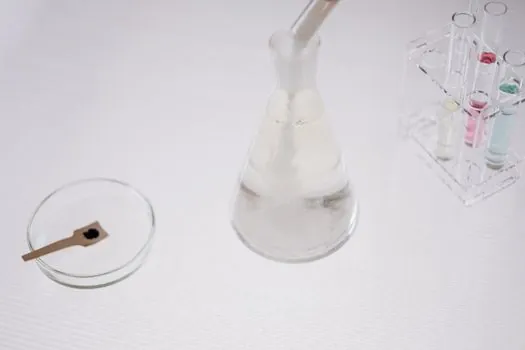
Tube selection drives both chemical compatibility and pump life on shear-sensitive duty, and the common elastomer families are silicone (platinum-cured for pharma), EPDM, PharMed / thermoplastic elastomer, Viton (FKM), and natural rubber [S4][S6]. Silicone is the default for cell-culture and biopharma because of low extractables and USP Class VI compliance; PharMed and TPE perform better on peristaltic fatigue life at continuous duty; natural rubber gives the lowest cost per hour for abrasive slurries but is not suited to oils or solvents [S3][S4].
Bore and wall thickness set the flow per revolution. A 6.4 mm bore tube with 1.6 mm wall typically delivers 10 to 30 mL per revolution depending on roller geometry, while a 9.6 mm bore with 2.4 mm wall roughly doubles that, and Watson-Marlow 530-series pumps are explicitly specced for larger bore and thicker wall tubing to handle higher-viscosity, higher-resistance fluids [S4]. Tube life drops sharply above 100 RPM and above 2 bar, so sizing a tube pump means picking the largest bore and slowest speed that still meet the required flow, not the smallest pump at the highest RPM [S4][S6].
Low-Pressure Operating Envelope: 0 to 2 Bar Discharge, Sub-100 RPM
Low-pressure tube peristaltic pumps are normally rated for 1 to 2 bar continuous discharge, with a peak of roughly 2 to 4 bar for short transfer cycles, well below the 6 to 16 bar typical of hose pumps used in mining and dewatering [S3][S5][S6]. This lower pressure ceiling is the trade-off the specifier accepts in exchange for gentle handling, dry-run tolerance, and sterile fluid path [S4].
On the suction side, peristaltic pumps generate a strong vacuum at the tube inlet by the same roller action, so suction lift of 8 to 9 m water column is achievable and self-priming from dry is standard [S3][S4]. This is the second reason peristaltic pumps replace diaphragm and centrifugal pumps on high-viscosity feed lines: the suction lift no longer collapses when the fluid thickens, so the line keeps moving without a flooded suction [S4][S5].
Comparison: Peristaltic Tube, Twin-Screw, and Lobe Pumps on Four Decision Criteria

On four decision criteria for shear-sensitive duty, peristaltic tube pumps score as follows: low shear (excellent, because only tube contact), dry-run capability (excellent, no seals), particle handling (good up to soft particle size limited by tube bore), and pressure capability (limited, 1 to 2 bar continuous) [S1][S3][S4]. Twin-screw pumps score: low shear (good, no contact between screws), dry-run capability (poor, gears need lubrication), particle handling (excellent, large passages), and pressure capability (good, 6 to 16 bar) [S1].
Lobe pumps sit in the middle: low shear (fair, contact between lobes and casing), dry-run capability (poor), particle handling (good), and pressure capability (good, 4 to 8 bar), and they are usually specified only when CIP sterile design and moderate pressure outweigh the higher shear footprint [S1]. For cell-culture, vaccine, and protein-formulation duty where any shear is unacceptable, the tube peristaltic option wins by default; for high-solids, high-pressure chemical transfer, twin-screw wins despite its higher capital cost [S1][S4].
Application Map: Where Low-Pressure Tube Pumps Are Specified vs Where They Fail
Low-pressure tube peristaltic pumps are commonly specified for shear-sensitive applications such as latex and emulsion transfer in coatings, and for handling paints, pigments, polymers, and slurries [S1][S2][S4]. The flow range typically runs from 0.001 mL/min in micro-bore lab drives up to 8 to 15 L/min in mid-range process drives, with industrial hose pumps extending to 30 to 50 m³/h for water and wastewater sludge [S3][S4][S5].
They are not the right choice for abrasive mining slurries above 30 percent solids, high-temperature oils above roughly 130 °C that destroy standard elastomers, or processes that need 6 to 16 bar discharge into a filter or reactor, where twin-screw or progressive-cavity pumps dominate [S1][S3]. Within low-pressure, low-shear, sterile, or particulate duty, the tube peristaltic is the most defensible default, and the peristaltic pump reference in this encyclopedia covers the operating principles in more depth.
Failure Modes, Sizing Discipline, and Standards to Anchor
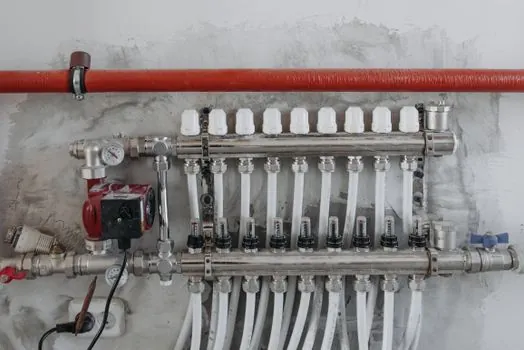
The dominant failure mode is tube rupture from fatigue, accelerated by over-pressure, high RPM, chemical attack, or running the pump against a closed discharge valve. Each rotor revolution is a flex cycle, so a tube rated for 1000 hours at 100 RPM can fail in 200 hours at 200 RPM on the same fluid, and the OEM-published tube-life curves (hours vs RPM at a given pressure) are the only honest way to size a peristaltic for production duty [S3][S4][S6].
For process engineering, three signals to track on a new install are: rotor RPM at design flow (target under 100 RPM for shear-sensitive), tube inlet vacuum (keep below 0.6 bar absolute to avoid cavitation and cell damage), and tubing replacement interval logged against hours on the fluid. Useful cross-references when the same line also needs sterile barrier or clean-in-place validation are documented in the ISO 9001 documentation for hydraulic power unit builds guide, which covers the documentation discipline that maps cleanly onto skid-mounted peristaltic dosing skids.
For the relevant spec sheets and selection criteria, see low pressure die casting machine, and pressure calibrator.