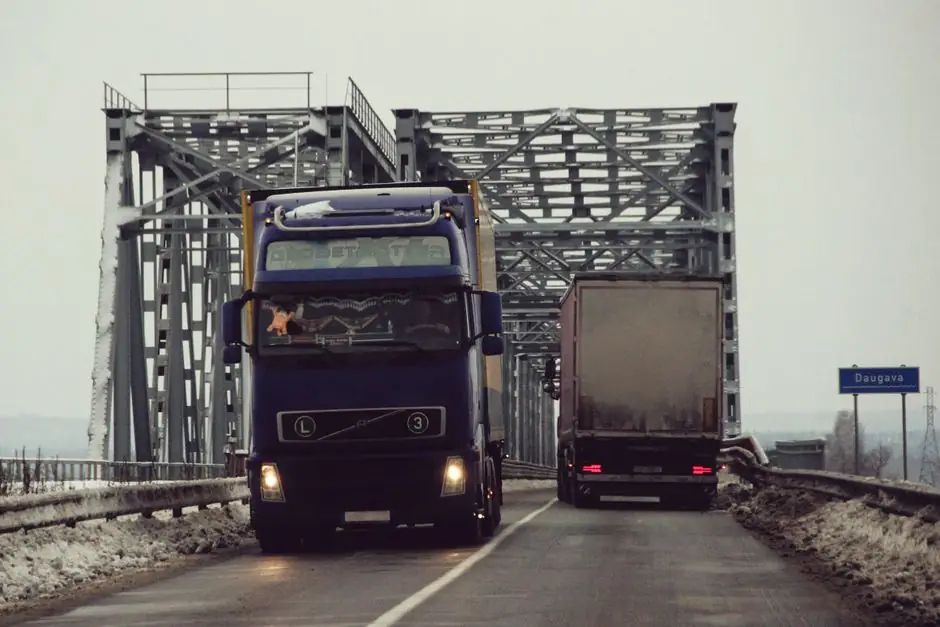
A low-profile pitless truck scale is typically under 25 cm (10 in) tall at the deck, while a standard pitless (open-sided) truck scale measures 28-51 cm (11-20 in) [S6]. Both install above grade, so neither needs a concrete pit, but the difference in approach height changes ramp length, footprint, and vehicle handling.
For a 70 ft platform, a standard-height pitless scale needs roughly 140 ft of open ground so trucks can drive on and off the ramps in a straight line [S1]. A low-profile deck cuts that approach length dramatically, which is why biomass terminals, port yards, and congested grain sites have migrated to the lower silhouette over the past decade.
Profile Height and Footprint Compared
Standard pitless truck scales sit 28-51 cm (11-20 in) above grade and may be open on one or both longitudinal sides for cleaning and repainting [S6]. Each side of approach consumes roughly one scale length of clearance, so a 70 ft deck typically wants a 70 ft approach lane on at least one end, plus runout space for the tractor.
Low-profile portable axle scales deliver the same weighing features as standard portable truck scales, with a lower overall height that makes the wheel load onto the platform with minimal ramp angle [S8]. On a full-length vehicle scale, the lower deck height also reduces wear on steer-axle tires and kingpins, since trucks no longer climb a 30-45 cm ramp and make sharp turns at the top [S3]. The trade-off is shallower clearance under the deck for cleanout, which is why some operators pair a low-profile design with a flush approach kerb.
Site footprint is the deciding factor for many buyers. A 60 ft by 11 ft platform with a standard 30 cm pitless deck needs roughly a 200 ft by 30 ft paved envelope including approach ramps, while a 10-15 cm low-profile deck on the same platform can fit inside a 150 ft envelope, useful for an urban transfer station or a constrained quarry lane.
Install Cost, Civil Work, and Drainage
Pitless scales are less expensive to install and maintain than flush-mount pit scales, because there is no concrete pit to form, no waterproofing membrane, and no dewatering pump [S1]. A ten-foot pit-less scale for smaller trucking or agricultural use starts around seventeen thousand dollars as a baseline figure [S7]. Full-size 70 ft electronic pitless decks climb into six figures once load cells, indicators, and remote displays are added, but still undercut pit installations because excavation, rebar, and concrete work drop out of the bill.
Flush-mount pit scales have to fight groundwater. At the Port of Miami, the deep-pit design below the water table required a self-contained underground pump station built adjacent to both scale pits, just to keep the 4 1/2 ft deep pits dry on an island [S4]. That single civil subproject typically costs more than the entire pitless foundation on the same site.
Legacy low-profile truck scale models were manufactured with lower deck heights, and most contemporary standard truck scale models do not physically fit existing foundations left behind by those older installations [S2]. When replacing a 1980s-vintage low-profile deck, buyers must either match the old 10-15 cm height with a modern low-profile deck or accept raising the approach grade and rebuilding the ramps.
Vehicle Handling and Throughput
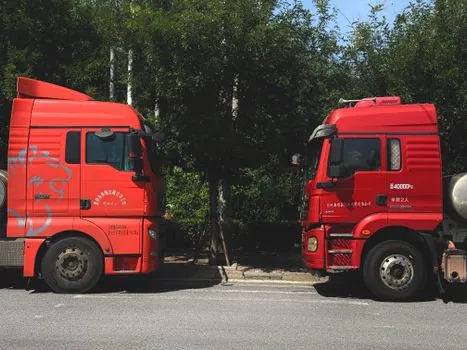
A low-profile design reduces wear and tear on vehicles, as trucks do not need to climb ramps or make sharp turns to access the axle, which keeps approach speed higher and reduces the risk of a steer-axle tire scrubbing the kerb [S3]. On busy sites running 600 trucks per day, that translates into a measurable cycle-time gain, the same cycle-time gain that drove the Port of Miami installation toward pit decks in the first place [S4].
Standard pitless decks force drivers to commit to a straight-on entry, which slows jackknife trailers and is a documented cause of off-scale incidents where a trailer tire climbs the side rail. A taller deck also magnifies ride-height issues on lowboy trailers, agricultural drawbar tractors, and dump trucks with body-up clearance problems. Detailed guidance on matching dump-truck body-up clearances to approach geometry is covered in the dump-truck selection encyclopedia entry.
For axle-weighing and wheel-load compliance, the low-profile approach also lets drivers roll individual axles onto the platform without the suspension bottoming on a 30 cm ramp, an effect that biases single-axle readings by several hundred kilograms if the truck bounces during the weighing event.
Selection Criteria: When Low-Profile Wins, When Standard Pitless Wins
Low-profile pitless is the right call when site length is under 180 ft, when most inbound rigs are short wheelbase tractors or bobtails, when steer-axle tire wear has been a maintenance issue, or when the yard already sits at a tight grade that cannot absorb a 30-45 cm approach ramp. Standard-height pitless is the right call when install budget is the primary driver, when the operator wants maximum under-deck clearance for washdown and repainting, or when the scale will sit in a long, straight lane with no jackknife turns [S1][S6].
On a criteria basis, low-profile scores higher on footprint (roughly 25-30 percent less paved envelope), vehicle handling (no ramp climb, less tire scrub), and retrofit compatibility with old foundations [S2][S8]. Standard pitless scores higher on install cost (no civil pit, but also no special low-profile modules), maintenance access (more headroom underneath), and resale flexibility (modular steel decks can be moved) [S1].
Concrete decks vs steel decks is a parallel decision that interacts with profile choice. Concrete decks are less expensive initially and have the potential to be more durable over time, but require 2-4 weeks of cure time before the scale is available for use, while steel decks are slightly more expensive initially but are usable immediately and have higher resale value [S1]. A steel deck is the standard pairing for low-profile portable modules because it keeps the assembled weight light enough to relocate. For broader vehicle-class sizing context, the truck scale encyclopedia entry covers deck material, length, and capacity options.
Load Cells, Indicators, and Site Integration
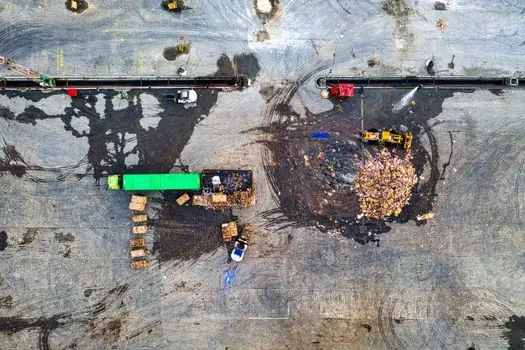
Both low-profile and standard pitless decks use the same multi-cell electronic load-cell architecture, so accuracy class, NTEP or OIML certification, and indicator electronics are independent of profile height. A representative spec is the Loadmaster Portable Vehicle Scale model 156-5406-9, configured as two 20 ft modules plus a 20 ft bridge for a 60 ft total length at 100 tons gross capacity, sized for biomass loadout [S1]. The same electronics package drives either deck height.
Cardinal Scale model 210 weight indicators with 10/100 Ethernet cards, paired with P500 receipt printers, handle data capture and remote-server integration at high-throughput port installations [S4]. Modern electronic scales carry high resistance to electrical surges, an upgrade over legacy multi-cell designs that were prone to lightning damage, and the surge protection does not vary with deck height [S1].
Peripherals such as outside remote displays, ticket printers, barcode scanners, host computers, and stop/go traffic lights attach the same way to either profile, so specifying a low-profile deck does not force a different controls architecture [S1]. Safety rails or side rails are simply in place to stop a truck from driving off the side of the scale, and are standard on both styles.
Limitations and Failure Modes
Low-profile pitless decks give up under-deck clearance, so cleanout, repainting, and load-cell inspection all require the technician to lie on the ground or remove deck plates. Standard pitless decks at 28-51 cm (11-20 in) let a worker sit or kneel under the deck and rotate a load cell out [S6]. On a corrosive site (fertilizer loading, salt storage, coastal terminals), that headroom matters and may push the spec toward standard pitless despite the footprint penalty.
Flush-mount pit scales avoid the cleanout problem entirely but introduce a new failure mode: pit flooding. Keeping a 4 1/2 ft deep pit dry at just above sea level on an island required an engineered pump station, and any future pit scale on a similar site should budget for the same dewatering system [S4]. Low-profile pitless sidesteps both failure modes, which is the central engineering argument for the design.
Finally, a low-profile deck does not eliminate the need for approach space, it only shortens it. Buyers who assume a 10-15 cm deck can be installed against a wall will see jackknife damage on the first day. Reserve at least one scale length of straight approach on the entry side regardless of profile, and the rest of the site can be tight. For matching scale selection to the broader yard layout, the aerial work truck encyclopedia entry covers related vehicle-class clearance issues.
Background reading: 17-Ton Boom Truck Lift Capacity at 30 ft Radius: Real Chart Numbers.