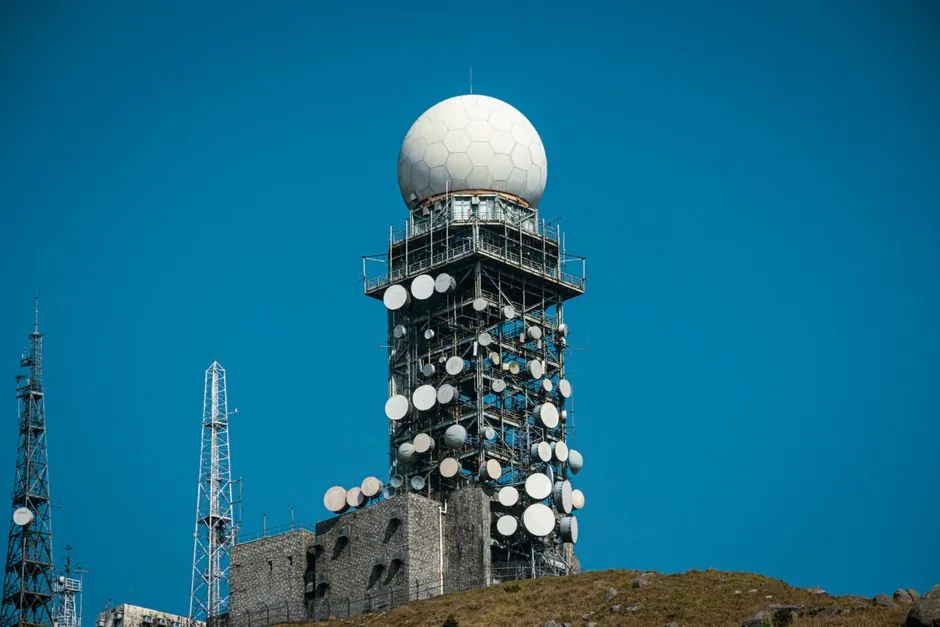
A 0.3-1.5 bar regulated low pressure fill into a sealed die is the working window that makes low pressure die casting (LPDC) the preferred route for outdoor telecom enclosures built in aluminum and magnesium alloys with wall integrity comparable to gravity casting but tighter tolerance than sand [S4][S5].
For 5G RRU, fiber junction, and roadside telecom cabinet bodies, the decision is not whether to choose a low pressure die casting machine over a high pressure unit, but which LPDC size class matches the projected casting area, wall section, and annual volume the program needs [S2][S4].
Pressure Class and Casting Area Envelope
Typical LPDC cells run injection pressure in the 0.3-1.5 bar range (roughly 0.03-0.15 MPa) against a holding pressure of 1-4 bar during solidification, far below the 73.5-153 MPa intensifier pressures of conventional cold chamber HPDC machines catalogued at 1250-1750 cm2 maximum casting area under 40 MPa [S1].
Telecom enclosure footprints (typically 200-700 cm2 face area with 2-6 mm wall sections) sit well inside the LPDC envelope, so a buyer should size on shot chamber diameter and plunger stroke rather than on a "tonnage" number lifted from HPDC marketing [S5][S7]. UPMOLD-class machine tables confirm that the same frame can offer 405-940 cm2 casting area across different intensifier stages, indicating that platen area, not lock force, is the binding constraint for telecom-grade castings [S1].
Alloy Selection for Outdoor Telecom Service
Aluminum alloys A380, A383, A384, and the magnesium alloy AZ91D remain the workhorses for telecom enclosures where thermal conductivity for passive heat sinking and corrosion resistance for tower-top service converge, per NADCA Product Specification Standards for Die Castings (2015, 9th edition) [S3].
Aluminum's thermal conductivity substantially exceeds that of steel or plastic, which is the engineering reason a die-cast lid can act as the primary heat sink for an RRU or small-cell radio without a forced-air fan [S2]. Where weight is critical (drones-on-towers, pole-top small cells), AZ91D magnesium at roughly 1.74 g/cm3 cuts mass about 35% versus A380 at about 2.71 g/cm3; the trade-off is a magnesium-specific magnesium die casting machine with melt protection and a lower MgO-content tolerance that a standard aluminum cell cannot meet [S3].
Mechanical Integrity Versus HPDC and Gravity

Compared with HPDC, LPDC yields lower trapped-gas porosity, slower fill velocities, and finer grain in the skin region, which translates to pressure-tight housings for IP65/IP66 sealed telecom enclosures without the vacuum-assist hardware that vacuum die casting machine cells add at the high end [S2][S4][S5].
Compared with gravity die casting machine cells, LPDC allows more complex internal geometry and tighter wall-thickness control because the metal is actively pushed rather than poured, but the cycle time per shot is longer, so the throughput case for LPDC over HPDC only closes when the part is safety-critical or hermetic [S5][S7]. For a 5G RRU housing that must pass a 96-hour salt-spray test plus an IP66 water-jet test, that trade favours LPDC or vacuum HPDC, not standard HPDC [S2][S3].
Process Trade-offs and Production Limits
The documented drawbacks of low pressure die casting are a slower production rate than high pressure die casting, restricted alloy range (light metals only, since the holding furnace and pressurised crucible work poorly with iron- and copper-base melts), and a machine footprint dominated by the furnace stack above the die [S7].
For telecom programs in the 50,000-200,000 enclosures/year band, those limits are real: cycle times of 90-180 s per shot are typical for a 1-3 kg telecom lid, and a single LPDC station is unlikely to feed a full automotive-tier volume, so multi-station cells or hybrid cells (LPDC body, aluminum die casting machine cold-chamber cover) become the standard configuration [S4][S7]. Buyers should request the machine builder's published cycle-time curve at the planned fill volume, not a generic "shots per hour" headline.
Decision Matrix: LPDC Versus Competing Processes for Telecom Enclosures
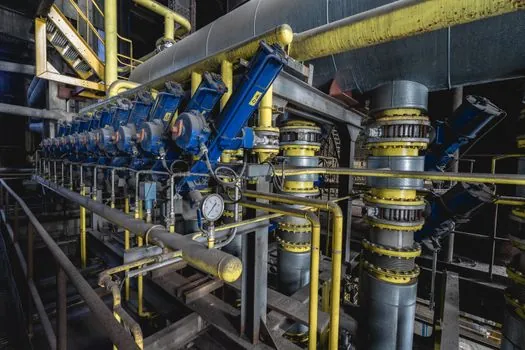
On four engineering criteria, the LPDC position is clearly bounded: structural integrity ranks high (low porosity, heat-treatable wall); tooling cost ranks medium (steel dies similar to gravity, less than HPDC); cycle time ranks low (90-180 s typical); and alloy range is narrow (Al, Mg, limited Cu) [S4][S5][S7].
Gravity die casting scores close on integrity but loses on geometry complexity; HPDC die casting machine cells win on cycle time and surface finish but lose on porosity unless paired with a vacuum system, and at that point the cost gap with LPDC narrows quickly for telecom-spec parts [S2][S4][S5]. Sand casting wins on prototype cost and alloy range but loses on tolerance, surface, and production rate, so it is rarely the production route for sealed telecom enclosures [S5].
Standards Discipline and Supplier Audit
Any LPDC program for telecom enclosures should be quoted against NADCA Product Specification Standards for Die Castings (2015 edition) for alloy chemistry, mechanical property tables, and dimensional tolerancing, then layered with project-specific drawings for IP rating, salt-spray hours, and paint or chromate-conversion finish [S3].
On the supplier side, the LPDC market for aluminum and magnesium components is documented as growing on the back of lightweight automotive, EV, and 5G infrastructure demand, so capacity and lead time are realistic risks for new programs entering 2026 [S4]. For hardware-manufacturing context, our related LPDC machine selection spec map for hardware manufacturing walks through the same platen-area, plunger, and intensifier trade-offs at a different component scale, and the tool and die steel selection map covers the die-material side that any LPDC die life calculation inherits.
Trackable signals: NADCA's next major revision cycle (three-year cadence from 2015), any 2026 LPDC market-share disclosure from published OEM buyer reports, and the next aluminum-vs-magnesium telecom enclosure retrofit announcements from major RRU vendors.