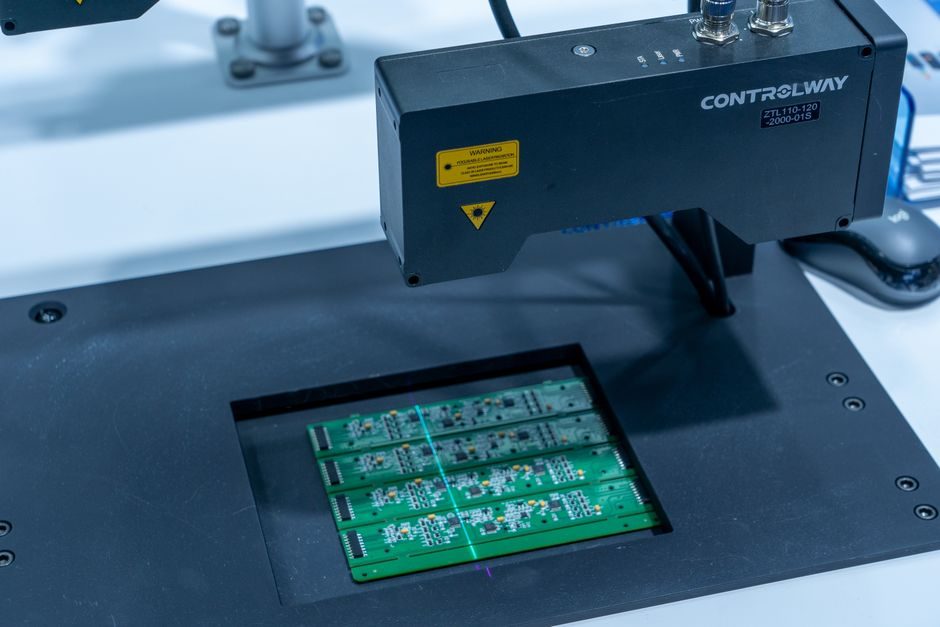
Two public forecasts bracketing the machine vision system market in 2026 disagree on size by roughly an order of magnitude, but converge on three operational signals: 2D vision remains the dominant type, smart cameras are the fastest-growing product form, and inspection-class applications still drive the majority of revenue [S3]. Allied Market Research values the global system market at $49.7Bn in 2023 and projects $159.2Bn by 2032 at a 13.9% CAGR (2024-2032) [S3].
IndustryARC's narrower scope — covering vision hardware components such as cameras, frame grabbers, optics, processors, and vision light sources — sizes the same market at $17.20Bn by 2027, advancing at 7.1% CAGR for 2022-2027, with cameras alone projected to surpass $7.90Bn by 2027 [S1]. A second public release headlines a $74.9Bn-by-2027 trajectory without disclosing its segmentation scope [S4], a reminder that headline totals are sensitive to whether software, services, and integration are bundled in.
Market Sizing and the Hardware/Software Split
Camera hardware is the single largest revenue line inside the components view, forecast above $7.90Bn by 2027 within a $17.20Bn total [S1]. Software breaks into application-specific stacks and deep-learning toolkits, with deep-learning software cited as a structural growth driver behind the smart-camera surge [S1]. The CIR China report's table of contents tracks the same hardware/software and application split — automotive, electronics and semiconductors, food and drink, medical field — for 2020 versus 2026 [S2], confirming that segmentation, not the absolute total, is the stable part of these forecasts.
For a buyer comparing the two public totals, the practical question is which bundle you are budgeting against. The $17.20Bn figure isolates the bill of materials a vision vision controller line will draw from; the $159.2Bn figure is the system-and-services envelope that includes integration, software licences, and lifecycle support [S1][S3]. Both can be true at once because they answer different questions.
Component Selection: Camera, Optics, Lighting, Processor
For PC-based systems, IndustryARC partitions the bill of materials into five line items: camera, frame grabber, lighting, processor, and optics [S1]. The two top-level system architectures remain PC-based and smart-camera-based, and the smart-camera form factor is pulling share as on-board processing displaces external frame grabbers in lower-channel-count cells [S1][S3]. Allied Market Research's 2023 product ranking places vision sensors and image-based barcode readers as the dominant product class, with 2D vision systems as the dominant type [S3].
A practical component map for 2026 sourcing looks like this. Cameras lead spend, with area-scan 2D still the default for inspection and the fastest 3D-colour growth coming from new 3D camera lines (Zivid's May 2023 launch is the cited reference point) [S3]. Lighting choices — LED arrays, dome, coaxial, backlight, structured light — are the second biggest lever because they set signal-to-noise ratio before any algorithm runs; a recent vision light source price map walks through how driver topology and wavelength selection move unit cost. Optics, frame grabbers, and processors round out the spec, with the vision measuring machine class adding telecentric lenses and calibrated stages for sub-pixel metrology.
Application Mix: Inspection, Position Guidance, Measurement, Identification

Inspection dominated 2023 revenue across both component and system views, and IndustryARC's application taxonomy adds position guidance, measurement, identification, and pattern recognition on top [S1][S3]. Quality assurance and inspection combined with position guidance covers the bulk of automotive, electronics, and logistics deployments; the deep-learning software subset of vision toolkits is where the incremental capability is being paid for, especially where lighting variability or reflective surfaces defeat classical rule-based vision.
End-user verticals that show up in both public reports are automotive, electrical/electronics, food and beverage, medical, logistics, and packaging [S1][S2]. The CIR China report explicitly adds electronics and semiconductors as a top-tier application, consistent with the wafer and PCB inspection demand that pulls Asia-Pacific volumes [S2]. The IFR-cited 553,052 industrial robots installed worldwide in 2022, with Asia at 73%, Europe 15%, and the Americas 10%, is the demand backdrop — vision attaches to nearly every new robotic cell, and that ratio is what pulls Asia to the highest regional CAGR in the 2024-2032 forecast [S3].
Regional Distribution and Supply Concentration
North America generated the largest 2023 revenue, but Asia-Pacific is forecast to grow at the highest CAGR through 2032 [S3]. IndustryARC's geographic split confirms the same ordering with the United States, Germany, the United Kingdom, China, Japan, India, and Australia as the named country-level drivers [S1]. The CIR China release adds a competitive layer, tracking top-vendor revenue share, CR5 concentration, and tier-1 versus tier-2/tier-3 vendor counts over 2015-2026 [S2] — useful context for anyone running an ASRS system or shuttle-based shuttle system warehouse where vision-based dimensioning and barcode reading are part of the cell spec.
For capacity planning, the takeaway is that the fastest incremental unit growth is in Asia-Pacific 2D and 3D inspection cells, while North American and European demand is skewing toward software refreshes, deep-learning upgrades, and replacement of legacy PC-based systems with smart-camera equivalents. Logistics and parcel hubs, which IndustryARC flags as a near-term demand engine for standalone vision systems given AI-in-supply-chain adoption [S1], sit at the intersection of those two trends.
Selection Criteria, Limitations, and Failure Modes
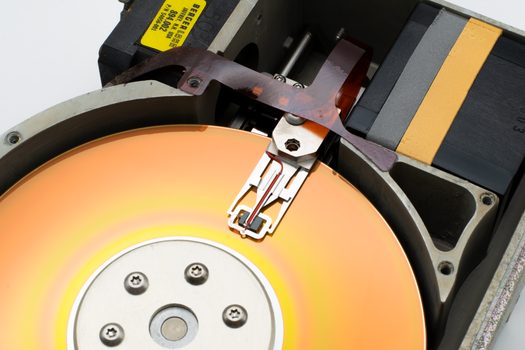
Vision system selection in 2026 turns on four criteria: lighting control, sensor resolution and shutter type, on-board versus PC-based processing, and software stack (rule-based versus deep-learning). A PC-based system with a frame grabber remains the right answer for multi-camera lines, high-frame-rate inspection, and any cell that needs third-party optics; smart cameras win on footprint, cabling, and unit cost for single-point inspection [S1][S3]. The Allied Market Research data puts 2D vision in front on revenue, but the 3D-colour camera class is the cited growth pocket, especially for bin-picking and de-palletising [S3].
Common failure modes are consistent across the public literature: glare and specular reflection on metal or glass parts, variable ambient light in logistics cells, occlusion in bin-picking, and drift in vision-guided robotics when fiducials are dirty or absent. Deep-learning software reduces the first two but does not eliminate them; lighting engineering still sets the ceiling. Standards commonly cited for industrial vision deployments include ISO for optical measurement traceability, IEC 61131 for PLC integration, and the GigE Vision / USB3 Vision / CoaXPress interface standards, though the specific revision dates for any of these are not stated in the source material. Buyers should verify the exact revision in force at the time of specification.
Trackable Indicators for the Rest of 2026
Two signals a sourcing or process engineer can monitor between now and the end of 2026: (1) quarterly updates to the Allied Market Research and IndustryARC total-addressable-market figures, which have already drifted between the 2024 and 2026 releases by a factor of roughly nine on the system-versus-component split [S1][S3]; (2) the IFR World Robotics report's annual installation count, which sets the denominator for vision-per-robot attach rates and confirmed 553,052 units installed in 2022 with Asia at 73% [S3]. A third, narrower signal is the cadence of 3D-colour camera product launches through 2026, which the May 2023 Zivid release established as the benchmark event [S3]. A buyer watching any of these three will know within one reporting cycle whether the 7.1% or 13.9% CAGR track is the one their spec should be budgeted against.