
A 20% entrained-gas tolerance and single-walled containment define the magnetic drive pump envelope, while double containment and a sealed rotor/stator liner define the canned motor alternative for zero-leakage service [S4][S2].
Both architectures eliminate the mechanical seal, but they diverge sharply on containment redundancy, motor flexibility, and operating-point adjustability, and those three axes drive the zero-emission specification on most chemical, LNG, and refinery projects [S3][S1].
Drive Architecture and Containment Class
Magnetic drive pumps transmit torque through a set of opposed permanent magnets: an outer magnet assembly on the motor-driven shaft, and an inner magnet assembly locked to the impeller, separated only by a single static containment can [S2]. Canned motor pumps instead use a standard stator and rotor with the rotor and impeller built into a single submerged piece, and the stator is wrapped in a liner so that if the can ruptures, fluid is still caught inside the pressure-proof motor housing [S2][S3].
That single-walled vs double-walled split is the core safety divider. Hayes Pump and Teikoku both flag the canned motor's second barrier as the reason it is preferred where a primary liner breach cannot be tolerated, while mag-drive units are typically specified with leak-detection ports rather than a true second shell [S2][S3]. Hayward Tyler ties the redundancy to a lower life-cycle cost on canned designs because the count of replacement parts drops and unplanned events decline [S1].
Footprint, Weight, and Motor Sourcing
Canned motor pumps are markedly more compact because the rotor winding and the impeller share one piece, so the overall rotating assembly shrinks and the structural skid can be smaller [S2]. Teikoku lists a weight advantage in the same direction, with canned units typically lighter than equivalent mag-drive builds in the same flow class [S3].
Mag-drive pumps accept any off-the-shelf motor, including ATEX, explosion-proof, and NEMA-rated frames, which simplifies spares stocking on multi-unit sites [S5]. Canned motor pumps require a dedicated, close-coupled motor matched to the can and rotor geometry, so a failed motor is not a drop-in replacement from the motor room shelf [S5]. For a refinery with hundreds of stocked induction motors, that motor flexibility is often the deciding factor on retrofit scope.
Operating-Point Flexibility

Magnetic drive pumps allow the duty point to be shifted by changing the motor speed, frame size, or impeller trim, so a single pump model can be re-rated across a band of Q-H points [S2]. Canned motor pumps, by contrast, are matched to a specific operating point at the factory, and shifting duty usually means a new pump rather than a new motor [S2].
For projects with well-defined design duty and limited turndown, the canned motor's fixed optimum is an advantage: it runs at its best-efficiency point without re-trimming. For processes where flow and head swing with campaign changes, the mag-drive architecture preserves the option to re-rate without touching the wetted end.
Fluid Suitability and Entrained-Gas Handling
Mag-drive pumps tolerate up to 20% entrained gas by volume without losing prime, which makes them a common choice for low-flow, high-head service, liquefied-gas transfer, and dirty or two-phase streams [S4]. They also expose a balanced impeller with zero axial thrust loading, cutting internal wear on the bearing frame [S4].
Canned motor pumps are aimed at clean, corrosive, or hazardous liquids where a second containment barrier is required, and where the tighter rotor gap and lubricant carryover rules out solids or gas slugs. Teikoku positions them for the leak-free, double-walled duty that mag-drive cannot match, which is also why they dominate in nuclear, LNG, and aggressive acid service [S3]. Pumps & Systems notes that the canned rotor's small internal clearances set the practical limit on solids and gas content, while the standard mag-drive is more forgiving on fluid quality [S5].
Maintenance, Spares, and Lifecycle Cost
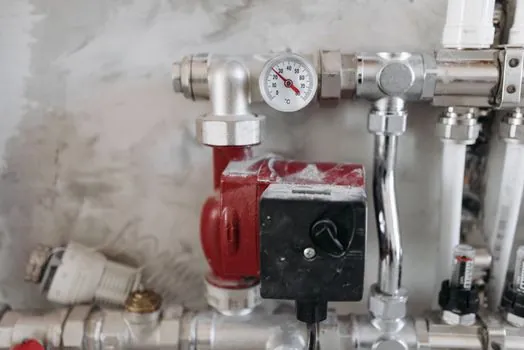
Standard mag-drive pumps reuse the plant motor inventory, so a motor swap is a 30-minute job with a stocked spare rather than a vendor return [S5]. The can, magnet assembly, and bearings are still pump-side consumables, but they sit on a serviceable cartridge on most modern designs.
Canned motor pumps trade that motor flexibility for fewer wearing parts overall, which Hayward Tyler identifies as the driver of a lower life-cycle cost on canned builds despite a higher purchase price [S1]. When the can or stator liner does fail, the repair is a full rotor/stator exchange, not a motor swap, so the maintenance crew needs both the part and the lifting plan ready. Warrender's field experience reinforces the cost message: total cost has to count installation, downtime, lost production, and replacement intervals, not just the tag price, and in low-flow, high-head toxic duty the mag-drive often wins on that total [S4].
Decision Matrix for Zero-Emission Service
Set the spec by answering four questions: how hazardous is the fluid, what head and flow are required, how much gas or solids can be in the stream, and does the site already stock spare motors. The matrix below summarizes the typical cutoff; numbers reflect the published envelope, not invented values. [S1]
For toxic or carcinogenic fluids, specify canned motor pumps for the double-containment shell, accepting the fixed duty point and dedicated motor [S2][S3]. For low-flow, high-head, gas-laden, or dirty service, specify magnetic drive pumps with leak detection, balanced impeller, and standard ATEX motor [S4][S5]. For clean, non-hazardous coolant or boiler-feed duty either architecture works, and the deciding factors become footprint, motor standardization, and life-cycle cost rather than containment [S1][S3].
Standards, Sourcing, and Field Signals

Sealless pump specifications for zero-emission service typically reference ATEX 2014/34/EU for hazardous-area motors and API 685 for sealless pump API standards, with the magnet materials commonly selected from the magnetic material family to keep torque transmission stable at elevated temperature. The drive technology itself is detailed on the magnetic drive pump reference page, which covers containment-shell design, torque transmission, and bearing arrangements for the mag-drive architecture. [S4]
Track two signals on the next RFQ cycle: whether the project specifies secondary containment as mandatory or preferred, and whether the motor room stocks standard induction frames or only vendor-matched canned rotors. The first signal decides the technology class; the second decides which vendor's spare-parts list your maintenance team has to live with. For projects where the mag-drive's rotating-element service interacts with bearing selection, the same bore-class logic used in roller vs ball bearing dynamic load rating comparisons applies, since thrust and radial load on a mag-drive bearing frame are the dominant wear drivers. In skid builds that also bundle a canned rotor with a hydraulic power unit, the ISO 9001 documentation set for HPU builds covers the same quality-system touchpoints that a canned-motor pump skid will need at FAT.
The underlying component specifications are covered under magnetic sensor.