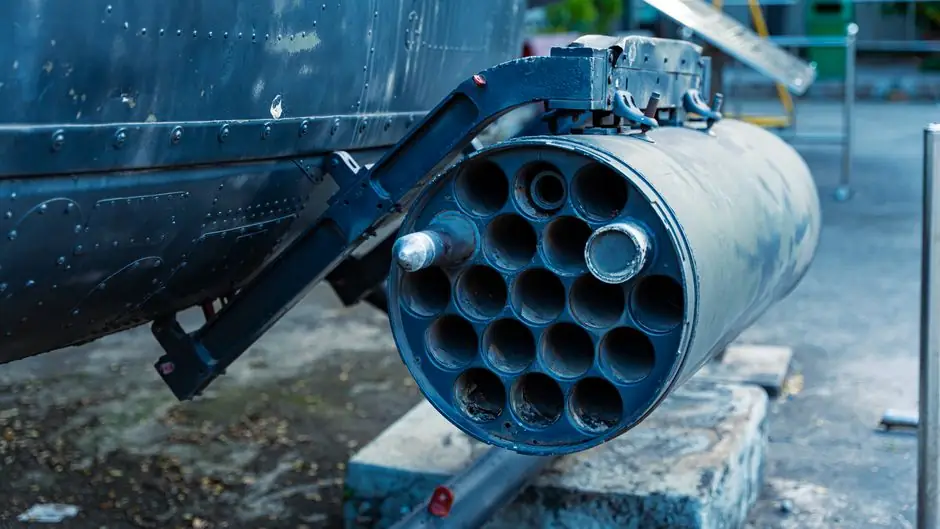
Magnesium HPDC machines for aerospace structural and interior parts typically run in the 800-5000 t clamping-force range, with 400-5000 t HPDC platforms now standardly offered by tier-1 Chinese OEMs for large magnesium and aluminum structural castings [S1].
The same OEM tier publishes a 5000 t maximum HPDC rating, ±0.015 mm post-cast CNC tolerance, and A356 semi-solid rheocasting as a parallel option, with IATF16949 and ISO9001 quality systems applicable when aerospace tier-1 audit is in scope [S1].
Magnesium HPDC machine envelope: clamping force, shot, and vacuum
Aerospace-qualified magnesium HPDC cells are almost universally built on cold-chamber platforms because magnesium melt attacks the steel gooseneck used in hot-chamber designs; hot-chamber machines remain common only for zinc and small magnesium inserts where melt residence time is short, per a fundamentals overview of used hot-chamber die casting equipment [S6].
Vacuum-assist HPDC is the dominant process where AMS 4442 and similar aerospace magnesium castings specify <2% porosity, and vacuum levels in the 50-200 mbar absolute die-cavity range are typically quoted; specific machine-vendor cavity-pressure profiles and leak-rate targets must be confirmed in the OEM test plate [S1].
Clamping-force sizing for an aerospace magnesium component follows projected area at roughly 30-50 MPa intensification, so a 0.3 m² projected part maps to a 900-1500 t machine, and a 0.6 m² transmission housing maps into the 1800-3000 t class; 5000 t machines are used for single-shot large aerospace structural panels, with the upper tonnage published as a max-HPDC capability by integrated suppliers [S1].
Alloy selection: AZ91D, AM60, WE43, and Elektron 21
For elevated-temperature aerospace applications, WE43 (Mg-4Y-2Nd-0.5Zr) and Elektron 21 (Mg-2.5Nd-0.7Gd-0.5Zn-0.5Zr) retain tensile strength above 200 MPa up to 200-250°C and are the alloys quoted in AMS 4442 / ASTM B94 castings, though specific aerospace-qualified WE43 melt-pour protocols must be confirmed with each foundry [S1][S7].
Corrosion performance of AZ91D benefits from Fe and Ni limits of <50 ppm and <20 ppm respectively, and Mn content at 0.15-0.35% is the standard melt-cleaning addition; for salt-spray aerospace service, surface conversion coating plus powder primer is the usual downstream finish, with the casting supplier typically offering in-house surface treatment integration [S1].
Selection criteria: cold-chamber HPDC vs semi-solid rheocasting vs gravity
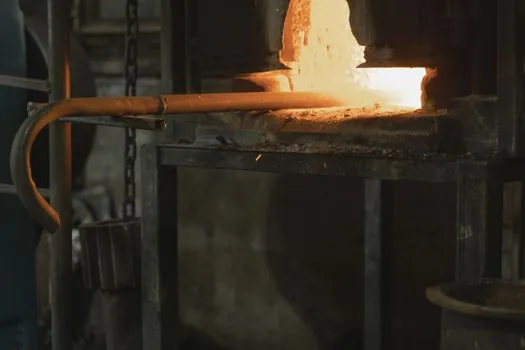
For an aerospace magnesium part, three process options must be lined up against part geometry, mechanical target, and porosity spec. Cold-chamber HPDC delivers 1-3% porosity, 200-230 MPa tensile on AZ91D, and the lowest unit cost at high volume; semi-solid rheocasting on an A356 (aluminum reference, also applicable to Mg thixotropic billets) line drops porosity below 1% and supports heat-treatment to T6, but requires a thixotropic billet feedstock and a higher machine-platform cost; gravity die casting is the slowest, lowest-porosity baseline but rarely used for thin-wall aerospace parts because fill velocity is insufficient [S1].
Vacuum HPDC sits between cold-chamber standard and semi-solid: it preserves HPDC cycle time while dropping porosity into the 1-2% band required by AMS 4442 castings, and is the process tier most tier-1 aerospace part foundries default to for safety-critical magnesium housings [S1].
Hot-chamber magnesium die casting is generally NOT specified for primary aerospace structural parts because of melt residence concerns and the iron pick-up issue, but remains in scope for small non-safety parts such as seat fittings and interior brackets, where the same fundamentals apply as for zinc hot-chamber operation [S6].
Machine builder landscape and tonnage classes
Chinese integrated die casting machine builders publish a small/medium/large/ultra-large die casting machine class structure, with cold-chamber HPDC cells in the 125-5000 t bracket typically used for structural castings, and the ultra-large class corresponding to the 2500-5000 t segment [S2].
Japanese machine builders such as Shibaura Machine (formerly Toshiba Machine) hold the long-standing global benchmark for aerospace-tier HPDC, with the 2026 Chicago IMTS appearance (14-19 Sep 2026) announced on the OEM's own events page as a venue for new injection molding and die casting platform releases [S5].
Integrated part suppliers such as the OEM behind oeform.com publish 5000 t HPDC max, A356 semi-solid rheocasting, prototype-to-mass-production workflow, and PPAP documentation, positioning themselves as one-stop suppliers rather than as machine builders per se [S1].
Process safety and furnace handling: SF6, SO2, and cover-gas trade-off
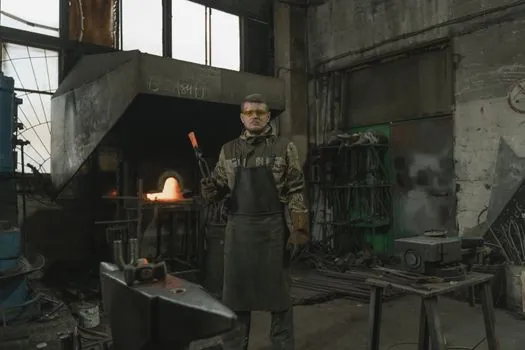
Magnesium melt cover-gas selection is a first-order safety specification. SF6 (sulphur hexafluoride) is the historical reference at 0.2-0.5% vol in air or N2, but its GWP of 23,500 and EU F-gas restrictions are pushing the industry to SO2, HFC-134a, and dry-air-plus-Novec 612 fluoroketone alternatives, and the exact allowable SF6 concentration must be confirmed with local environmental regulation before a foundry is selected.
Magnesium die cells additionally require flame arresters on the dosing port, thermal imaging of the die face, and an emergency melt-pour containment pit; the OEM facilities audited for aerospace structural work generally publish a flow chart that includes these as floor-pre-readiness items, although specific fire-suppression ratings belong to each foundry's NFPA and local-authority audit pack [S1].
For a buying engineer, the safety pre-readiness checklist should include cover-gas specification, melt-throughput rate in kg/h, documented leak-test protocol (typically helium sniffer or pressure-decay at 1-2 bar), and an exclusion zone around the cell, all of which must be confirmed in writing before machine order placement [S1].
Inspection and quality gates for aerospace magnesium castings
CMM dimensional inspection, X-ray porosity inspection, and material/leak testing are the three standard inspection gates published by tier-1 integrated magnesium HPDC suppliers, and the same workflow is repeated as a 5-step DFM-to-delivery flow (DFM review, tooling development, die casting, CNC machining, inspection) on the same OEM page [S1].
PPAP documentation support, production-traceability systems, and continuous-improvement process records (typically IATF16949/PPAP-style) are the usual deliverables for an aerospace program; for magnesium specifically, melt-lot traceability and a Fe/Ni chemistry record per heat must be added to the standard PPAP packet because corrosion and porosity performance trace to the melt chemistry [S1].
Comparing the aluminum die casting machine workflow to the magnesium equivalent: the workflow stages (DFM, tooling, HPDC, CNC, CMM/X-ray) are nearly identical, but the magnesium line adds cover-gas safety, melt-chemistry traceability, and a lower Fe/Ni chemistry ceiling as distinct magnesium-only gates.
When magnesium HPDC is the right pick, and when it is not
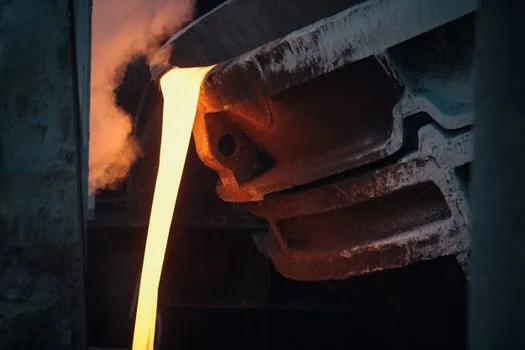
Magnesium HPDC fits aerospace when the part is a thin-wall structural housing or bracket, density below 1.8 g/cm³ is required (magnesium is 1.74 g/cm³ vs aluminum 2.7 g/cm³, a 35% mass reduction), volumes are above ~5,000 pieces per year, and post-cast machining tolerances of ±0.015 mm are needed [S1][S3].
Magnesium is not the right pick when the part is a high-integrity rotating component (forged or wrought 7075/T7351 aluminum is more common in rotor hubs and landing-gear parts), when service temperature exceeds 300°C (creep becomes dominant and AM60 outperforms), or when the buyer's minimum order quantity drops below 5,000 pieces, where vacuum die casting or even zinc die casting becomes more economical [S3][S6].
For comparison on the same aerospace tier, see the related cast-iron selection for aerospace: standards, grades, and where it still belongs piece, which maps the alternative process and material paths, and the aluminum die casting machine selection for electronics housings reference for tonnage-alloy mapping on the lighter electronics side.
Trackable signals for a buyer in the next buying window: machine-builder announcements from Shibaura Machine at IMTS Chicago 14-19 Sep 2026 [S5], any further F-gas regulation tightening on SF6 cover-gas which would shift magnesium foundries to fluoroketone cover-gas, and OEM-published WE43 and Elektron 21 melt-pour protocols (currently only general AMS 4442 references are common in supplier literature).