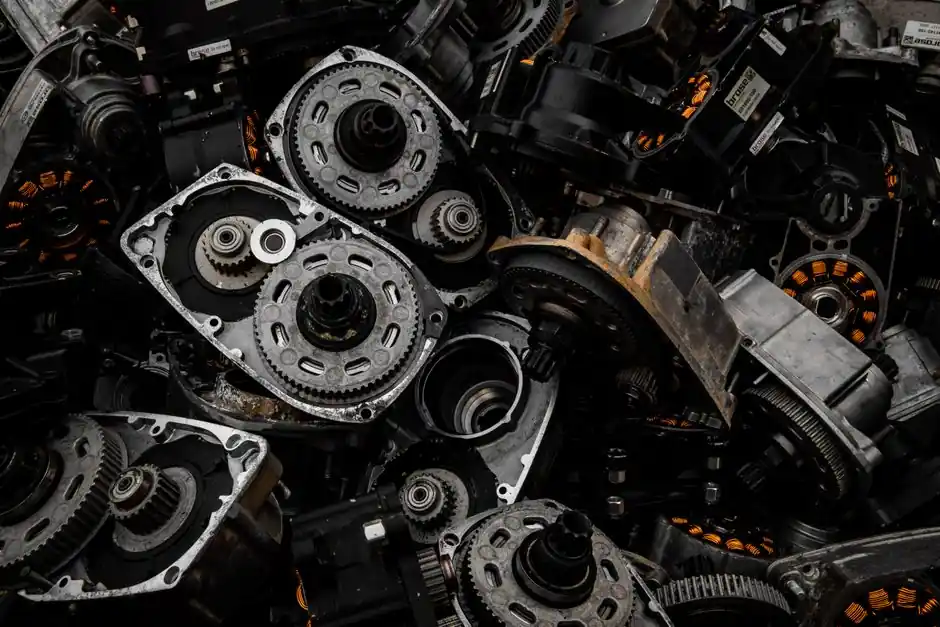
For electronics enclosures, cold-chamber high-pressure die casting on machines rated 120-1650 tons is the standard process window, with ADC12 and A380 as the default alloys for thin-wall, EMI-shielded housings [S1]. Zinc (Zamak 3/5) and magnesium hot-chamber routes cover smaller, higher-volume parts but sacrifice the thermal conductivity and mechanical strength most enclosure designers need [S1].
Source-published machine inventories confirm the 120-1650 ton band as the practical production range, with gravity casting cells reaching part weights up to 50 kg for larger chassis or heatsink bodies [S1]. When wall sections drop below 2.0 mm on spread-cavity layouts, vacuum-assisted cold-chamber HPDC and intensive cooling circuits become the deciding factors, not raw tonnage.
Machine Class, Tonnage, and Clamping Force Match
Clamping force selection is a projected-area calculation, not a rule of thumb. For a typical 100 x 80 mm laptop-adjacent housing with 1.5 mm wall and a ~80 cm² projected area including runner, an ADC12 fill needs roughly 60-80 MPa injection pressure times area, which lands in the 160-250 ton band with a safety margin; the same part scaled to a 200 x 150 mm server faceplate pushes past 800 tons [S1].
Modern die casting cells in this tonnage range routinely run shot weights of 1-8 kg aluminum per cycle, with cycle times of 60-180 seconds on automated trim and extraction cells. For reference, a 10-ton/month aluminum log melting and casting line costs US$ 960,000 and requires a 78 m x 24 m footprint, while a 20-ton/month line steps up to US$ 1,180,000 and 78 m x 36 m [S3].
Alloy Choice: ADC12 vs A380 vs Zinc vs Magnesium
ADC12 (Japanese JIS equivalent to A383) and A380 are the two alloys most Chinese Tier-1 die casters list for electronics work, with A360, 6061, and 6063 reserved for parts that need better corrosion resistance or post-machining tolerance [S1]. For an RF/EMI enclosure that also dumps heat, A380's nominal thermal conductivity near 96 W/mK and ADC12's near 92 W/mK outperform zinc alloys, which sit around 105-110 W/mK as cast but lose out on stiffness and operating temperature.
Zamak 3 and Zamak 5 hot-chamber die casting still win on dimensional tolerance and surface finish for connectors, shields, and small cosmetic covers, while magnesium hot-chamber is chosen when weight is the primary driver. Where the housing sees sustained junction temperatures above 150 °C, the choice collapses back to ADC12 or A380, since zinc creeps well below that point [S1].
Wall Thickness, Vacuum, and Process Controls
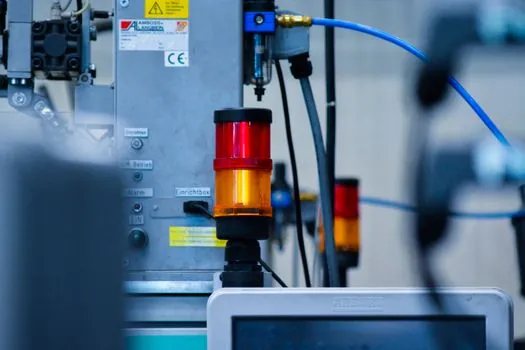
Thin-wall aluminum electronics enclosures typically run 1.0-2.5 mm wall sections; below 1.5 mm, the fill velocity has to climb to 3-4 m/s and the gate area must increase proportionally to avoid cold shuts. Vacuum-assisted cold-chamber HPDC drops entrapped gas below 10 mbar, which is what makes leak-tight die cast housings possible without impregnation. [S2]
Intensive cooling in the die is not optional on thin-wall work: conformal beryllium-copper inserts, internal waterlines spaced 8-12 mm from the cavity surface, and oil-temperature units held within ±1 °C of setpoint are standard. The trim press and extraction robot have to be in the same cycle window, so a 120-160 ton machine on a 60-second cycle needs a 6-axis robot with at least 5 kg payload, not a 3 kg pick-and-place unit.
Surface Finish and Post-Process for Electronics
Powder coating, anodizing, electroplating, and liquid painting are the four surface routes a full-service die caster will offer in-line [S1][S2]. For EMI/RF shielding, zinc or tin-zinc electroplating over a chromate conversion coat remains the conventional stack; for cosmetic consumer enclosures, powder coat at 60-80 µm over a chromate-free pre-treatment handles most indoor use cases.
For more aggressive specs such as RoHS and REACH compliance, water-based e-coat and REACH-compliant liquid painting lines are now standard on Indian and Chinese Tier-1 suppliers alike [S2]. Conductive-anodic finishes (Type II hardcoat with conductive seal) give limited shielding and are usually paired with a separate gasket groove for high-frequency gaskets.
Quality Systems, Capacity, and Sourcing Signals
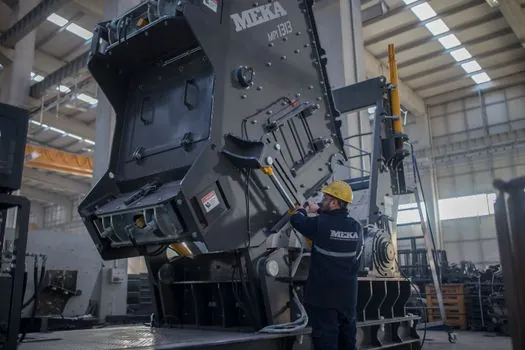
IATF 16949 is the floor for any die caster serving automotive electronics, but most consumer-electronics housing work still runs on ISO 9001:2015 [S4]. The crossovers are real: a cell set up for an automotive ECU housing with PPAP, Cpk ≥1.33, and full traceability can run a 5G router housing without modification; the reverse is not true.
Plant scale matters because thin-wall aluminum work is uptime-bound. A single 800-ton cold-chamber cell is the practical minimum for a serious thin-wall housing program, and most Tier-1 suppliers run 5-15 such cells with a sister CNC shop of 10+ VMCs for post-cast machining [S2]. When evaluating suppliers, ask for tonnage list, shot weight history, and the ratio of automated cells to operator-driven cells; that ratio is the strongest predictor of consistent wall thickness on runs of 10,000+ housings.
Selection Criteria: HPDC vs Gravity vs Vacuum vs Zinc
For electronics housings, the decision pivots on four criteria: alloy (aluminum vs zinc vs magnesium), wall thickness (under or over 2 mm), volume (under or over 50,000/year), and shielding requirement. The matrix below summarizes the practical fit for a typical 100-200 mm housing. [S2]
High-pressure die casting (cold-chamber) with ADC12 or A380 fits 1.0-2.5 mm walls, 50,000+ annual volume, and high EMI shielding when paired with plating, on a die casting machine of 160-800 tons. Vacuum-assisted cold-chamber HPDC adds 15-25% cycle cost but enables leak-tight and porosity-critical parts. Gravity die casting with A356 or A360 suits 3-6 mm walls and lower volume under 10,000/year, but cannot hold ±0.1 mm on thin sections. Zinc hot-chamber on a zinc die casting machine fits sub-1 mm cosmetic covers and connectors, not structural housings. Magnesium hot-chamber on a magnesium die casting machine is the right pick for weight-driven, sub-2 mm consumer electronics above 200 g mass savings; for the broader aluminum housing conversation, see the aluminum die casting machine reference.
Common Failure Modes and How to Spec Against Them
The three failure modes that catch electronics-housing programs are porosity leading to plating bleed, cold shuts at thin-wall flow fronts, and soldering/assembly tolerance drift from inconsistent as-cast dimensions. Each maps back to a spec: vacuum level below 10 mbar for porosity, fill simulation showing >80% gate velocity at the flow front, and Cpk tracking on critical dimensions across the production run. [S3]
For thin-wall work, ask the supplier for the vacuum rating, the number of vacuum valves per cell, and whether the die has a hot-chamber or cold-chamber shot sleeve. The difference shows up directly in porosity on the as-cast surface: a cold-chamber sleeve at 0.5-1.0 m/s shot speed gives a denser skin than a hot-chamber equivalent running the same alloy, which is why aluminum electronics housings are almost universally on a vacuum die casting machine configuration rather than gravity or standard HPDC [S1].
Track the supplier's tonnage list, vacuum capability, alloy stock, and surface-finish line as the four hard spec items. A die caster running 120-1650 tons of cold-chamber capacity with vacuum-assist cells, in-line powder coating or anodizing, and a 10+ VMC machine shop is the configuration that has consistently held ±0.05 mm on thin-wall electronics housings in 2025-2026 production runs [S1][S2]. For comparison with similar spec-driven process selection in adjacent capital equipment, the Skid Steer Loader Selection for Agriculture: ROC, Hydraulics, Frame breakdown uses the same tonnage-to-application matching discipline, and Machine Vision System Selection: A Spec-First Buyer's Map applies it to inspection cells that usually sit beside the trim press on a die cast housing line.