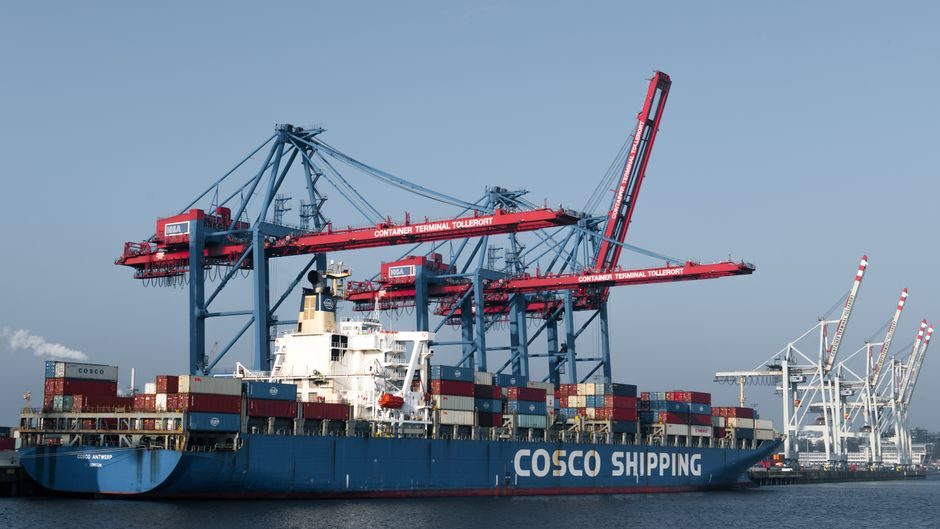
As of the CBCIE May 2026 monthly statistical release, Chinese titanium sponge production capacity sits in a narrow provincial footprint, with Liaoning, Xinjiang and Sichuan forming the three dominant nodes [S1].
For the engineer or buyer outside the sponge trade, the practical question in 2026 is not whether titanium sponge is available, but which node matches a given ASTM-grade requirement, what lot-level documentation can be obtained, and how a dual-source plan absorbs the geopolitical and logistical risk that the Russia/Ukraine, China/export-licence, and Kazakhstan/transport-corridor exposures each carry.
Chinese Capacity Footprint and Provincial Concentration
CBCIE's monthly tracking for 2026-05 lists titanium sponge production capacity broken down by province and city, with Liaoning, Xinjiang and Sichuan holding the largest installed base inside China [S1]. Output is organised around the Kroll process (magnesium-reduction of TiCl4 in a sealed retort), so capacity additions are not flip-a-switch — a new 10,000 t/yr line typically takes 30-36 months from ground-break to first qualified metal, which is why 2026 shipments largely reflect decisions taken in 2022-2023.
Outside those three provinces, secondary capacity clusters in Guizhou and Yunnan, and a smaller build-out is visible in Inner Mongolia, but the headline volume still routes through Liaoning, Xinjiang and Sichuan, meaning a disruption at any one of those three nodes has a measurable impact on China's domestic billet and ingot supply [S1]. For a procurement team, that footprint is the first thing to map: the question is "where in the country does the sponge actually come from, and what downstream mill does it feed?" rather than "China total."
Grade Bands, Specifications, and What Each Node Typically Runs
Titanium sponge is sold against ASTM B299 / GB/T 2524 grades (MHT-110, MHT-100, MHT-95 in China; equivalent Gr1-Gr4 in ASTM/ASME B348 form once melted), and the most consequential spec at the sponge stage is the Brinell hardness cap — 110 HBW for MHT-110 / Gr1, 120 HBW for MHT-100 / Gr2, up to ~140 HBW for MHT-90 — because the hardness number correlates with Fe, Cr, Ni, Cl and O residuals that propagate into every downstream product, from titanium alloy billets to CP-grade plate. [S1]
Chinese plants shipping into aerospace and medical work-streams generally target MHT-110 with full lot-traceability (retort number, Kroll batch, vacuum-distillation run); merchant MHT-100 lots go into chemical-process and desalination heat-exchanger tube; MHT-90 and below feed master-alloy additions and steel-foundry deoxidation. The published CBCIE statistics do not break production by grade, only by province and capacity [S1], so the engineer has to ask the mill for grade-mix disclosure on every inquiry, especially since the same nominal capacity figure can mask a high-hardness or non-rotating-retort product mix.
Producer Map: China, Russia, Kazakhstan, Japan, USA
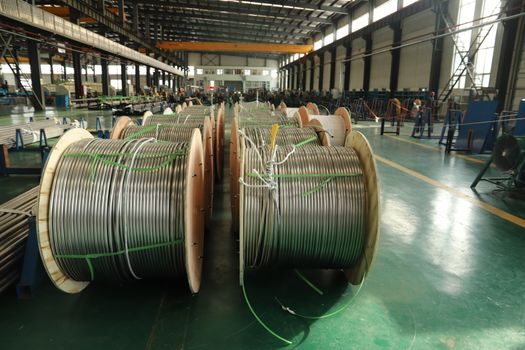
Outside China, the supply map is unusually concentrated: VSMPO-AVISMA (Russia) remains the largest single integrated sponge-to-mill operation globally; UKTMP in Ust-Kamenogorsk (Kazakhstan) runs Kroll sponge with a strong CIS and Chinese export pull; Toho Titanium and Otai (Japan) hold the highest-purity niche for the medical and semiconductor-CP markets; and the U.S. has no merchant sponge at scale after the closure of the last dedicated sponge line, depending on imports and on the electrolytic / Armstrong paths under development. [S1]
A practical 2026 sourcing comparison for sponge buyers looks like this:
<strong>Sourcing node vs decision criteria:</strong>
- <strong>Chinese Liaoning/Xinjiang/Sichuan nodes</strong>: lowest nominal sponge price, qualified against GB/T 2524 and many ASTM B299 lots, but lot-trace depth varies by producer; export licensing has tightened for some end-uses, so contract clauses need an export-licence-pass-through.
- <strong>VSMPO-AVISMA (Russia)</strong>: the most integrated sponge + ingot + billet + forging supply, AS9100/ Nadcap at major Russian plants, but OFAC / EU sanctions layering in 2026 means U.S. and EU aerospace customers typically cannot take new contracts; defence and non-sanctioned industrial buyers still transact.
- <strong>UKTMP (Kazakhstan)</strong>: Kroll sponge, common middle grade (MHT-100 equivalent), strong Chinese and CIS rail logistics via the Alashankou and Dostyk border crossings, lower geopolitical friction than Russia.
- <strong>Toho / Otai (Japan)</strong>: premium grade, highest lot traceability, used in medical implants and CP foil; price premium and limited annual tonnes make this a niche buy, not a base-load option.
For a procurement manager weighing total cost of ownership, the trade is roughly: Chinese MHT-100 sponge runs in the lowest price band, UKTMP sits in the middle, VSMPO T6/T5 lots in the next tier for the Western industrial market, and Toho/Otai at the top, with the gap between bottom and top commonly a multiple of 2-3x on the per-kg sponge basis.
Cost Stack and What Drives Sponge Pricing
Across all four source regions, the cost stack behind a kilo of titanium sponge is dominated by TiCl4 feedstock and magnesium reductant (the Kroll cycle consumes roughly 1.0-1.1 kg of Mg per kg of Ti produced, with the MgCl2 by-product needing to be re-electrolysed in a chlor-alkali or dedicated Mg cell to be economic), then energy, then labour, then overhead. This is why electricity price is the single biggest variable cost line, and why Sichuan and Xinjiang — both with low-cost hydropower or coal — show up in CBCIE's top three by capacity [S1].
At the buyer level, the practical levers to move on price are lot size (a 20 t lot versus a 5 t lot changes the per-kg quote), contract length (12-month take-or-pay beats spot), packaging (vacuum-sealed foil vs sealed drum changes scrap rate in the customer's warehouse), and grade flexibility. If a heat-exchanger fabricator can take MHT-100 instead of MHT-110, the price band drops; if a medical device line must have MHT-110 with low Cl and Fe, the price band rises and the eligible supplier list shrinks to Toho, Otai, a subset of Chinese plants, and qualified UKTMP lots.
Risks, Failure Modes, and What Hurts Supply in 2026

The failure modes that have hit titanium sponge supply in the past decade are worth listing because they have not gone away: (1) export-licence or tariff actions from China affecting certain HS codes; (2) sanctions layering on Russian producers that splits VSMPO supply between Western and non-Western buyers; (3) magnesium availability, since Kroll is a magnesium-cycle process and a Mg shortage translates one-for-one into reduced sponge output; (4) energy rationing in Chinese provinces during winter peaks, which can throttle retort heating; (5) transport-corridor disruption on the Kazakhstan-China rail border; and (6) lot-trace gaps that show up only at the customer's incoming-QA stage. [S1]
The single most-cited shock of recent years was the 2021-2022 magnesium supply squeeze; the same mechanism still applies. If a buyer's risk model treats sponge as a "normal" commodity, they will underweight these channels. A more robust model uses the same kind of multi-criteria map a procurement analyst would use for any other conflict-mineral-adjacent input: geographic concentration of production, single-supplier dependence, and substitutability, with hard triggers for activating a second source. For context on how other critical-mineral supply chains read against similar criteria, the manganese ore supply shortage and risk map and the copper cathode 2026 supply nodes map use a similar node-and-risk-frame approach.
Standards, Documentation, and Lot Acceptance
The specification framework a sponge contract should reference: ASTM B299 for sponge grades; ASTM B348 / ASME SB-348 for wrought billet/bar product forms that the sponge is melted into; AMS 4928, AMS 4911, AMS 4901 for aerospace and CP plate/strip; ISO 5832-2 / ISO 5832-3 for medical-grade wrought titanium; and GB/T 2524 for Chinese domestic sponge. Each one sets a different envelope on Fe, O, N, C, H, Cl residuals and on the Brinell hardness cap. [S1]
At incoming QA, the lot should carry: a mill test certificate with retort number and heat number, a Brinell hardness reading on the agreed sample, a chemical composition to the listed spec, a sieve / particle size statement, and a visual / contamination check on the vacuum pack seal. Any sponge contract that does not give the buyer the right to witness or audit sampling at the producing plant is leaving money on the table; for higher grades (MHT-110, medical CP), independent third-party inspection (e.g. SGS, Bureau Veritas, ASTM-accredited labs) is normal commercial practice rather than a luxury.
For Whom This Supply Map Works, and Where It Does Not

This map fits a procurement team buying sponge for CP-grade tube, plate, rod, or for downstream billet feeding titanium alloy aerospace or chemical-process components, where the decision is grade + node + lot trace + dual-sourcing. It also fits a finance or risk team modelling the upstream inputs to industrial components covered elsewhere in the catalog, such as DC power supply chassis that use CP titanium covers in marine or chemical environments. [S1]
It does not fit a buyer who needs mill-product form (bar, plate, wire, tubing) — for that, the right conversation is with the melters and the rolling mills, and sponge is a back-to-back input, not a direct buy. It also does not fit a buyer of titanium tetrachloride (TiCl4), titanium powder for additive manufacturing, or titanium scrap — those are different commodities with different nodes, different specs, and a different risk map. The powder side, in particular, follows the HDH (hydride-dehydride) and PREP (plasma rotating electrode) routes and has its own supply chain. If the brief is powder, this article is the wrong map; if the brief is Kroll sponge for downstream CP or alloy melting, this is the map to use.
Sourcing Signals Worth Tracking Through 2026
Three trackable signals stand out for the rest of 2026: (1) CBCIE's monthly provincial capacity update — the May 2026 release shows the latest published numbers [S1], and the next release is the leading indicator for any new provincial build-out or re-start; (2) Russian export-licence and OFAC General License activity around VSMPO-related HS codes, which has changed the contractual posture of multiple Western OEMs in the past 18 months; (3) magnesium spot prices, since a sustained move in Mg has historically flowed through to sponge output within 2-3 months.
For a procurement team that needs an actionable 2026 plan, the next node to watch is whether Sichuan and Xinjiang add further nameplate capacity through 2026-H2 on the back of low-cost power, and whether Chinese export licensing tightens on any sub-grade — both are direct demand-shocks for non-Chinese sponge users.
Spec-level background on the components involved: switching power supply.