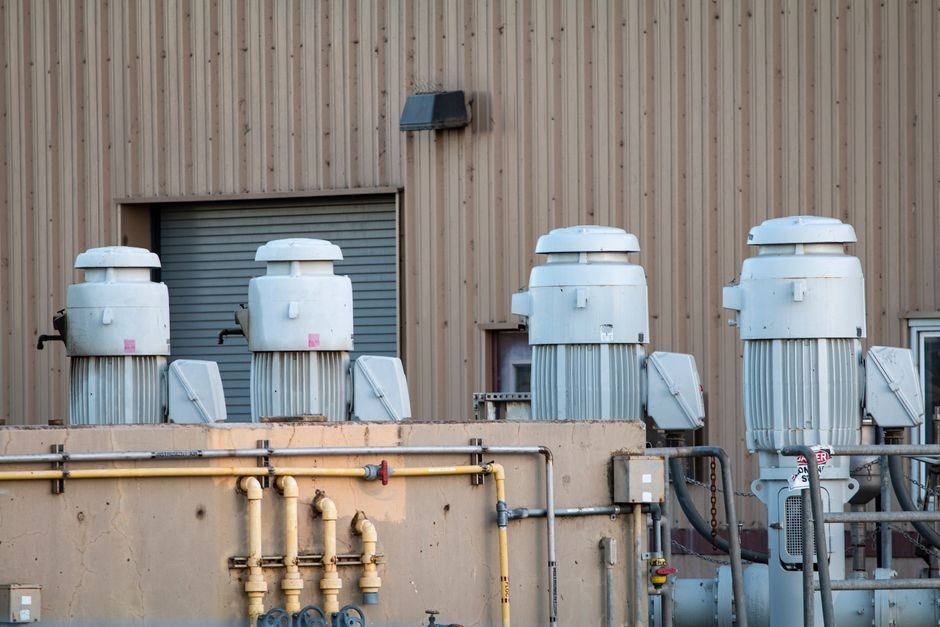
Magnetic drive pumps replace the traditional mechanical seal with a permanent-magnet coupling that drives the impeller through a metallic or non-metallic containment can, which is why they dominate hydrocarbon, acid and hot-oil services where fugitive emissions must be cut to near zero [S3].
Across the 2026 sourcing pool, published performance windows cluster tightly: capacity 1.8–1450 m³/h, head ≤133 m, suction+head ≤1.6 MPa, and media temperature windows from −10 °C up to 300 °C depending on body and magnet material [S1][S3]. For an engineer sizing one for the first time, the decision is less about the pump itself and more about getting the containment-shell material, magnet grade and dry-run margin to match the actual service — not the headline number on the data sheet.
Operating Envelope: Flow, Head, Pressure, Temperature
Industrial magnetic drive centrifugal pumps from mainstream Chinese OEM catalogues cover 1.8–1450 m³/h at heads up to 133 m, with 2900/1450/970 r/min motor pairings at 380 V / 50 Hz, IP44–IP54 enclosure, and B/F insulation class [S3]. The combined suction pressure + head must stay ≤1.6 MPa, which is the working-pressure gate that most buyers miss because they read only the head curve [S3].
Standard PP/PVDF small-frame models (JMH/JMC family) typically rate −10 °C to +120 °C media with ambient ≤40 °C, while titanium-bodied brazing-residue units reach 300 °C continuous service [S1]. A 3/4-inch 65 W 110 V hobby unit moves 700 gal/h (≈2.65 m³/h) at very low head — useful only for coolant loops, not for chemical transfer [S5]. For the broader architecture behind a magnetic-drive pump, the magnet assembly sits between the motor shaft and the impeller shaft, so any thermal or chemical stress on that coupling is the real reliability limit, not the hydraulic curve.
Body and Containment-Can Material Selection
PP and PVDF pump bodies are the default for hydrochloric, sulfuric (dilute) and mixed-acid baths because the thermoplastic survives where cast iron would pit in months. High-purity ceramic shafts paired with silicon-carbide bearings are the standard wear package in this class, giving the dry-run idle protection the catalogue advertises. [S1]
For higher temperatures and aggressive mixed-acid services, titanium-bodied magnetic-coupled brazing pumps push to 300 °C and pair titanium directional nozzles with wettables for electronics tinning and lead-free solder pot service [S1]. Cast-iron/45-steel/3Cr13 stainless pump shafts with silicon-carbide/graphite/tungsten-carbide/hard-alloy seal pairs handle hydrocarbon and solvent transfer, but the operator must keep them wet — the can and bushings are the failure point if the suction runs dry [S3]. When the fluid is slurry, abrasive, or has any crystallisation tendency, specify a flush/filter loop from day one; magnetic pumps do not tolerate starved suction even though the catalogue claims otherwise.
Frame Standards, Motor Coupling and Mounting
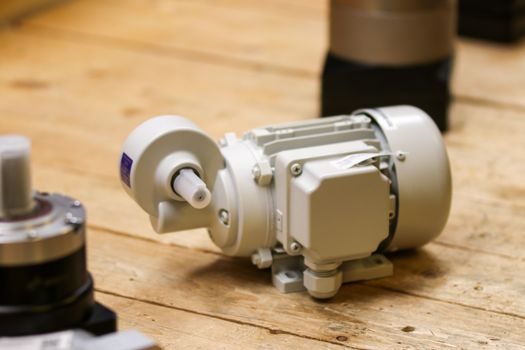
The ACQ direct-coupled family is designed to ISO 2858, which is the same envelope as end-suction centrifugal process pumps — meaning plant engineers can drop a magnetic-drive unit into an existing ISO 2858 baseplate and pipework layout without redoing the foundation. The permanent-magnet transmission removes the shaft seal entirely, so the only alignment that matters is the motor-to-drive-end face run-out, typically ≤0.05 mm on a 4-pole foot-mounted frame. [S2]
Insulation class B/F and IP44/IP54 protection are the published default for general-purpose industrial frames; for outdoor chemical-skid duty, push the spec to IP55 and add a canopy over the coupling housing [S3]. Power sizing should leave at least a 1.15 service factor over the nameplate hydraulic power — magnetic couplings lose 3–8 % through eddy-current heating in the can, and that loss rises with speed and specific gravity. For guidance on adjacent drive-train components, the linear guide and crossed-roller guide references cover the alignment-fixture side of skid build, which is where most frame-tolerance problems actually start.
Service-Fit Map: Where Magnetic Drive Pumps Win and Lose
Magnetic drive pumps are the right pick for: hydrocarbon and solvent transfer where API 685-style seal-pot support is unwanted, hot oil loops up to 300 °C on titanium frames, corrosive acid dosing on PP/PVDF frames, and clean photo-chemical or CMP slurry where zero leakage is mandated [S1][S3]. They are the wrong pick for: fluids containing ferromagnetic particles (they will lock the inner rotor to the can), high-viscosity (>~200 cSt) duties because eddy-current heating in the can rises with viscosity, slurries above ~3 % solids by weight, and any service where the pump can run dry for more than ~60 s — even the best dry-run-rated can is rated in minutes, not hours.
A useful comparison frame: cast-iron body (cheap, hydrocarbon, ≤120 °C, 1.6 MPa) vs PP/PVDF body (corrosion, ≤120 °C, low pressure) vs titanium body (high temp, mixed acid, premium). Cost ratio roughly 1 : 1.4 : 4 on like-for-like frame sizes, with PP/PVDF offering the best $/corrosion-resistance and titanium the only viable 300 °C option [S1][S3].
Common Failure Modes and Spec Traps
The four failure modes that dominate warranty returns are: (1) dry-run overheating of the containment can, which demagnetises the NdFeB or SmCo rotor above its Curie-region limit; (2) cavitation pitting on the impeller eye from NPSH-A margin under 1 m; (3) chemical attack on the can from a fluid the supplier sheet did not cover (e.g. strong oxidisers on PP); and (4) bearing wear from radial load on misaligned couplings. The 110 V 65 W hobby-grade unit (3/4-inch, 700 gal/h) shown in the 2026 eBay pool illustrates the spec-trap problem: it is a coolant-circulation pump, not a chemical-transfer pump, and a buyer who treats it as the latter will lose the can in days [S2][S5].
Spec discipline that cuts warranty cost: confirm the fluid is on the body-material compatibility chart before quoting, hold NPSH-A margin ≥1 m at the duty point, insist on a power monitor or temperature probe in the coupling housing, and require a documented dry-run timer in the control logic. For plants already handling permanent-magnet assemblies in instrumentation, the magnetic material entry covers the grade-vs-temperature trade-off that drives demag risk.
Sourcing Landscape, Price Bands and Sourcing Reality
The 2026 sourcing pool splits three ways: tier-1 multinational brands (Magnatex, Iwaki, Sundyne) that hold the ATEX/IECEx-certified hazardous-area and API 685 chemical-process slots; tier-2 Chinese OEM/ODM factories (Anhui Jiangnan, Aoliwei, Jiekai, PTCM) that ship ISO 2858 and PP/PVDF frames at 30–60 % of tier-1 list price; and tier-3 eBay/reseller units that are hobby-grade coolant pumps mis-labelled as chemical pumps [S2][S3][S4][S6]. Magnatex publishes 11 series covering general industrial, high-pressure, and slurry-modified magnetic drive configurations, all with public O&M manuals — a useful library for spec cross-reference [S6].
Realistic 2026 price bands: US$185–400 for 65 W–500 W 3/4-inch to 1-inch hobby/small-frame units; US$1,200–4,500 for 5–30 m³/h PP/PVDF process frames from Chinese OEM/ODM lines; US$8,000–40,000 for tier-1 50–500 m³/h hazardous-area units with full certification [S4][S5][S6]. Lead time runs 2–4 weeks for tier-2 standard frames, 8–14 weeks for tier-1 certified builds, and is dominated by the containment-can and magnet-rotor stock, not the casting. Verify the supplier publishes the exact can material (Hastelloy C-276 vs 316L vs titanium vs PVDF), the magnet grade (NdFeB N35H/N42SH vs SmCo), and the bearing-pair spec, before locking the PO.
Selection Criteria Matrix and Standards to Cite
A 2026 spec gate that holds up at the P&ID review: capacity at duty point between 60–110 % of BEP flow, head at duty point ≤90 % of shut-off head to keep eddy-current heating in the can within rated rise, NPSH-A margin ≥1 m over NPSH-R, motor frame to IEC standard with IP55 minimum, body material matched to the published corrosion-resistance chart, and a containment-can material one tier above the body if the fluid is a strong oxidiser [S3][S6]. ISO 2858 dimensional conformance is the baseline for direct-coupled frames; ATEX 2014/34/EU and IECEx certification is required for any Group II hazardous-area installation, and the supplier must show the certificate number, not just a logo.
Cross-check the published O&M manual against the actual O-ring kit and bearing part numbers — multiple Chinese OEM catalogues list "silicon carbide" generically without distinguishing reaction-bonded from sintered alpha-SiC, which behave differently in hot caustic [S6]. The magnetic level gauge and magnetic sensor references cover the related instrumentation side of a sealed skid, where a stray field from the pump's drive rotor can interfere with nearby Hall-effect devices if the sensor is mounted inside the coupling housing's 100 mm radius.
Buying Process and Verification Checklist
Step-by-step procurement path for a 2026 buy: (1) Pin the duty point — flow, head, fluid SG, viscosity, temperature, solids %, and required NPSH-A; (2) Select body material from the supplier's corrosion-resistance chart, not from generic marketing; (3) Match containment-can material to fluid, with one corrosion-tier upgrade for strong oxidisers and halogenated solvents; (4) Confirm ISO 2858 frame size or close-couple motor flange; (5) Lock magnet grade against the continuous media temperature (SmCo above 150 °C duty); (6) Demand the test certificate for hydrostatic and dry-run, plus a curve sheet with a clearly marked BEP and shut-off head; (7) For hazardous-area, verify ATEX/IECEx certificate number against the issuing body's public register. [S3]
Red flags at quote stage: no published O&M manual, no curve sheet with the actual offer, body material listed only as "alloy", containment-can not separately specified, no NPSH-R curve, no magnet grade disclosure, and lead time under 2 weeks for a tier-1 certified build. The 2026 market also surfaces a steady stream of small reseller listings that re-badge tier-2 OEM frames as tier-1 brands — verify the nameplate and serial range against the OEM's published list before paying the premium.
Two trackable signals to watch into H2 2026: first, more Chinese OEM/ODM lines (Jiangnan, Aoliwei, Jiekai, PTCM) adding IECEx documentation to their standard ISO 2858 frames, which would compress tier-1 price points on small-frame hazardous-area builds; second, the gradual substitution of 316L containment cans with PVDF-lined or titanium cans in mixed-acid service, driven by 2025–2026 chloride-stress-cracking incidents in chlor-alkali transfer lines. Related process-pump sourcing context, including how the same OEM/ODM clusters handle adjacent rotating equipment, is covered in the China's grip on rare earth capacity: 2026 production map by country article — relevant because the NdFeB magnet supply is what gates lead time on the rotor side of every magnetic drive pump built this year.