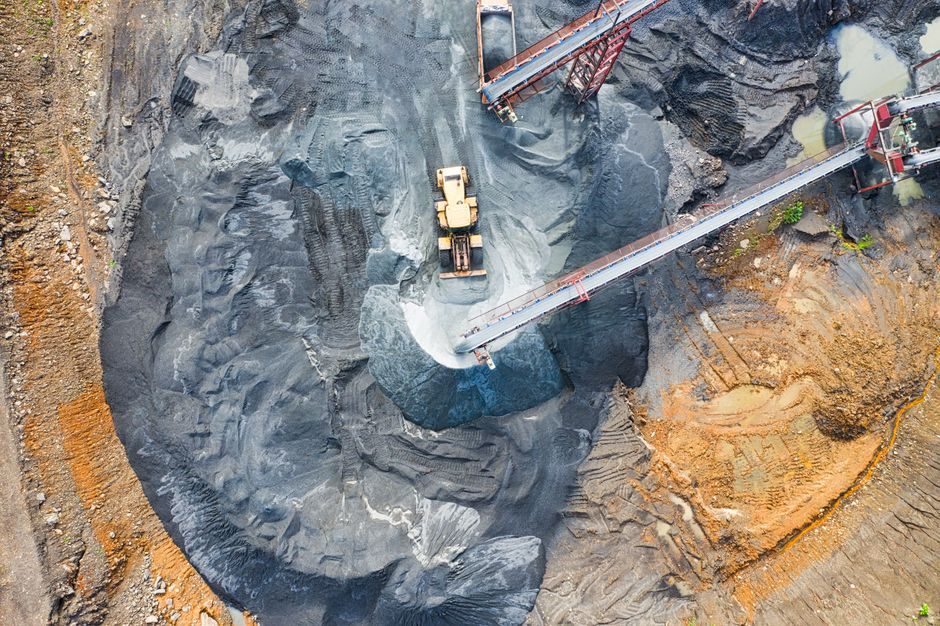
China processes the majority of mined rare earth oxides into separated metals and magnets, holding more than half of global reserves and a controlling share of midstream refining capacity, with December 2024 export curbs to the US acting as the most disruptive single policy move of the past decade [S3].
The global rare earth metals market reached US$ 14.1 billion in 2025 and is forecast to grow to US$ 30.9 billion by 2036 at a 7.4% CAGR, anchored by demand from EV traction motors, wind turbine generators and defence electronics [S1]. Eight countries produced the elements in 2023 and continue to do so into 2026, but the split between mine output and refined output is sharply asymmetric [S5].
Country-by-Country Mine Output, 2023 Baseline
Per the US Geological Survey figures cited for 2013, eight countries split global REE production, with China as the dominant producer by a wide margin and a long tail of smaller producers including Australia, the US, Russia, India, Brazil, Malaysia and Vietnam [S5]. Mine output rankings have not changed materially in the 2024-2026 window according to public USGS summaries referenced in [S5].
China's State Council issued a 22-point protection plan on 19 May 2011 imposing stricter mining, waste-emission and anti-smuggling rules on the domestic industry, an early example of the policy tightening that has continued to shape the production share China releases versus the share it retains for downstream magnet and alloy production [S2].
Where the 2026 Bottleneck Actually Sits: Separation, Not Mining
Mining tonnage is no longer the binding constraint on the rare earth supply chain. The choke point is solvent-extraction separation of individual oxides (Nd, Pr, Dy, Tb) and the reduction to neodymium-iron-boron magnet alloy, a stage dominated by Chinese processors even for ore mined in Australia, the US and Myanmar [S3].
Outside China, commercial-scale separation capacity is concentrated at Lynas's Mt Weld / Kalgoorlie complex in Australia and at Energy Fuels' White Mesa mill in Utah, both of which ship intermediate concentrate or mixed carbonate that is still refined in China for the highest-purity magnet grades [S5].
Demand Pull: EV Motors, Wind Generators and Defence
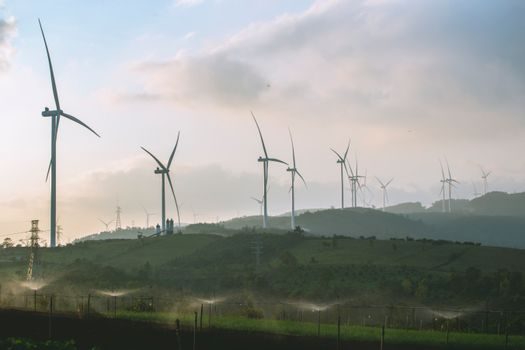
Wind turbine direct-drive generators use heavier dysprosium-bearing magnets to maintain flux density at generator operating temperatures, while defence applications consume samarium-cobalt magnets for high-temperature avionics and guided-munition actuators [S3]. The 7.4% CAGR forecast in [S1] is built primarily on these three end-use pillars.
Policy Levers and the 2024-2026 Trade Sequence
China's December 2024 ban on critical mineral exports to the United States was described as a direct escalation of the tit-for-tat tariff and export-control sequence between the two countries, with rare earths named alongside gallium, germanium and graphite in the restriction list [S3].
Subsequent rounds of bilateral tariff adjustments through 2025 partially restored licensing channels for civilian and EV-grade material, but the December 2024 action remains the most disruptive single policy event of the cycle and is the reference point for downstream OEM stockpile decisions into 2026 [S3]. For buyers specifying rare-earth-fed industrial components such as flow meters with NdFeB-driven displays, pressure transmitters with samarium-cobalt motorised manifolds, and industrial valves with rare-earth-alloy seats, the policy sequence directly affects magnet lead times and price escalator clauses.
Selection Criteria for Non-Chinese Sourcing
Three decision gates dominate the specification of non-Chinese rare earth feedstock for industrial users: (1) separation origin — must be solvent-extraction refined outside China for "non-Chinese" labelling; (2) purity grade — magnet-grade NdPr oxide at 99.5% minimum versus metallurgical grade at 90-95%; (3) chain-of-custody documentation — mill test certificate traceable to mine of origin and separator site. [S1]
Sourcing decisions for related industrial inputs follow the same chain-of-custody logic — see the silicon steel supplier cluster map for an analogous non-ferrous metallurgical supply chain with comparable geographic concentration risk.
Limitations and Failure Modes
Substitution is the principal failure mode to plan for. Dysprosium and terbium have no drop-in replacements in high-temperature NdFeB grades, and samarium is similarly constrained in samarium-cobalt systems; ferrite magnets can substitute in low-performance motors but at a 3-5x weight penalty that is unacceptable for traction applications [S1].
Recycling from end-of-life magnets and swarf is technically proven at commercial scale in Japan and the EU, but currently supplies only a small single-digit percentage of total rare earth feed, so primary mined and refined material remains the binding constraint through the 2026-2030 window [S1][S3].
Standards Anchoring the Trade
No single international standard governs "non-Chinese" rare earth labelling; buyers instead rely on ASTM B877 for neodymium-iron-boron magnet material designations, IEC 60404 for magnetic property test methods, and ISO 9001 chain-of-custody certification at the separator site [S1]. For industrial assemblies incorporating rare-earth-fed instrumentation such as pressure sensors and PLCs with rare-earth-relay outputs, the same magnet-grade traceability logic flows into the component bill of materials.
Buyers specifying ground continuity and bonding for installations near high-current rare-earth-motor drives should cross-reference earth ground tester selection against the harmonic profile of variable-frequency magnet drives, since NdFeB rotor back-EMF introduces common-mode noise on the protective earth conductor that standard 50/60 Hz test procedures can miss.
Trackable 2026 signals: (1) any new USGS Mineral Commodity Summaries update on country-level 2025 mine output, expected Q1 2027; (2) the next round of US-China critical-mineral licence negotiations, typically telegraphed 30-60 days ahead via Federal Register notices; (3) commercial start-up of new non-Chinese separation trains at La Rochelle (France) and Estree (UK), both targeting 2026-2027 first-product dates.