Get the first three gates wrong and the magnet will either demagnetise in service, drift in calibration, or fail a magnetic particle tester acceptance run. The remaining three decide whether the part survives the field, the warehouse and the invoice. The Arnold Engineering selection framework groups these under four practical family buckets — NdFeB (neodymium-iron-boron, sintered and bonded), SmCo (samarium-cobalt 1:5 and 2:17), AlNiCo (aluminium-nickel-cobalt, cast and sintered), and hard ferrites (strontium / barium ferrite, sintered and bonded) [S2].
The Four Industrial Families and Their Working Envelopes
Sintered NdFeB (Nd2Fe14B tetragonal phase) is the volumetric performance leader with commercial grades from N35 to N54, BHmax roughly 33–53 MGOe (263–422 kJ/m³) and Hci typically 12–30 kOe (955–2,388 kA/m); grades above N52 require dysprosium (Dy) or terbium (Tb) grain-boundary diffusion to keep Hci above 12 kOe at 20 °C [S2].
SmCo 2:17 (REC17, e.g. Sm(Co,Fe,Cu,Zr)7.5–8.5) is the high-temperature incumbent, rated for continuous service from −60 °C to +300 °C with some grades to +350 °C, and α(Br) roughly an order of magnitude lower than NdFeB, which is why it dominates aerospace and magnetic sensor flux sources exposed to engine bay thermal cycling [S2].
AlNiCo is the temperature-stable ferrimagnetic alloy with the lowest α(Br) of any commercial magnet (~−0.02 %/K) and a Curie temperature near 800 °C, but very low intrinsic coercivity (Hci ~0.5–2 kOe, 40–160 kA/m), so demagnetisation from adjacent iron paths or stray external fields is the failure mode to spec against, not temperature drift [S2].
Selection Criteria: Br, Hcj, α(Br), Tmax, Corrosion, Cost
Remanence Br sets the air-gap flux density Φ at a given geometry; for a given air-gap volume, going from ferrite Y30H (Br ~380–400 mT) to NdFeB N52 (Br ~1.42–1.45 T) means roughly 3.7× more flux without changing the magnet size, which is why NdFeB displaced ferrite in any application where size and weight are constrained [S2].
Intrinsic coercivity Hcj is the demagnetisation margin: NdFeB N-series ships at Hcj ≥ 12 kOe, N-series high-coercivity (N38UH / N42SH / N48AH) at Hcj ≥ 25 kOe, and SmCo 2:17 at Hcj ≥ 25 kOe for grades such as REC17HS rated to 300 °C; specify Hcj rather than the legacy Hcb (normal coercivity), because Hcj is the only number that protects against recoil loss [S2].
Reversible temperature coefficient α(Br) is the hidden budget item in magnetic material datasheets: a 100 K temperature rise steals roughly 9–12 % of Br from NdFeB N, 3–4 % from SmCo 2:17, 2 % from AlNiCo, and 19 % from ferrite; in any closed-loop design the compensator has to be sized for the worst case, not the nominal case [S2].
Maximum service temperature is the headline number vendors lead with, but it is only correct when paired with the working point (B/H ratio) and the load line; for NdFeB this is the dividing line between N (≤80 °C), M (≤100 °C), H (≤120 °C), SH (≤150 °C), UH (≤180 °C), EH (≤200 °C) and AH (≤230 °C) grades, with each step adding Dy/Tb content and 10–30 % cost [S2].
Who Each Family Is For — And Who It Is Not For

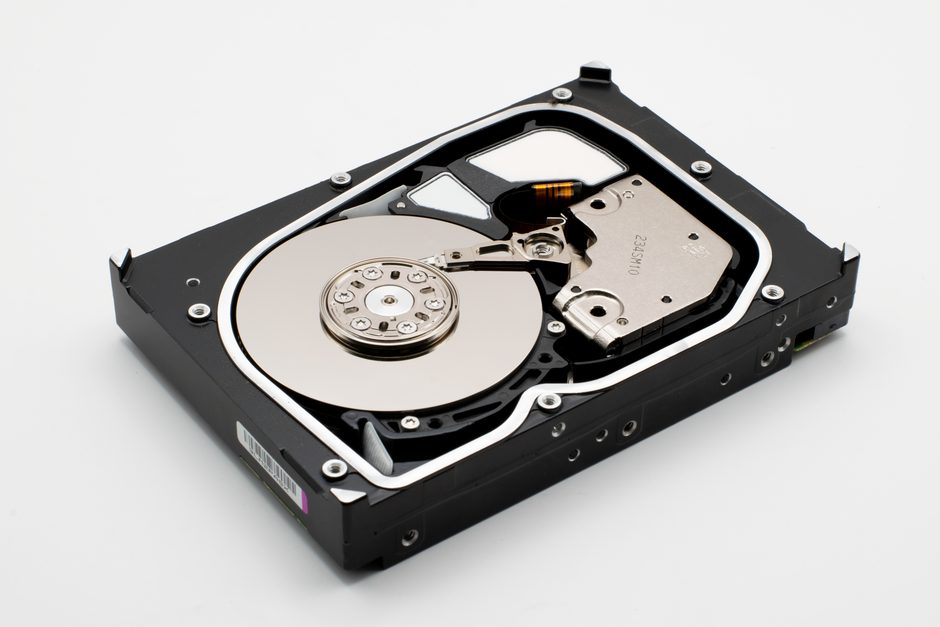
Specify NdFeB when the design is volume-limited and the ambient stays inside the 80–200 °C band: servo motors, EV traction motors, drone BLDC motors, wind turbine PMSG generators, hard-disk voice-coil actuators, and MRI gradient coils are the canonical applications where NdFeB's BHmax to cost ratio wins [S2].
Do not specify NdFeB when (a) the magnet operates continuously above 200 °C, (b) the part lives in a hydrogen-rich or cryogenic-LNG environment where hydrogen embrittlement of the Nd-rich grain boundary is a documented risk, or (c) the assembly cannot tolerate surface coating and the magnet will see humid salt-spray exposure; in any of those cases move to SmCo, AlNiCo or ferrite [S2].
Specify SmCo when thermal stability dominates and the cost premium (typically 3–5× NdFeB) is recoverable: aerospace actuators, downhole MWD/LWD tools (operating to 175–200 °C), military guidance flux sources, and magnetic drive pump inner rotors in chemical service where a coating breach cannot be tolerated [S2].
Specify AlNiCo when temperature stability must be combined with high Br and the design can guarantee the working point stays above B/H ≈ 0.5: instrumentation, TWT magnets, watt-hour meter bearings, and guitar pickup polepieces are the standard fits, with the explicit acceptance of a demagnetisation curve that is almost a straight line in the second quadrant [S2].
Specify hard ferrite when cost-per-piece is the gate, the geometry tolerates a larger magnet, and the temperature stays inside −40 °C to +250 °C: DC brush motors, refrigerator compressor rotors, magnetic level gauge float stacks, separator drum fields, and consumer loudspeaker rings [S2].
Options Compared on Cost, Temperature, Corrosion and Flux Density
On a cost-vs-flux grid, ferrite sits in the lowest cost band (~$2–6/kg raw stock, $0.10–0.30 per MGOe·cm³ of effective flux in a finished magnet), NdFeB in the mid-to-high band (~$40–90/kg, $0.02–0.05 per MGOe·cm³), SmCo 2:17 in the high band (~$80–150/kg, $0.10–0.25 per MGOe·cm³), and AlNiCo in the mid band (~$25–60/kg, $0.05–0.15 per MGOe·cm³) — the per-flux-cubic-centimetre metric is the only number that lets a buyer compare NdFeB against ferrite fairly [S2].
On a temperature grid, ferrite loses to NdFeB below 150 °C because the higher α(Br) cancels the lower cost; NdFeB loses to SmCo above 200 °C because even UH/EH/AH grades start to lose Hci after 1,000 h at 220 °C, while SmCo 2:17 is rated to 300 °C with effectively no irreversible loss [S2].
On corrosion, ferrite and SmCo are intrinsically stable (no coating required for most indoor and mild-outdoor duty); NdFeB requires Ni-Cu-Ni (standard), Zn (economy), NiSn (marine), or epoxide/parylene-C (medical, food) coating, with salt-spray performance to ISO 9227 NSS 48 h, 96 h, 500 h or 1,000 h being the spec gate — buyers should require the hour rating, not a vendor adjective [S2].
On flux density, NdFeB is the ceiling (Br up to ~1.45 T for N52, ~1.50 T for N54 experimental grades), SmCo 2:17 next (Br 1.05–1.15 T), AlNiCo follows (Br 0.7–1.35 T depending on grade, isotropic vs anisotropic), and ferrite anchors the floor (Br 0.38–0.43 T for Y30H-Y35 grades) [S2].
Failure Modes and Process-Engineering Constraints
Irreversible loss is the single most common NdFeB field failure: it happens when the working point B/μ0H drops below the knee of the B-H curve at the lowest operating temperature, which pushes the operating point into the recoil region on every thermal cycle. The mitigation is to size Hcj with a 1.5–2× safety margin over the calculated worst-case demagnetising field at the lowest service temperature [S2].
Thermal demagnetisation is the analogous SmCo failure but with a much wider safety envelope: even at 300 °C, 2:17 grades keep Hci above 8 kOe, and the α(Br) drift is reversible, so calibration drift — not permanent loss — is the more common complaint; the mitigation is to instrument magnetic particle tester reference blocks with a temperature-compensated Hall probe rather than rely on room-temperature certification [S2].
Corrosion-driven failure for NdFeB typically initiates at coating defects and propagates along the Nd-rich grain boundary phase, producing "rust powder" that is itself catalytically aggressive to the surrounding matrix; a single 50 µm pinhole in a Ni coating can consume the magnet in 200–500 h of ASTM B117 / ISO 9227 NSS exposure, so 100 % inspection of coating thickness (XRF or eddy-current) is the procurement gate, not a sampling check [S2].
Mechanical failure for sintered NdFeB and sintered SmCo is brittle by design: flexural strength 200–350 MPa for NdFeB, 100–150 MPa for SmCo, 50–80 MPa for ferrite; press-fit assemblies must use a non-magnetic sleeve or a compression-limit shoulder, otherwise hoop-stress cracking will occur on thermal expansion and present as a sudden loss of flux at the air gap [S2].
Standards, Acceptance Tests and Sourcing Signals for 2026
International magnetics procurement in 2026 is anchored to IEC 60404-8-1 (classification of magnetically hard materials) for material designation, IEC 60404-5 (permanent magnet measuring methods) for BH curve traceability, ASTM B887 (sintered NdFeB dimensional tolerance) for mechanical spec, and ISO 9227 / ASTM B117 for corrosion acceptance — buyers should call these four standards out by number on the PO and reject any vendor that quotes a "house standard" in their place [S2].
Sourcing signal to watch through 2H 2026: Dy and Tb oxide spot prices have historically driven NdFeB cost up by 5–15 % quarter-on-quarter when Chinese export quotas tighten, and the drone magnet supply picture is the most visible downstream bellwether — buyers with 6-month production horizons should lock long-term alloy contracts before Q4, and buyers with single-source NdFeB exposure should pre-qualify a ferrite fallback geometry now [S2].