
Stainless-steel manual pallet trucks rated 2,000–3,000 kg with sealed hydraulic units, nitrile or polyurethane seals, and 304/316 frame construction are the recurring baseline specification called out in current 2026 guidance for food, pharmaceutical, and chemical handling [S3][S4].
Pharmaceutical distribution centres typically move CHEP or EUR pallets (1,219 × 1,016 mm or 1,200 × 1,000 mm) between receiving docks, quarantine zones, and pick faces, a workflow dominated by short, repetitive runs under 50 m where the manual format remains the lowest total-cost tool per load moved [S1][S2].
Capacity and Frame Sizing for Pharma Loads
Manual pallet jack load ratings span 1,000–5,000 kg, with 2,500 kg the most common standard and 2,000–3,000 kg the pharmaceutical-typical operating band for finished-goods pallets in corrugated cases or drums [S1][S3].
Fork dimensions must be confirmed against the pallet pool in service: the EUR pallet 1,200 × 1,000 mm and the CHEP 1,219 × 1,016 mm are both designed to accept standard fork geometry, and a mismatch here is the single most common cause of in-process tip-overs [S1]. Standard fork width sits near 550 mm with fork length around 1,150 mm, matching both EUR and CHEP entry pockets.
Stainless-steel construction in 304 grade covers washdown zones; 316 stainless is specified where chloride-bearing sanitising agents (commonly sodium hypochlorite or quaternary ammonium compounds) are used, since 304 is susceptible to pitting under prolonged chloride exposure [S3].
Hygienic Materials and Sealing
Pharma-grade manual pallet trucks use FDA-grade nitrile or polyurethane seals on the hydraulic ram, food-grade grease on pivot points, and electropolished or bead-blasted frame finishes to limit harborage points for microbial growth [S3][S4].
Open hydraulic reservoirs are a hard reject for GMP zones: sealed pump bodies and leak-tight tiller linkages are required because hydraulic oil contact with open product is a documented contamination vector in FDA 21 CFR 211 audit findings [S3].
Wheel choices diverge sharply: nylon wheels are quiet and clean-room friendly but lose traction on wet or oily floors; polyurethane wheels trade floor marking for higher grip and are the typical pharma-DC compromise [S3].
Manual vs Electric in a Pharmaceutical DC

Manual pallet trucks dominate short-haul dock-to-stock movement because they have no battery, no charging infrastructure, and minimal operator certification overhead, while electric walkie models begin to pay back only above roughly 150–200 pallet moves per shift per operator [S1][S6].
Electric walkie pallet trucks from 6,000 to 30,000 lb (≈2,722–13,608 kg) capacity are built for high-volume distribution, but their higher cost, battery charging footprint, and electronics-cleaning overhead push them out of the spec for smaller pharma wholesalers doing fewer than 100 moves per shift [S5][S6].
For a mid-size pharmaceutical distributor (50,000–200,000 ft²), the working fleet typically splits 70/30 manual-to-electric, with manual units handling dock-to-quarantine, cross-dock, and put-away moves, and electric walkie units assigned to the pick-face loop and full-pallet replenishment runs above 100 m [S2][S6].
High-Lift, Scale, and Specialty Variants
Manually operated high-lift pallet jacks such as the Bishamon LV Series lift to ergonomic working height (typically 800 mm) and are widely used in pharma order-picking where bending-related MSD risk drives the spec [S4].
High-lift units cap at 1,000–1,500 kg versus 2,000–3,000 kg for standard manual models, a trade-off that forces a 2:1 fleet split when both transport and elevated work-table positioning are required [S3][S4].
Weighing-scale pallet trucks (2,000–3,000 kg, integrated ±0.1% load cells) are used at receiving and shipping checks in controlled-substance vaults, where the unit serves both as a transport device and a verified scale under the QA chain-of-custody process [S3].
Floor Conditions, Compliance, and Operator Ergonomics
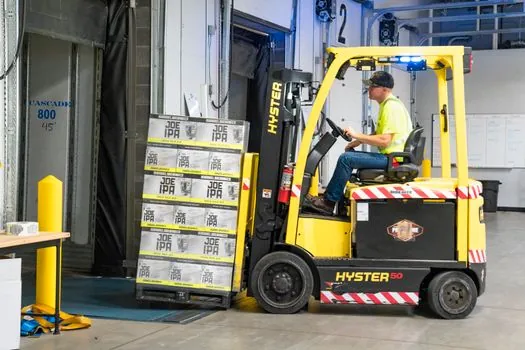
Pharma DC floors are typically sealed concrete or epoxy-coated, rated for 5–8 ton/m² point load, with a maximum allowable slope of 2% for manual pallet truck operation; above 2%, manual units become unsafe regardless of capacity [S1].
Operator-side ergonomics matter more than fleet managers assume: a manual pallet jack weighs 60–90 kg empty, and ISO 11228-1 guidance on combined lifting, lowering, and pushing treats sustained pallet-truck operation as a monitored ergonomic task in most jurisdictions [S1].
Washdown frequency is the hidden spec driver: facilities running daily full-foam cleanings with hot (60–80°C) chemistry should spec fully sealed hydraulic systems, 316 stainless frames, and IP65-rated electrical components, none of which are needed for dry-goods pharma warehouses where monthly wipe-down is the norm [S3][S4].
Selection Criteria: Stainless vs Galvanised vs Painted Steel
304 stainless: 2,000–3,000 kg capacity, FDA-grade nitrile seals, sealed hydraulics, typical price band 1.8–2.5× painted steel, lifecycle 7–10 years under daily washdown [S3].
316 stainless: same capacity range, chloride-resistant, specified where sodium hypochlorite or acidic sanitising agents are routine, price band 2.2–3.0× painted steel, lifecycle 10–15 years [S3].
Galvanised or painted steel: 2,500–5,000 kg capacity, lowest cost, suitable only for dry-storage pharma (tablets in blister packs, non-sterile API warehouses), lifecycle 4–6 years before corrosion-driven replacement [S1][S3].
Quick decision rule: if the zone is GMP-graded and cleaned more than weekly with water or chemistry, spec 304 stainless minimum and 316 if chlorides are present; painted or galvanised steel is acceptable only in non-GMP bonded storage where the product is sealed in transit packaging throughout its warehouse dwell [S3][S4].
When a Manual Pallet Jack Is the Wrong Tool
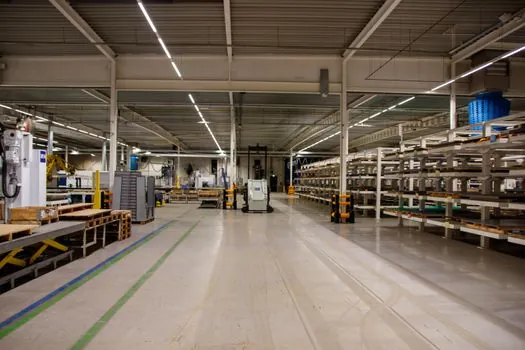
Cold-chain pharma storage below -20°C is also a poor fit for standard hydraulic manual units, because standard nitrile seals harden and leak; low-temperature NBR or silicone seal upgrades, or electric walkie with cold-rated batteries, are required instead [S1].
Cleanroom ISO 7 / ISO 8 suites typically need electric walkie pallet trucks with sealed electronics, since manual units shed particulates from greased pivot points, a contamination vector that rules them out for aseptic fill suites [S3][S5].
Track the August 2026 Sroka washdown and pharmaceutical catalog updates for 316 stainless walkie SKUs and the Q4 2026 release of LV Series high-lift options sized to 1,200 kg for ergonomic batch-picking, two fleet decisions that will reset the manual-vs-electric mix for mid-size pharma DCs through 2027 [S4][S5].
The underlying component specifications are covered under distribution cabinet, and pallet rack.
For related coverage, see Slewing Ring Bearing Selection for Steel Mills: Load, Heat, and Contamination Spec Map.