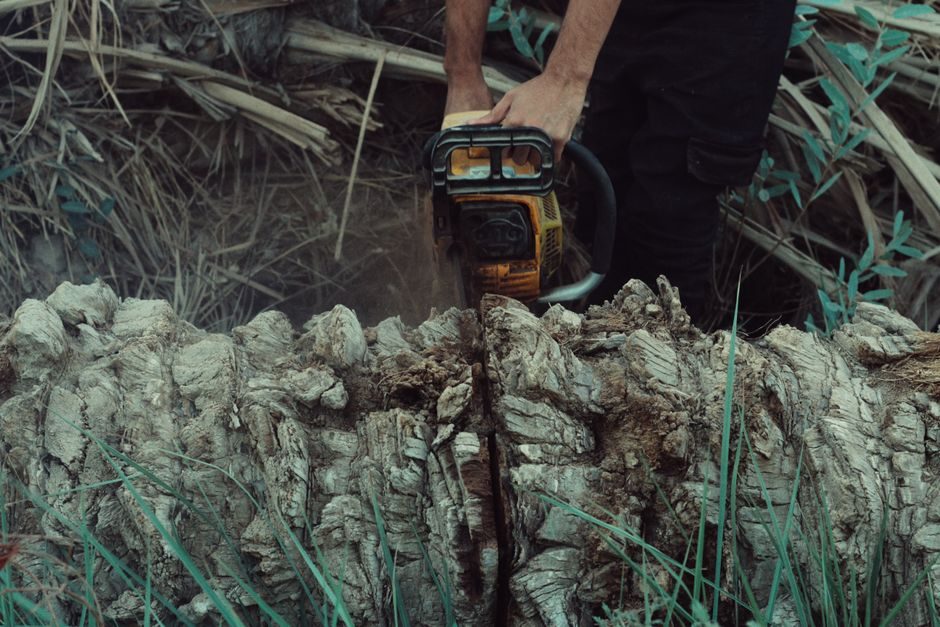
Demolition-rated marble cutter work in 2026 centres on 110mm and 125mm diamond-blade platforms drawing 1200-1400W from a universal motor, with no-load speeds clustered in the 11000-13000 RPM band, according to Zhejiang Jingli Tools Co., Ltd. supplier documentation updated 2026-07-15 [S1].
The selection problem on a demolition site is not "what cuts marble" but "which cutter survives dropped tiles, embedded rebar scoring, and 4-hour continuous-cut cycles without spindle or armature failure." A 110mm 1400W model 6261A-class machine on Made-in-China lists a 1000-piece MOQ at US$20.00 FOB-tier reference pricing, with payment on T/T terms [S2].
What counts as a demolition-rated marble cutter
Demolition-rated marble cutters from the same Zhejiang supply base carry CCC certification on all product lines, with motor, housing, and aluminium parts produced in-house on automated lines installed from 2012 onward [S1]. A 110mm 6261A-spec cutter running a continuous-rated 1400W motor is the entry baseline for cutting natural stone, ceramic tile, and thin concrete panels on renovation sites [S2].
For heavier chipping work — breaking out tile beds, scoring masonry, or trimming cured concrete — a dedicated demolition hammer is the correct tool class, not an over-driven marble cutter. The Jingli main-product list pairs marble cutter and demolition hammer in the same catalogue, reflecting the manufacturer's own split between cut-work and impact-work [S1]. Using a marble cutter for chipping wears the spindle bearing and burns the armature windings within hours.
Power, blade diameter, and no-load speed: the working envelope
Three numbers define the working envelope: blade diameter (mm), input power (W), and no-load speed (RPM). The Made-in-China 6261A spec lists 110mm blade and 1400W input as a matched pair [S2]. Jingli's general power-tool range covers 125mm-class machines in the same 1200-1400W input band, suitable for deeper cuts in stone slabs and for plunge cuts into cured screed [S1].
A larger blade does not automatically mean more demolition capability. Going from 110mm to 125mm adds roughly 15% more cut depth but raises kerf load and side thrust; the operator needs a side handle rated for the higher torque. Cordless 18-20V platforms from the same manufacturer family (Oliver Gear, 2026-07-07 catalogue) extend the line into mains-free work, but the demolition-grade units remain corded for sustained-load reliability [S4].
Blade selection: diamond vs abrasive for demolition
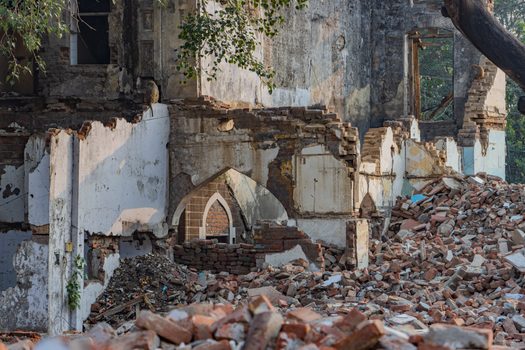
Segmented-rim diamond ("turbo") blades trade cut quality for faster stock removal in concrete, brick, and mortar beds, and tolerate the intermittent impact loading of demolition cuts [S1].
Abrasive (silicon-carbide) cut-off wheels are cheaper per disc but wear 5-10x faster under stone dust and create more respirable crystalline silica load. On demolition sites with existing concrete or mortar dust, wet-cutting with a continuous-rim diamond blade and a GFCI-protected water feed remains the dust-control baseline. The 6261A platform accepts both dry and wet blades, but wet operation requires a residual-current device on the supply, sized at 30 mA or lower for construction-site use [S2].
Demolition work vs finish work: a side-by-side comparison
For a structured comparison on the four decision criteria that matter on a demolition site — power, blade size, primary application, and dust control — the entry-tier marble cutter and the dedicated demolition hammer line up as follows: [S1]
• 110mm 1400W marble cutter (6261A class): 1400W input, 110mm blade, ~12000 RPM no-load, intended for stone/tile/concrete cutting, dust control via wet feed or M-class extraction [S2].<br>• 125mm 1300W angle grinder / mini grinder: 1300W input, 125mm disc, similar RPM band, intended for grinding and light cut-off work, not for sustained demolition cuts [S1].<br>• Demolition hammer (SDS-plus class): 800-1500W input, no blade, impact energy 2-15 J per blow, intended for chipping concrete and breaking tile beds [S1].<br>• Aerial work platform-mounted wall saw: 2000-3000W input, 300-800mm diamond blade, intended for vertical demolition cuts at height, water-fed dust suppression [S1].
The 110mm 1400W marble cutter is the right answer for "cut stone and tile on a demolition floor"; the demolition hammer is the right answer for "break the substrate"; the wall saw is the right answer for "open a 600mm penetration in a concrete wall." Conflating the three shortens tool life and slows the job.
Operator safety: CCC, GFCI, and dust

CCC certification covers the complete product family from the Zhejiang Jingli line, including marble cutter, demolition hammer, and angle grinder categories [S1]. On a 2026 demolition site, three additional controls are non-negotiable: a 30 mA RCD on the socket outlet, an M-class or H-class vacuum for dry cutting, and a P3-rated respirator for any operator cutting concrete, mortar, or fibre-cement sheeting.
Wet cutting eliminates dust at source but introduces electrical hazard through the tool body. The combination of an isolating transformer or RCD plus a water-feed diamond blade is the standard mitigation. Dry cutting with extraction is acceptable indoors only when the extractor is M-class or higher and the filter is changed on schedule; otherwise the operator's respirable silica exposure exceeds occupational exposure limits within one shift.
When NOT to use a marble cutter on a demolition job
A marble cutter is the wrong tool for breaking out a 100mm concrete slab — that's a demolition-hammer or aerial work truck-mounted breaker job. It is also the wrong tool for cutting embedded rebar in a 200mm reinforced concrete beam; a plasma cutter or a diamond wall saw handles that, and a marble cutter will stall, overheat, and shed commutator dust. [S1]
For cutting rebar or threaded rod exposed during strip-out, a dedicated rebar cutter rated for the bar diameter (up to 16mm hydraulic, 20mm+ electric) gives a clean, square cut in under 3 seconds per bar. The marble cutter with an abrasive disc will make the cut but produces a ragged end, burring, and sparks that exceed hot-work permit thresholds on most live sites.
Procurement signals to track
Two verifiable signals for the next 6 months: (1) cordless 54V marble cutter platforms entering the demolition-tool hire channel, replacing 110mm corded units on sites where generator noise is restricted; (2) integrated dust-extraction shrouds becoming standard on 110-125mm cutter bodies rather than optional accessories, driven by tightening silica exposure rules in the EU and UK. For related selection criteria on bridge and structural concrete work, see the circular saw selection spec map covering blade, RPM, and concrete parameters. [S1]