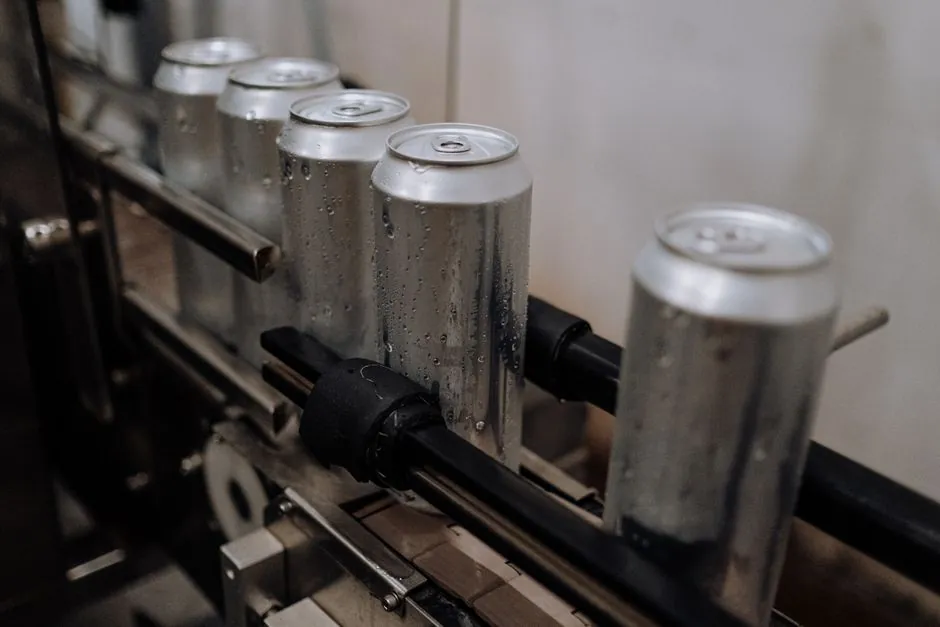
A slewing drive on a packaging line is sized as a combined-load rotational actuator, not a simple gearbox: axial load ratings up to 250 kN, radial load limits to 120 kN, and moment load governed by M = F × L, all on a single slewing bearing [S2]. Packaging applications cover rotary fillers, cappers, and labelers, where synchronized, smooth rotation prevents jamming and product damage at line speed [S4].
Packaging lines impose three concurrent demands on the drive: high cycle counts, frequent washdown, and short product-changeover windows. That combination pushes the spec toward sealed, self-locking worm or compact planetary units with FEM-optimized housings, rather than open gear reducers [S2][S4]. The bearing and drive are integrated into a single unit, so a slewing drive on a filler carousel is doing bearing duty, gear reduction, and load support at the same time.
Load Matrix and Torque Calculation for Packaging
The three-axis load matrix is the starting point, and it is explicit: axial load up to 250 kN for vertical press-type mounts, radial load to 120 kN for cantilevered jib-style supports, and moment load calculated by force times lever arm [S2]. A packaging carousel sees mostly axial + moment from product weight plus tool weight, while a labeling turret adds a radial component from the label reel. Required torque is calculated as Required Torque (Nm) = [Load Mass (kg) × Gravity (9.81) × Friction Coefficient] + Dynamic Forces, and a 30 percent safety margin is added for shock loads [S2].
For a rotary filler indexing 24 stations at 120 cycles/min with 2 kg of product per station, peak torque during index is dominated by acceleration, so intermittent (peak) torque capability matters as much as continuous torque rating. Servo sizing on similar packaging axes uses the same running-torque vs. peak-torque split, with peak torque often several times the rated torque during accel/decel [S3]. The spec note to add 30 percent covers shock events such as cap-torque reaction, label-web tension spikes, and emergency stops.
Worm vs. Planetary Gearing on Packaging Lines
Worm gear slewing drives offer 40 to 70 percent efficiency with inherent self-locking, which is useful where the line must hold a vertical axis without a brake, for example in capping or volumetric filling heads [S2]. The trade-off is heat: worm drives dissipate more energy as heat, so continuous-duty washdown environments need to budget for thermal limits. Planetary gearing runs at 85 to 95 percent efficiency with bidirectional operation, making it the better fit for high-cycle indexing where heat build-up and energy cost dominate [S2].
For a worm shaft slewing drive in large-scale automated packaging, design specifics matter: a 38:1 gear ratio, 350 mm rotation center diameter, 161.5 mm total height, and gear backlash held to ≤0.13 mm were delivered for one packaging machinery build, with a large module on the worm gear for output torque, a ground slewing ring for end-face runout, and a negative-clearance design for smooth rotation [S1]. The worm material was a special grade with quenched and ground tooth surfaces for wear resistance, a standard playbook for high-cycle packaging duty [S1].
Sealing, Lubrication, and Washdown Survival
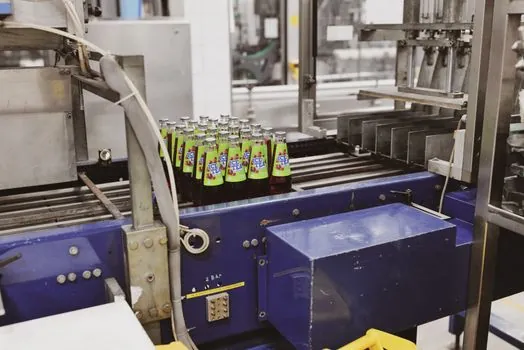
Food, beverage, and pharma packaging lines run daily washdown, so the sealing spec is not optional. IP69K is the target for full dust and high-pressure, high-temperature water ingress protection in food processing [S2]. Operating temperature window is -40°C to +80°C with special lubricants required at the extremes, and corrosion protection is typically zinc-nickel coating or marine-grade stainless for cleaning-chemical exposure [S2].
Mounting surface flatness is a spec, not a guideline: 0.05 mm/m tolerance on the mating flange is the published limit, and exceeding it introduces moment load that the bearing was not designed to carry [S2]. A typical packaging carousel also needs IP65 minimum for dry lines such as tissue wrapping or corrugated case packing, where dust and carton debris are the main contaminants. The slewing bearing itself is the load-carrying interface, and how it is specified and integrated is covered in the slewing bearing reference.
Backlash, Duty Cycle, and Changeover Constraints
Backlash on packaging slewing drives is dictated by what the product can tolerate, not by what is cheapest to make. Sub-1 arcmin backlash is the published benchmark for medical and precision dosing devices, and ground-worm builds hold ≤0.13 mm of circumferential play on a 350 mm rotation center, equivalent to roughly 0.04° at the output [S1][S2]. For a labeler applying a wrap label at 200 ppm, that level of play is the difference between a square label and a flagged reject.
Duty cycle target for 24/7 packaging lines is more than 10,000 hours MTBF, which means the drive is selected for continuous-duty lubrication life, not just static load rating [S2]. Frequent product changeovers, as flagged in the wider packaging upgrade discussion, also push the spec toward drives that can accept recipe-driven indexing without mechanical re-camming; servo-driven slewing axes with electronic camming replace physical cam discs on modern closing and filling carousels [S3][S5]. For a deeper look at how slewing bearing selection cascades into overall drive sizing, the slewing ring bearing reference covers the load path from raceway to bolt circle. Packaging line integration also depends on the broader motion stack, and the packaging machine reference covers how the slewing drive interfaces with conveyors, fillers, and sealers.
Who Should Use a Slewing Drive, and Who Should Not

A slewing drive fits a packaging axis when the axis is rotating a heavy, cantilevered, or vertical load, needs built-in load support, and runs moderate speeds with high torque. That covers rotary fillers, cappers, labelers, stretch-wrapper turntables, and palletizer rotators [S4]. It does not fit a high-speed linear conveyor, where a helical or parallel-shaft gearmotor is the cheaper, lower-backlash answer [S5]. It also does not fit a cleanroom aseptic filler if the chosen unit cannot be supplied in stainless with hygienic mounting, since crevices in standard painted housings trap product and cleaning fluid.
For packaging OEMs building modular lines, the practical rule is: if the rotating station carries more than 50 kg of product and tool mass, or holds position without a brake, the integrated slewing drive pays for itself in eliminated components. Below that mass, a standard gearmotor with an external bearing is usually lighter and cheaper. The same logic shows up in adjacent process lines; for a comparison of how the spec changes under heavier ambient dust and shock loads, the slewing drive selection for cement plants piece runs the same matrix against IP and service factor.
Configuration and Sourcing Checklist
Request FEM-optimized housing analysis and certified FEA load reports from the drive maker, and ask for 3D CAD models to verify integration clearances, because a 5 mm interference can derail a packaging line build schedule [S2]. On the supplier side, gear motor configuration for packaging upgrades typically starts with a gear-ratio optimisation pass, then a lubricant and seal spec, then a motor pairing for continuous and peak torque, with the whole package sized against the line's indexing profile [S5].
For the procurement spec sheet, fix these before quoting: required torque with 30 percent shock margin, axial/radial/moment load triplet, IP rating (IP65 minimum, IP69K for wet lines), operating temperature window, backlash budget in arcmin, MTBF target, and mounting flatness tolerance [S2]. Verify that the chosen unit matches the line's duty cycle (more than 10,000 hours MTBF for 24/7), and confirm that lubrication grade and seal material are compatible with cleaning chemicals on site [S2]. A signal worth tracking over the next 6 to 12 months: servo-driven slewing axes replacing cam-disc mechanics on cap-tightening and volumetric filling carousels, as flexible-packaging SKUs continue to multiply [S3][S5].