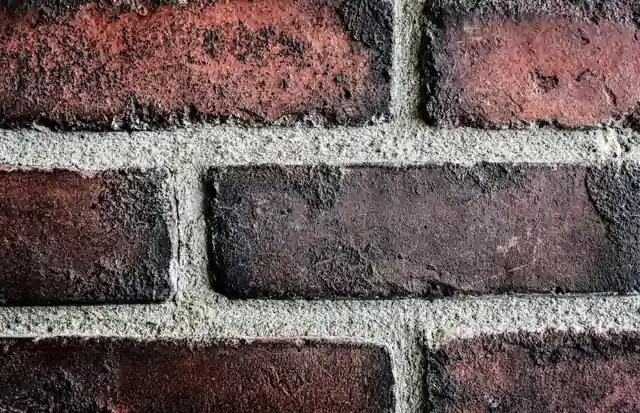
For block, brick, and CMU layout, a 30–50 m handheld phase-shift laser distance meter with ±1.5 mm tolerance, Class 2 eye-safe output, and IP54 sealing handles the job, and entry pricing sits at $22–$40 per the June 2026 consumer channel [S1][S3].
Beyond 50 m, masonry crews move into industrial 100–150 m units like the Leica DISTO X3 or Bosch GLM 120i C in IP65 housings rated for a 2 m drop onto concrete, with prices around $250 [S1].
Range Bands Mapped to Masonry Tasks
Masonry work breaks cleanly into three range bands, and choosing outside the right one wastes money or kills accuracy. Interior block partition walls, lintels, and rebar placement sit inside a 30 m envelope where entry-level 50 m phase-shift meters running ±2.0 mm are the de-facto tool, retailing near $22 on the consumer channel as of mid-2025 [S1][S4].
Single-story exterior brickwork, foundation diagonals, and CMU corners on residential jobs stretch to 50 m, where the 100-foot (about 30.5 m) class plus or minus 1/16 inch meter at $40 during seasonal promotions is the typical crew pick [S3]. Façade work, multi-story brick veneer, and large commercial wall runs push past 50 m, which is where 100–150 m phase-shift industrial units in IP65 housings and ±1.0 mm accuracy become the right tool [S1][S2].
Phase-shift dominates masonry because it beats pulsed time-of-flight on short range with sub-2 mm tolerance, while time-of-flight only wins beyond roughly 150 m once SNR on a phase-shift detector collapses [S2]. For reference, a comprehensive laser distance meter guide explains the underlying phase-shift versus pulsed comparison in more depth.
Accuracy Tolerance and the Masonry Practical Floor
Three tolerance tiers appear in the public catalog, and only two of them are useful for masonry layout. Entry-level 50 m units publish ±2.0 mm typical accuracy, acceptable for room dimensions and cabinet fit-out but visibly accumulating across a 20 m block run [S1]. Mid-tier industrial handhelds push ±1.0 mm, the threshold below which surveyors, façade contractors, and steel fabricators will accept the reading without a steel-tape check [S1][S2].
For MEP rough-in on a 200 mm-slab tolerance and standard CMU coursing, ±1.5 mm is the practical floor for masonry work, and the widely published plus or minus 1/16 inch figure (about 1.5 mm) on quality handheld meters matches that threshold [S1][S5]. Always read the datasheet tolerance, not the brochure adjective, and check whether the spec is "typical" or "maximum," because many vendors publish the better number first [S1].
Two distinct accuracy figures can appear on the same unit: standard measurement accuracy and stakeout accuracy, and the gap can be large. In one widely reported case, a new line of measurers delivered the standard plus or minus 1/16 inch on normal measurements but deviated up to plus or minus 1/2 inch in stakeout mode, eight times the published tolerance, a critical distinction for repetitive stud, joist, or block coursing layouts [S5].
Laser Class and Site Legality on a Masonry Jobsite
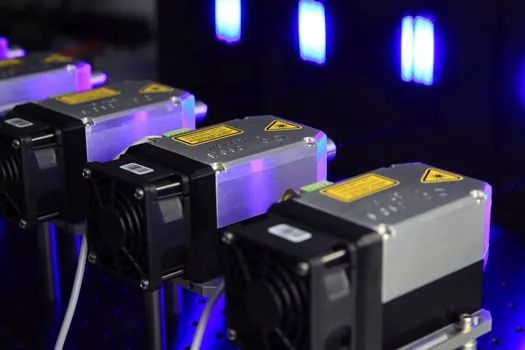
Handheld masonry units ship as Class 2 (visible, 1 mW CW) by default, eye-safe for accidental glances under 0.25 s and the legal default for construction sites in most jurisdictions [S1][S2]. A Class 2 designation removes the controlled-area paperwork burden and lets a foreman hand the meter to a bricklayer without a laser-safety briefing.
Class 3R units (≤5 mW) appear on long-range masonry models, and require a nominal operator briefing but no PPE. Class 3B and Class 4 pulsed rangefinders (the 1,500 m-plus survey instruments) demand laser-controlled areas, interlocks, and OD-rated eyewear, a category jump rather than a price jump, and almost never the right tool for brick or block layout [S1]. Specifying a Class 3B or higher unit onto an active masonry site without the controlled-area paperwork is the most common compliance miss in 2024–2026 project audits [S1].
IP Rating, Drop Survival, and Masonry Environment Reality
Mortar dust, wet saw slurry, and the occasional drop off a scaffold are the reasons a masonry-rated meter needs IP54 at minimum. IP54 means dust-protected and splash-resistant from any direction, which is the entry sealing level for handheld construction lasers [S1][S4]. Industrial 100–150 m units like the Leica DISTO X3 and Bosch GLM 120i C carry IP65, fully dust-tight and protected against low-pressure water jets, with 2 m drop ratings onto concrete [S1].
Operating temperature also matters on a masonry site: most handheld meters are rated for 0°C to 40°C (32°F to 104°F), and cold-morning block work in winter will push the lower limit on budget units [S2]. A 1/4-inch tripod thread on the base is a useful spec for any long façade run, because handheld shake and off-angle aiming both degrade reading repeatability even on a Class 2 phase-shift meter [S4][S5].
Red vs Green Beam on Exterior Masonry Walls
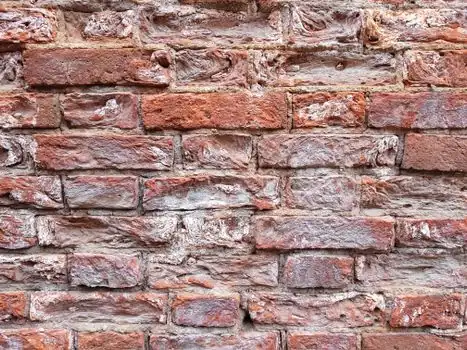
Red lasers are the traditional and cheaper choice, and on shaded indoor masonry work a red beam is usually enough. Green lasers use a wavelength the human eye perceives as roughly four times brighter, which helps in daylight and over the 30–50 m exterior runs that define most brick veneer work, but green modules draw more power, cost more, and shorten battery life [S4].
For sunny outdoor masonry layout above 30 m, green earns its premium; for interior partitions, scaffolding work in shade, and below-grade block walls, red holds its own at half the module cost. A useful field test is the 32-foot plus or minus 1/16 inch spec point: compare multiple readings from the same spot, then repeat at an angle, because off-axis measurements drift more than the headline number suggests [S3][S4].
Decision Matrix: Three Tiers Side by Side for Masonry
Three tiers cover virtually every masonry layout need, and the choice is driven by range and accuracy first, IP and laser class second. A 50 m phase-shift handheld with plus or minus 1/16 inch accuracy, Class 2 red beam, and IP54 sealing at $22–$40 handles 90 percent of interior block, residential brick, and CMU partition work [S1][S3][S4]. A 100–150 m industrial phase-shift unit with plus or minus 1.0 mm accuracy, Class 2 red or green beam, IP65, and 2 m drop rating at $250 covers multi-story façade runs and large commercial wall layouts [S1][S2]. A 1,500 m-plus pulsed time-of-flight rangefinder with Class 3R or higher output is a survey instrument, not a masonry tool, and belongs on a different crew [S1][S2].
For crews that already own a cross-line laser for coursing, the concrete work picks roundup covers the matching handheld meters used by flatwork contractors. The selection logic carries over to masonry because the underlying distance-measurement physics is identical; the main differences are target surface reflectance on raw CMU and the longer façade runs that push the 100–150 m band. For higher-accuracy positioning on piers and large masonry openings, a bridge theodolite is the better tool, with 1-inch or 2-inch angular accuracy and EDM range to 5,000 m, but it costs orders of magnitude more than any handheld laser distance sensor on this list.
Limits, Failure Modes, and Field Checks Before You Buy
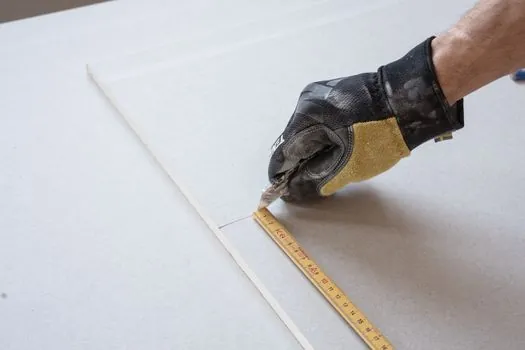
Five real-world factors degrade masonry readings and have to be checked before trusting a handheld. White or light-colored surfaces reflect more laser light than dark or matte surfaces, and smooth painted block returns a stronger signal than raw CMU or unpainted concrete [S2]. Direct sunlight contains infrared components that can interfere with the laser receiver, so shaded or indoor conditions produce the most reliable readings [S2][S4].
Extreme heat or cold affects electronics and optics, and most meters operate within 0°C to 40°C [S2]. Handheld shake and off-angle aiming both increase error, which is why a 1/4-inch tripod thread matters on long façade runs [S4][S5]. A reflective target plate fixes the dark-rough-surface problem, and most industrial handhelds ship with one [S2][S4]. Before committing, check the accuracy spec at the manufacturer's rated range (not just at short distances), test against a known distance such as a measured wall or steel tape, and verify the stakeout-mode tolerance separately if the crew uses equal-spacing functions for coursing or rebar layout [S4][S5].
Watch the next two signals: the late-2026 holiday promotional window on 100-foot plus or minus 1/16 inch handhelds, where seasonal pricing typically drops $10–$20 below year-round retail [S3], and any new IP66-rated masonry handhelds that bring full dust-tight and powerful-jet water resistance into the under-$300 industrial tier, currently dominated by IP65 units from Leica, Bosch, and Stabila [S1].
Spec-level background on the components involved: masonry insulation.