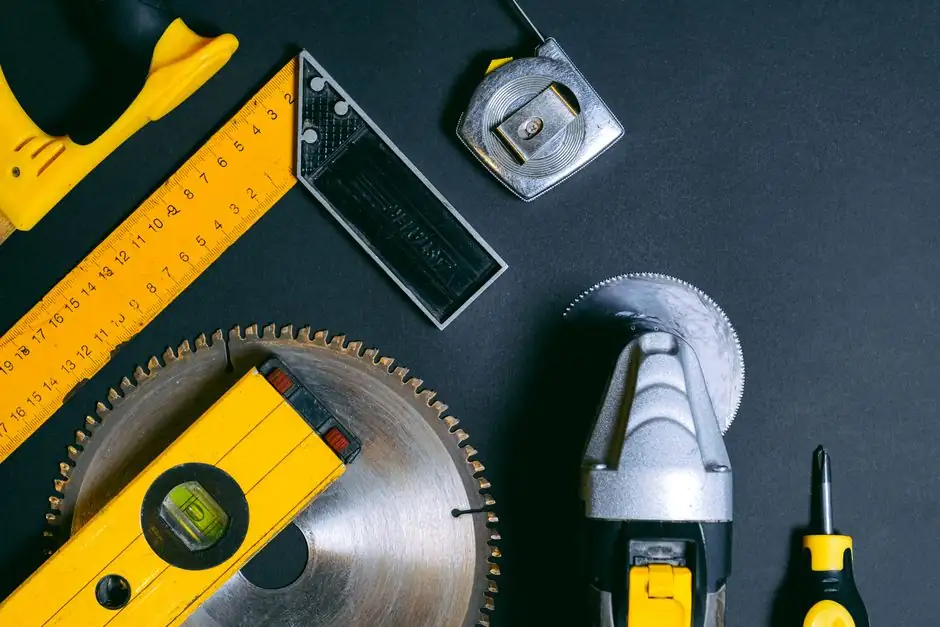
Steel erection layout demands a laser distance meter with at least 100 ft (30 m) of usable range, ±1/16 in (±1.5 mm) accuracy tolerance, Class 2 laser output, and an IP54-or-better housing, because column line, footing offset, and embed plate verification all run inside those numbers [S3][S4].
Steel layout differs from interior finish work in three ways: targets are dark or rusted steel rather than white drywall, sight lines are long across bays rather than across rooms, and the tolerance on a 30 ft column run is the published spec, not the displayed decimals [S1][S5]. A crew that picks a $22 50 m consumer unit and a crew that picks a $250 Leica DISTO X3-class industrial unit are solving different layout problems, and conflating the two is the most common specification error on steel packages in 2026 [S3].
Why Steel Layout Breaks Consumer-Grade Meters
Dark hot-rolled steel surfaces return far less laser energy than painted drywall, and a 50 m consumer unit rated for 164 ft on a white wall can lose 30–50% of its effective range on bare A36 plate, dropping working distance into the 80–100 ft band on a typical bay [S1][S4]. On a structural steel package where column spacings run 25–40 ft and diagonal bay checks run 60–80 ft, the meter must hold its published tolerance at the far end of the beam, not just at 10 m [S3]. Selection rule: read the tolerance figure on the datasheet, not the brochure adjective, and check whether the spec is quoted as "typical" or "maximum"; many vendors publish the better number first [S3]. A laser distance meter with ±2.0 mm typical accuracy accumulates visibly across a 20 m run and is the wrong tool for embed plate verification, where a misplaced anchor bolt costs more than the price difference between consumer and industrial units [S3].
The Four-Gate Filter: Range, Accuracy, Laser Class, IP Rating
Selection collapses to four gates, and missing any one of them disqualifies the unit: declared range, accuracy tolerance, laser safety class, and ingress protection rating [S3]. For steel work, the practical floor is 100 ft (30 m) minimum range with a target plate supplied, ±1.5 mm or tighter accuracy, Class 2 laser output (1 mW CW, eye-safe for accidental glances under 0.25 s), and at least IP54 dust and water splash protection, with IP65 and a 2 m drop rating preferred for active erection sites [S3][S5]. Below IP54 the housing will not survive the first month on a deck, and below Class 2 the unit either fails jobsite safety rules or escalates into controlled-area paperwork that a roving layout crew cannot carry [S3]. A unit that ships with a tilt sensor (±90° or 360°) and slope compensation adds genuine value on steel because horizontal distance across a sloped brace line is the number that matters for setout, not the slope distance [S3][S5].
Phase-Shift vs Pulsed Time-of-Flight: Which Architecture Fits Steel
Handheld phase-shift meters dominate the 0.05–50 m segment, modulating a continuous beam against the reflected return to derive distance by phase difference, with typical accuracy of ±1.5–2.0 mm at the cheap end and ±1.0 mm once the unit passes the $200 mark [S3]. Industrial phase-shift units (Leica DISTO X3, Bosch GLM 120i C, Stabila LD 520) stretch the same technology to 100–150 m, add the tilt sensor, and package it in IP65 housings rated for 2 m drops onto concrete, which is the right tool class for steel erection layout [S3]. Beyond 150 m, phase-shift loses signal-to-noise and the industry switches to pulsed time-of-flight, which the engineering literature places at 3.5–5,000 m for cooperative-target outdoor work; a 1,500 m pulsed rangefinder is a different hardware animal from a $30 handheld, with different beam divergence, pulse energy, detector sensitivity, and laser class paperwork [S3]. For most steel buildings, the bay geometry stays inside 100 m, so the phase-shift industrial handheld is the right answer, and jumping to pulsed time-of-flight buys range the layout crew cannot use while importing Class 3R or higher safety obligations [S3].
Stakeout Accuracy vs Standard Accuracy: The Hidden Failure Mode
A meter can carry two different accuracy figures, and on a steel stud or joist layout the stakeout spec is the one that counts because errors compound across a run [S1]. In one widely reported case, a new line of measurers delivered ±1/16 in on normal measurements but deviated up to ±1/2 in in stakeout mode, eight times the published tolerance, and that gap matters to anyone laying out repetitive steel framing or decking [S1]. On a 40 ft wall of studs at 16 in on center, roughly 30 marks per run, a 1/16 in tolerance keeps every mark within a hair of true, while a 1/2 in tolerance turns the same run into a guess and forces cuts, headers, and blocking to absorb the error downstream [S1]. For structural steel the parallel risk is purlin or girt spacing: the meter must publish the stakeout tolerance explicitly, and the buyer should ask for the figure rather than assume it matches the single-shot spec [S1].
Red vs Green Beam and Outdoor Visibility on Steel Decks
Red laser diodes emit around 635–650 nm and green units emit near 515–532 nm, close to the eye's peak sensitivity, so the same power output looks several times brighter in green, which is why outdoor crews pay the premium [S1]. On a structural steel deck at midday, the red beam of a Class 2 handheld becomes hard to see beyond 30–40 ft, and a green Class 2 beam extends usable sighting to 80–100 ft under the same conditions [S1]. Some long-range and mid-range meters include a digital viewfinder or camera-based targeting to recover the spot when the beam itself is invisible, which on a steel deck at noon is a real ergonomic improvement [S4][S6].
Comparison: Which Meter Class Fits Which Steel Task
Across the public catalog, three classes map cleanly onto steel construction tasks, and the decision sits on range, accuracy, and durability rather than brand [S2][S4]. Basic handheld meters (50–100 ft, ±1/8 in, no IP rating) suit interior fit-out and drywall, not structural steel; mid-range industrial handhelds (100–200 ft, ±1/16 in, IP54–IP65, tilt sensor) are the workhorse for column line, embed plate, and purlin layout; long-range meters (300–650 ft, ±1/16 in or tighter, digital viewfinder, IP65) belong to land surveying and large civil works, with price tags climbing into four-figure territory once pulsed time-of-flight enters the picture [S2][S3][S4]. For MEP layout on a 200 mm slab tolerance, ±1.5 mm is the practical floor, and the meter that cannot hold that figure on a 30 m run is the wrong meter for steel work [S3]. Buyers also benefit from cross-line laser kits that pair a handheld meter with a laser level for plumb and level reference, because steel alignment needs both distance and line, not distance alone [S8].
Field Methods That Protect the Specified Accuracy
Published accuracy assumes a reflective target in good light, and several field practices hold that number in real conditions: clean the emitter window with a microfiber cloth before each session, set the reference point explicitly (rear edge for measurements against a wall, front edge for measurements from an edge), and use the supplied target plate for any shot beyond 50 ft or on dark steel [S5][S6]. Failing to set the reference point is the most common field error, and a 10 m interior measurement taken from the wrong edge is off by the length of the tool itself, which on a column offset check can blow the tolerance before the laser even fires [S5]. For diagonal bay checks on a steel frame, the Pythagorean (indirect) mode lets the crew measure two legs and calculate the third, but the calculated value carries the tolerance of both legs, so a ±1.5 mm meter used in Pythagorean mode over a 60 ft diagonal can return a reading closer to ±3 mm, and that limit should be priced into the workflow [S6]. The general construction tools discipline of verifying one in every ten laser readings against a steel tape is still the cheapest insurance on a steel package, and the meter that fails that check should come off the job, regardless of brand. Buyers comparing across vendor catalogs can also cross-reference a laser distance sensor for fixed-installation applications, but for a roving layout crew the handheld remains the right form factor.
Limits, Misapplications, and Where the Laser Does Not Replace the Tape
Three failure modes define where a laser distance meter stops being the right tool, and steel crews hit all three at some point on a project. First, transparent or wet surfaces (glass curtain walls, standing water on a deck) scatter the beam and can produce readings off by feet rather than millimeters, so any shot through a glazed surface needs a target plate and a verification shot [S5]. Second, Class 3B and Class 4 pulsed rangefinders (the 1,500 m plus survey instruments) demand laser-controlled areas, interlocks, and OD-rated eyewear, which is a category jump in compliance rather than a price jump, and specifying one of those units onto an active erection site without the paperwork is the most common compliance miss in 2024–2026 project audits [S3]. Third, a 1/32 in displayed precision on a meter with a 1/16 in published tolerance is a display feature, not a quality claim, and the buyer who picks by decimals rather than datasheet tolerance ends up with a meter that looks better than it measures [S1]. For procurement engineers cross-checking stainless and carbon steel sourcing against layout tooling, the stainless-steel sourcing signal read-out sits in a different workflow, but the same discipline of reading the spec sheet instead of the brochure applies.
Trackable next signal: any 2026 Q4 OEM release that publishes a stakeout-mode tolerance figure separately from the single-shot tolerance would be a meaningful spec disclosure, because the current catalog mostly quotes the better single-shot number and leaves the stakeout figure implicit, and a vendor that publishes both would deserve a closer look from steel crews laying out repetitive purlin or girt spacing.