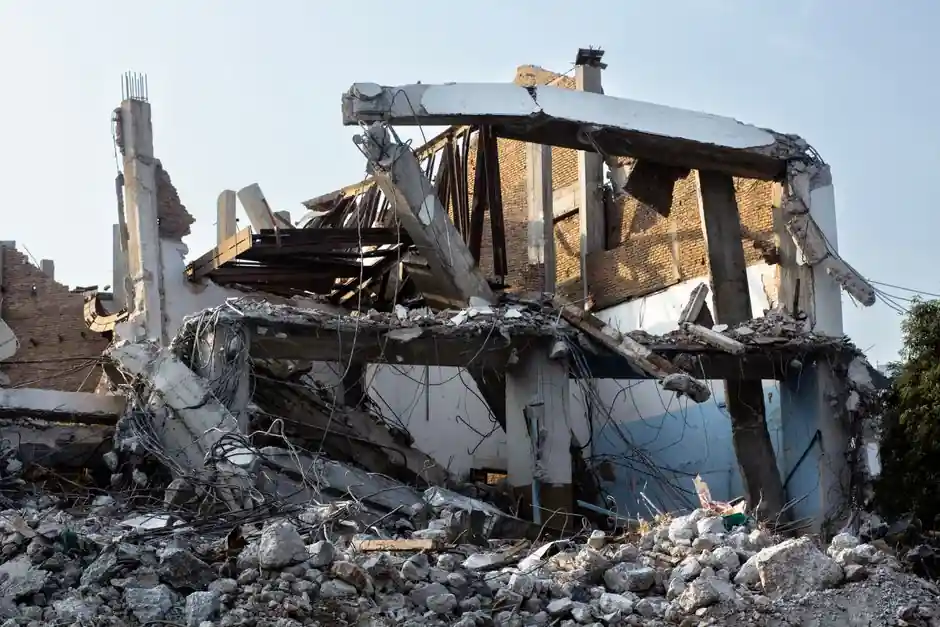
A 40–90 lb demolition hammer class covers concrete around 4–6 in thick, while reinforced sections may require a heavier breaker or a different removal method [S1][S5].
Concrete thickness, compressive strength, reinforcement, working access, and debris size determine whether a medium electric breaker, high-impact breaker, hydraulic breaker, or cutting-and-lifting approach is appropriate.
Set the Capacity Envelope Before Selection
For unreinforced slabs, a 60 lb electric breaker handles thicknesses up to about 5 in, while a 40 lb breaker is a practical match for concrete around 4 in thick [S5][S6].
Anything thicker than 3 to 4 inches requires more power than a sledgehammer, and a demolition hammer delivers powerful percussive blows that fracture concrete quickly and efficiently. Concrete at 5–6 in, or any reinforced concrete, calls for a heavier-duty breaker rather than forcing a lighter machine [S1]. The important distinction is nominal tool class versus guaranteed output on a specific slab.
No single impact-energy number in the research defines a universal breaking limit. Concrete strength and age, reinforcement spacing, support beneath the slab, chisel condition, and operator technique can change performance more than the marked weight alone. The 40-lb, 60-lb, and 90-lb classes should therefore be treated as starting points, not guarantees.
Equipment selection must begin with the demolition hammer operating concept and then be checked against the slab section that must actually fracture.
Compare the Main Breaking Options
A 60 lb electric breaker handles an unreinforced slab up to about 5 in thick and remains light enough for one-person operation, making it the middle option between a 40 lb breaker and a 90 lb class machine [S6].
The 40 lb class suits roughly 4 in concrete, the 60 lb class addresses about 6 in concrete, and the 90 lb class provides the greater impact and operating mass needed for more demanding sections [S5]. A 60 lb breaker is identified separately as suitable for unreinforced slabs up to about 5 in, which illustrates why slab thickness and reinforcement must be considered together [S6].
Hammer drills offer a different route for small areas and thinner material. They combine rotation with forward hammering, use masonry bits to chip concrete, and can be followed by pointed or flat chisels to fracture and remove loosened material [S2]. Thicker sections, larger areas, reinforced concrete, and large demolition jobs exceed the sensible limits of a hammer drill [S2].
For comparison, a hammer drill offers controlled drilling and localized weakening, a 40–60 lb electric breaker offers direct slab-breaking impact, and a 90 lb or hydraulic breaker applies greater mass and impact for heavy or thick work. Cutting saws and excavators change the method by isolating reinforcement or removing the slab as supported sections, rather than relying on impact fracture alone.
Reinforcement Changes the Removal Method
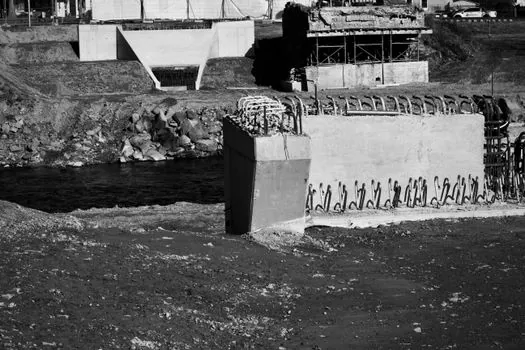
Reinforced slabs at 5–6 in thickness may require a heavier-duty breaker [S1], but reinforcement can prevent a fracture line from propagating even when the concrete matrix is breaking.
Steel bars or welded wire mesh carry tensile loads that plain concrete handles poorly. Repeated impacts can damage or expose reinforcement while leaving a connected section difficult to remove [S3]. If reinforcement resists the breaker, the practical sequence is to isolate exposed steel with an abrasive cut-off saw, then break and remove the concrete around it.
Working from the slab perimeter can reduce unsupported edge conditions and help direct cracks inward. Older demolition guidance also recommends undermining the underside where accessible, removing soil support so the concrete loses restraint and can fracture more readily [S4]. This is not a reason to undermine a structural foundation or an unidentified load-bearing element.
For a reinforced slab attached to a foundation, column, retaining wall, or cantilever, impact breaking may create uncontrolled fragments. Saw-cut perimeter joints with a concrete cutting machine, expose and cut reinforcement, and lift or remove sections before using the breaker.
Use the Working Method to Improve Capacity
A demolition hammer delivers repeated percussive blows, while a hammer drill weakens concrete through a series of drilled holes followed by chisel impacts [S1][S2].
Start by marking the removal area and checking for utilities. Clear furniture, plants, and loose debris; cover nearby openings and surfaces; and isolate the work area from occupied space [S1]. Concrete work can generate silica-containing dust, high noise, vibration, and flying fragments, so eye, hearing, respiratory, hand, foot, and leg protection are functional requirements rather than optional accessories [S1][S2].
Do not bury the chisel against reinforcement that must remain. On hammer-drill work, use a variable-speed trigger for starting holes, begin with smaller carbide masonry bits, widen the holes as needed, and stop if a bit becomes damaged because worn or broken tooling slows drilling and raises heat [S2].
A pointed chisel concentrates force for initiating fractures and hard spots; a flat chisel removes loosened concrete and supports prying [S2]. The rotary hammer is the more appropriate drilling platform once the section is thick or the removal area is large.
Plan for Handling, Access, and Utilities
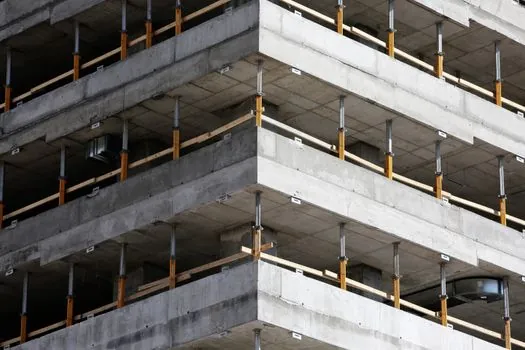
A demolition hammer can be used to remove an old patio, driveway section, walkway, or interior slab.
Breakability is only one constraint. A breaker that can fracture a slab may still be unsuitable if the point cannot be positioned, if the slab edge is inaccessible, or if fragments cannot be removed without damaging adjacent construction. Divide a large slab into manageable sections before removal, particularly where reinforcement limits crack travel [S1].
Confirm whether the slab supports a structure or conceals plumbing and electrical services before breaking it. Utility location is a prerequisite for drilling, cutting, or excavating around the slab [S1]. Reinforcement can also be concealed inside the concrete, so the visible absence of a bar at the surface does not establish that the section is unreinforced.
For structural slabs, foundations, heavily reinforced mats, or occupied buildings, use a qualified demolition contractor or engineer rather than treating a tool-selection chart as structural approval.
Specify by Job, Not by Tool Marketing
A 60 lb electric breaker handles unreinforced slabs up to about 5 in without undue difficulty, whereas a 40 lb class is associated with approximately 4 in concrete [S5][S6].
Write the procurement requirement around measurable inputs: slab thickness, minimum concrete strength where known, reinforcement type and spacing, removal area, access dimensions, required fragment size, power availability, operator headcount, and utility status. These details determine whether a 40 lb, 60 lb, or 90 lb breaker class is defensible, and whether a hydraulic breaker should be considered.
One older field example illustrates the uncertainty: a 35 lb Bosch breaker advanced only about 4 in in one hour while attacking very hard concrete with a pointed chisel and 3 in chisel, whereas a 45 lb hydraulic breaker was used on concrete 10–13 in thick over a prolonged operation [S4]. The comparison is not a performance guarantee, but it shows why concrete condition and operator method can dominate nominal machine class.
Before rental or purchase, verify impact-energy specification, bit and chisel compatibility, service availability, and required accessories. A rental may be more economical for one slab, but a purchase becomes easier to justify when repeated reinforced-concrete work requires the same equipment.
Track Capacity Through a Test Area
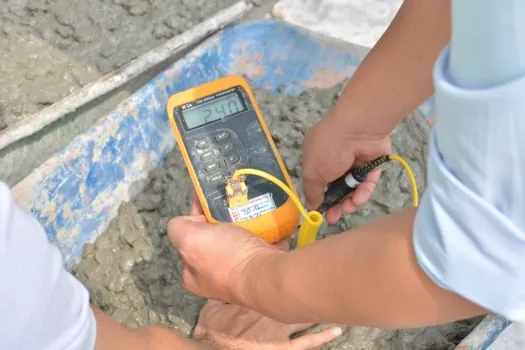
A 60 lb electric breaker is a practical one-person option for unreinforced concrete up to about 5 in thick, but actual performance should be checked on the least constrained edge [S6].
Begin with a 1–2 ft section at an edge where the slab geometry is known. Record time per foot of fracture line, chisel condition, fragment size, reinforcement encountered, and whether the slab remains supported. If the tool stalls or the fracture does not propagate after several impacts, change position or method rather than increasing impact force blindly.
Move to cutting and reinforcement separation when impact breaking stalls around rebar, when fragments exceed safe handling limits, or when edges cannot be reached. Use a SDS-plus rotary hammer with a compatible chisel for controlled local breaking, while reserving the full demolition breaker for sections where impact fracture is appropriate.
The closest traceable procurement rule is simple: 3–4 in slabs normally fit a medium electric breaker, 5–6 in or reinforced slabs require a heavier breaker or an altered removal method, and the 40, 60, and 90 lb classes map approximately to 4, 6, and heavier concrete respectively [S1][S5]. Validate that envelope against concrete strength, reinforcement, access, and the test section before committing to full removal.