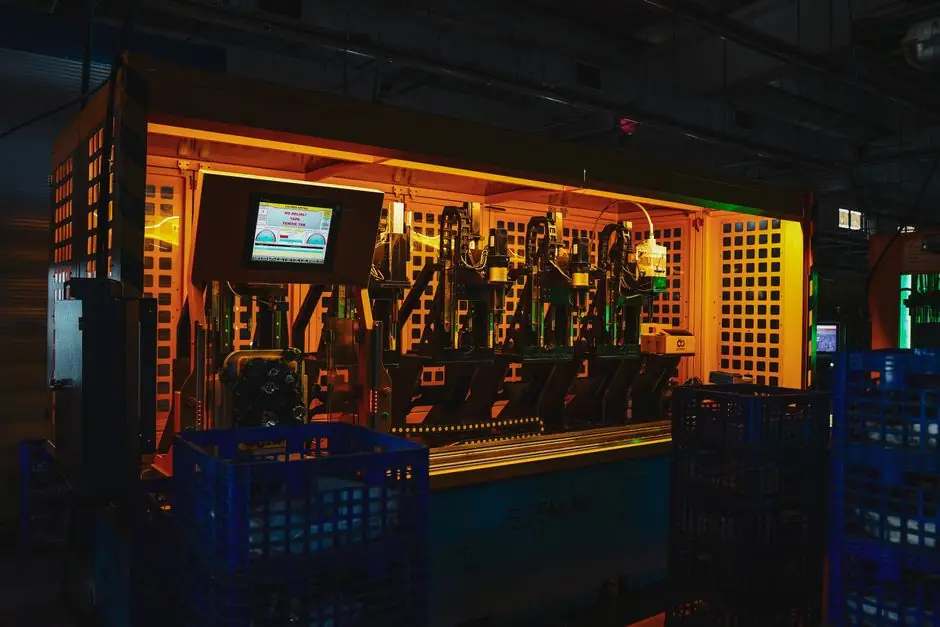
Medium die casting machines deliver roughly 250-800 metric tons of clamping force, sitting between small bench units under 160 tons and large structural machines above 1,000 tons per industry references [S2][S4].
Selection is driven by a single equation: Tonnage = injection pressure ratio × total projected area × safety factor, with a typical 1.1-1.3 safety margin used to absorb pressure spikes during cavity fill [S1][S3].
Where the 250-800 t band sits in the global fleet
Locking force on die casting machines spans 1 ton to 5,000 tons across the installed base, with most machines sold internationally falling in the 250-2,000 ton range [S4]. The 250-800 ton medium band covers the bulk of mid-volume automotive, hardware, and consumer-electronic work, and aligns with the band where a single medium machine can cast parts weighing more than 10 kg per shot [S5].
For perspective, NADCA defines machine size strictly as the clamping (locking) force applied to the die halves when the machine is closed, not as a measure of injection capability or platen size [S2]. That distinction matters: a 500-ton machine from one builder and a 500-ton from another can have very different tie-bar spacing, platen dimensions, and shot sleeve diameters, all of which constrain the part envelope.
Calculating the tonnage you actually need
The selection formula collapses to three numbers: projected area (cm² or in²), alloy-specific injection pressure ratio (MPa/cm² or psi/in²), and a safety factor [S1][S3]. For aluminum alloys, the typical injection pressure ratio used in published selection tables runs around 300-400 bar (30-40 MPa) at intensification, which means a part with a 500 cm² projected area lands in the 150-200 metric ton range before the safety factor is applied [S3].
Worked example: a 600 cm² projected area on an aluminum housing, with a 350 bar specific pressure and a 1.2 safety factor, requires roughly 250-280 metric tons of clamping force, putting it at the lower edge of the medium band [S3]. The same projected area in magnesium, which fills at lower intensification pressure, drops the required tonnage noticeably; zinc, with the lowest specific pressure of the three, drops it further. This is why a zinc die casting machine of the same platen size can handle a larger projected area than an aluminum die casting machine at the same tonnage rating.
The published caution is sharp: undersize the machine and the parting line opens, producing flash, dimensional drift, and accelerated mold wear; oversize it and you burn capital, floor space, and energy on a part that does not need it [S3]. For comparison, the four most common pitfalls in published guidance are: using the nameplate maximum instead of the rated clamping force, ignoring multi-cavity projected area, ignoring runner and overflow area, and skipping the alloy-specific pressure table [S3].
Medium tonnage by alloy family
Aluminum dominates the medium band because most automotive structural and housing parts fall in the 1-10 kg shot weight window. A typical 500-ton cold-chamber aluminum die casting machine will deliver shot weights in the 5-12 kg range, matching transmission housings, engine brackets, and inverter enclosures for EVs [S2][S5].
Magnesium extends the medium band into the consumer-electronics and laptop/phone chassis market, where the 300-600 ton magnesium die casting machine is the workhorse, exploiting magnesium's lower density (roughly 1.74 g/cm³, about two-thirds that of aluminum) to push the same part weight from a smaller machine [S2].
Zinc, cast in hot-chamber machines, lives in a different tonnage world: most hot-chamber zinc die casting machine ratings sit between 50 and 400 tons, so the medium overlap with cold-chamber aluminum is roughly the 200-400 ton slice [S2]. Copper and lead/tin alloys occupy niche bands and rarely justify medium-tonnage hardware.
For very high-integrity parts where porosity control matters, a vacuum die casting machine in the medium band (300-800 tons) is commonly specified, since vacuum assist reduces entrapped gas but does not change the underlying clamping-force requirement [S2].
Decision criteria: small, medium, or large
A useful four-criterion comparison lines the tonnage bands up against the typical work they handle: [S1]
Band vs. typical projected area vs. typical shot weight vs. common applications: under 160 tons maps to roughly under 100 cm² and 0.1-1 kg shot weights, dominated by zinc hardware and small connectors [S2][S4]. The 250-800 ton medium band covers 200-800 cm² and 1-10 kg, dominated by automotive housings, brackets, and consumer electronics frames [S4][S5]. Above 1,000 tons crosses into 1,000+ cm² and 10-50 kg territory, dominated by large structural automotive and furniture-grade components [S4].
Band vs. machine class: small and medium are commonly served by both hot-chamber (zinc) and cold-chamber (aluminum, magnesium) designs; large-tonnage work above 1,500 tons is almost exclusively cold-chamber [S2].
For most procurement decisions, the medium band is the right answer when projected area sits between roughly 200 and 800 cm², shot weight is 1-10 kg, and annual volume justifies dedicated clamping force rather than a multi-cavity small-tonnage setup [S3][S5]. A gravity die casting machine overlaps in part weight but not in tonnage specification, since gravity casting does not use the same high intensification pressure and therefore does not require comparable clamping force, which is why the two are not direct substitutes. For the broader family context, the general die casting machine reference covers how these bands relate to machine class.
Failure modes and constraints in the medium band
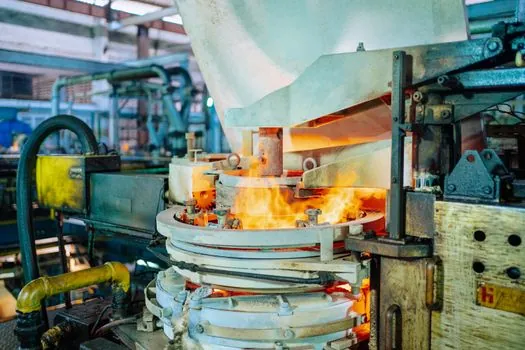
Three failure modes drive most medium-band warranty claims: die flash at the parting line from undersized tonnage, tie-bar stretch on cold-chamber aluminum machines cycling above 4,000 psi intensification pressure, and thermal-fatigue cracking on inserts when cycle times are pushed below roughly 30 seconds on magnesium [S1][S3]. Published guidance specifically warns against treating the nameplate maximum as the operating target, because the rated clamping force is the right number to use in the calculation [S3].
Standardized high-pressure die casting is documented by NADCA at forces exceeding 4,500 psi (31 MPa) for the high-pressure process, which is the regime where medium-tonnage machines live [S2]. Cycle time, shot weight, and clamping force together determine whether a medium-tonnage machine is operating inside its economic envelope or being pushed toward an oversize press.
Sourcing, standards, and spec verification
NADCA's published FAQ defines the tonnage convention and the standard alloy list (aluminum, zinc, magnesium, copper, lead/tin) that all medium-band machines are expected to handle [S2]. ScienceDirect's engineering reference confirms the 1-5,000 ton global range and notes the 250-ton floor for the typical international fleet [S4]. The 2026-08-24 industry article from Hexin restates the 150-ton worked example and the 1.1-1.3 safety factor band that most Chinese and European builders publish in their selection tables [S3].
For shop-floor verification, the disciplined approach is: measure projected area including runners and overflow, look up the alloy-specific pressure ratio, multiply by the safety factor, and round up to the next standard tonnage, then confirm the candidate machine's rated (not maximum) clamping force on its nameplate [S1][S3]. Two of the linked reference articles on adjacent process-equipment topics, AI Video Analytics for Bottleneck and Cycle Time Studies: 2026 Field Guide and Ball vs Roller Linear Guides: Load Capacity Decision, cover the cycle-time and platen-guide constraints that medium-band uptime actually depends on.
Trackable signal: monitor NADCA's published tolerance updates and any 2026-2027 revisions to the high-pressure die casting force threshold (currently 4,500 psi / 31 MPa), since a revised threshold would shift the tonnage band boundaries for new machine purchases. A second signal is the published shot-weight versus platen-size data from the major Chinese and Japanese builders, which will show whether the 500-ton machine of 2027 is materially more productive than the 500-ton machine of 2024.