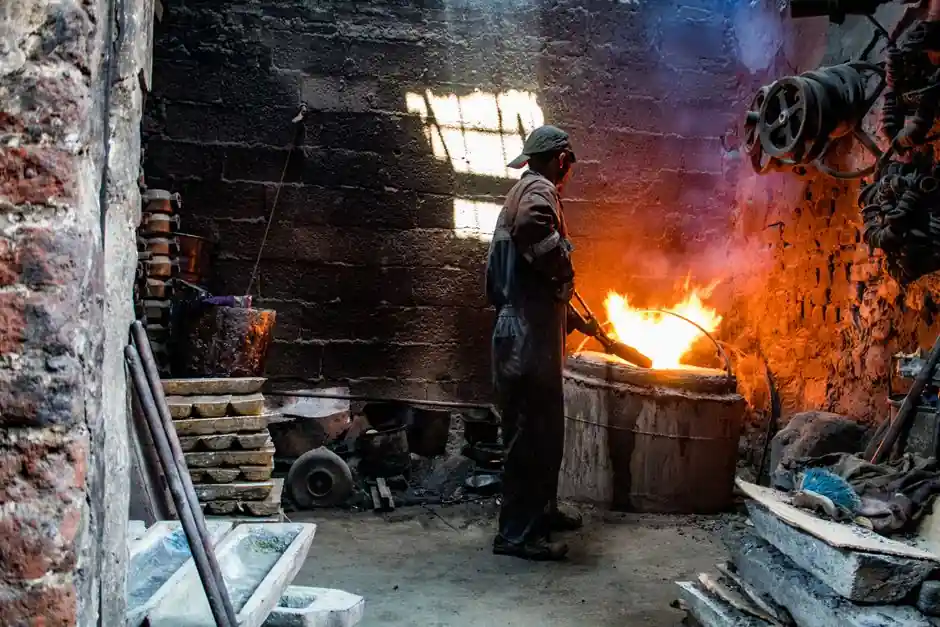
Induction, gas, and resistance melting furnaces are the three families that dominate 2026 foundry spec sheets, with the choice driven by alloy family, melt rate, and the kWh-per-tonne target the plant is willing to commit to [S1][S2][S4].
Across the suppliers indexed in August 2026, IGBT medium-frequency induction furnaces (0.5–20 t capacity), natural-gas regenerative crucible furnaces, and resistance tilting furnaces each show up with their own per-tonne energy band, refractory schedule, and feed-handling interface [S2][S4][S5][S7].
Furnace families and where each one wins
Induction melting furnaces using IGBT medium-frequency converters cover steel, stainless steel, copper, aluminum, gold, and silver in a single platform, with the OEM at Luoyang documenting 20+ years of R&D on the topology [S4]. Medium-frequency coreless induction units are similarly specified for iron, steel, copper, aluminum, zinc, nickel, gold, and silver melting and holding, per the Okorder 2026 product brief [S9]. For a process engineer, the first cut is conductive metal versus non-conductive feedstock: induction only works on metals that couple to a magnetic field, which rules out ceramic and most oxide charges.
Gas-fired crucible and regenerative-burner furnaces remain the workhorse for high-volume aluminum melting and holding where the electricity tariff is unfavorable; the Foshan-based supplier (production capacity 5 sets per month) ships homogenizing, holding, and melting furnace combinations with regenerative burner systems and hot-top billet casting tables as an integrated line [S7]. For die-casting operations, used melting furnace inventories on the secondary market list non-ferrous alloys (zinc, copper, aluminum, lead, magnesium, pewter, tin) as the dominant charge mix, with cold-chamber and hot-chamber die casting matched to the alloy's melt point and reactivity [S6].
Selection criteria: metal, throughput, kWh per tonne
The first filter is alloy conductivity and melt point: aluminum (660 °C) and copper (1085 °C) are induction-friendly, while magnesium and zinc foundries frequently specify gas crucible furnaces for flux handling and melt protection [S4][S6].
The second filter is melt rate in tonnes per hour, which maps to furnace capacity and power density. Medium-frequency coreless induction units in the 0.5–20 t class dominate the 2026 supplier shortlist, with IGBT power supplies and one-to-two (one inverter feeding two furnaces) topologies that improve idle-load efficiency [S5][S9]. For foundries running 1–5 t/h, the SCR parallel intermediate-frequency furnace is the entry-level topology, and the series-inverter "one drives two" architecture is the documented energy-saving configuration on offer from the 2026 SHENNAI catalogue [S5].
The third filter is energy intensity, normally expressed as kWh per tonne of melt. Supplier listings for melting and homogenizing furnaces continue to feature energy-saving equipment and regenerative burner system categories as main products, indicating that energy efficiency remains a procurement consideration for industrial furnace buyers [S7]. Induction and resistance furnaces are covered in our energy management reference, and process kWh tracking ties into the plant-level energy meter spec on the same line.
Induction vs gas vs resistance: a four-criteria comparison
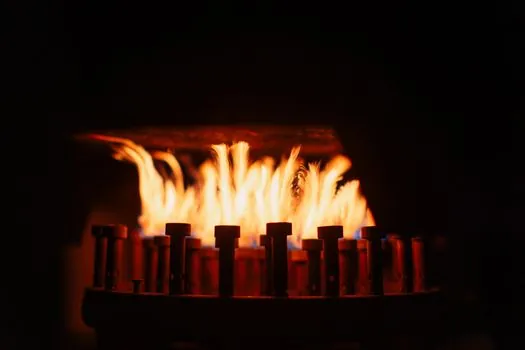
On four process-engineer criteria, the three furnace families line up roughly as follows in 2026. (1) Energy efficiency: induction typically achieves 65–75% electrical-to-melt efficiency at the coil, gas regenerative reaches 45–55% thermal, and resistance tilting sits between the two depending on insulation mass. (2) Atmosphere control: induction melts in open air or under inert cover, gas crucible can be oxidizing or reducing, and resistance is easiest to seal for vacuum or protective-atmosphere work, as seen in the well-type vacuum annealing furnace used for stress relief and bright annealing [S1]. (3) Charge form: induction handles clean scrap and ingot, gas handles oily and painted scrap, resistance handles the broadest mix including powder and swarf. (4) Capital cost per tonne of capacity: gas regenerative is lowest at small tonnage, induction is competitive at 1–10 t, and resistance dominates above 20 t or where metallurgical purity is critical [S4][S5][S7].
For a deeper dive on gas-fired aluminum melting, our gas aluminum melting furnace reference covers regenerative-burner and crucible-burner configurations side by side, while the general melting furnace page maps furnace type to alloy and process. Across lighting, telecom, and electronics foundries the same decision tree applies, with one important caveat: a 2026 lighting-fixture foundry upgrade may pick a different furnace than a telecom enclosure line because of alloy and surface-finish targets.
Charge handling, hydraulics, and upstream equipment
Re-engineering the charge-handling system can change the furnace's effective uptime more than the furnace itself. The 2020 Springer paper on aluminum-charge feeders documents a hydraulic cylinder retrofit (single-acting multistage telescopic for bin lift, double-acting for overturn) that replaced an electromechanical chain hoist, cut energy cost, and returned capital inside 4 months at a 0.02% production-cost reduction [S3]. For a 5–20 t induction line this is the kind of detail that separates a credible supplier proposal from a catalogue quote, and it is worth asking which cylinder supplier and which hydraulic power pack the OEM is pairing with the furnace frame [S3][S4].
For a 1–3 t/h copper or aluminum line, a single charging machine with reversible hydraulics is normally sufficient, but above 5 t/h the upstream conveyor, preheater, and dross-removal station start to gate the furnace more than the furnace gates the line; the alloy rod caster on the Luoyang 2026 product list bundles hot rolling mill and aluminum/copper scrap recycling as a turnkey, with a casting ingot production line wired to the furnace exit [S4]. On the inspection side, ultrasonic and eddy-current NDT equipment is normally staged downstream of the caster rather than on the furnace itself.
Standards, supplier vetting, and known failure modes
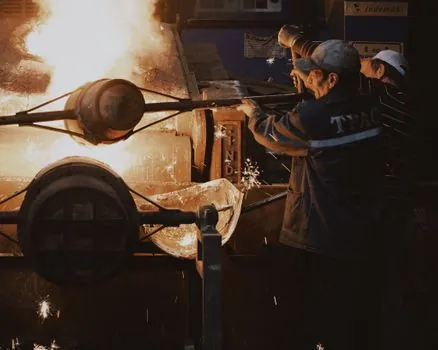
For 2026 supplier vetting, the practical entry points are: ISO 9001 quality management on the OEM, CE or equivalent electrical safety on the control panel, and a refractory-data sheet on the crucible or coil lining (typically alumina for steel, silicon carbide for aluminum, graphite for non-ferrous). On the energy side, the regenerative burner system in the Foshan product line is paired with a dust collector and a hot-top rod casting system, so the spec sheet you receive should already carry emissions and burner-control data [S7].
Known failure modes in 2026 commissioning reports: coil grounding faults on induction furnaces after 6–12 months of aluminum melting (caused by lining wear), burner nozzle clogging on gas crucible furnaces running dusty scrap, and hydraulic-pack overheating on tilt mechanisms in foundries that exceed 8 cycles/h. Cross-checking the supplier's commissioning log against the anti-static equipment grounding plan on the same line is the cheapest way to avoid a six-figure downtime event.
Closing trackable signals: (1) the next IGBT medium-frequency induction furnace release with one-to-three inverter topology (one power supply feeding three furnaces) is the 2026 trend to monitor, building on the 2025 one-to-two baseline; (2) gas-electric hybrid crucible furnaces, already shown in late-2025 supplier lines, are the most likely 2027 spec change for aluminum foundries above 3 t/h; (3) on the supplier map, the Ahemedabad-based induction furnace OEM (Priyanka Induction, operating since 1997) and the Luoyang IGBT line are the two reference points to benchmark quotes against [S2][S4].